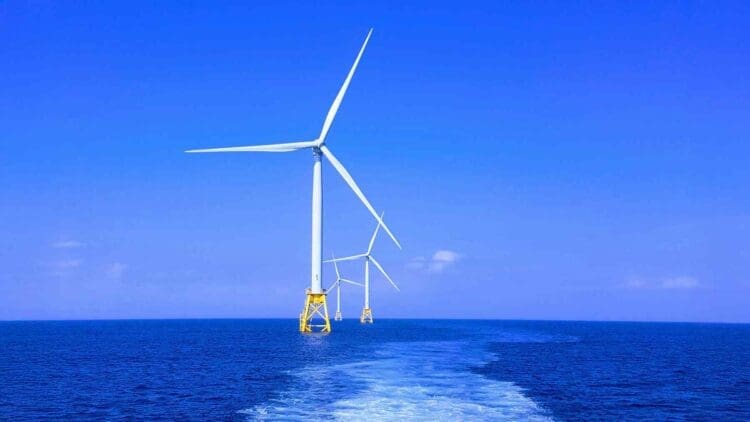

After the Trump administration decided to suspend multiple wind energy initiatives in the latter part of 2025, one would not have predicted that there would be great progress in the space as of early 2026. All credit should go to the court system, which has fairly assessed the decision and is increasingly allowing suspended initiatives to proceed. As such, the U.S. is slowly coming out of the controversy that was surrounding its wind energy projects. For instance, Ørsted has reported key construction milestones at the Revolution Wind offshore development.
Ørsted continues building the Revolution offshore development
As the U.S. wind energy landscape is now beginning to take shape following the setbacks. One of the most significant developments is the Revolution Wind offshore project led by Ørsted. Interestingly, it is a non-U.S.-based company that is at the heart of such a massive development, which speaks volumes to the impacts of globalization.
Ørsted is a Danish multinational power company and is recognized as the global leader in offshore wind energy. The company has achieved tremendous success in the sector, which explains why the United States would be willing to work with it instead of a local company.
There is great excitement regarding the benefits that the development will bring for the general population. The facility is located off the coast of Rhode Island. According to the most recent construction updates, the project developers have achieved vital milestones.
Ultimately, the future of the United States offshore wind sector is in safe hands because Revolution Wind is expected to become a fundamental part of wind generation in the northeastern United States.
Ørsted makes significant progress: Reviewing the construction progress of Revolution wind
The developers of Revolution Wind offshore development have every reason to be excited, considering how much progress they have made. As seen in many 2026 projects, there are obstacles that arise from different directions to affect initiatives, so when one materializes as planned, it is a massive success for developers.
On March 13, 2026, Revolution Wind officially started delivering its first power to the New England grid. The project developers are Ørsted and Skyborn Renewables, after Eversource sold its 50% stake in 2024. These are two massive companies that have great experience in executing large-scale developments.
The wind facility is designed to deliver a total capacity of 704 megawatts (MW) of renewable electricity. The initiative has been a long time coming, as offshore construction began after the project received final federal approval. This allowed the installation of turbine foundations and other critical infrastructure.
Delving deeper into the specific milestones achieved in building Revolution Wind
One of the key milestones was the installation of the first turbine foundation, which is referred to as the “steel in the water” stage. When this achievement was reached, it represented the beginning of full offshore construction activity.
All in all, Revolution Wind development will possess 65 offshore wind turbines manufactured by Siemens Gamesa Renewable Energy. Each turbine generates 11 MW, which in the context of turbines represents one of the most powerful offshore wind technologies currently deployed. When the farm finally starts to operate as planned, it will provide renewable electricity to more than 350,000 homes in Rhode Island and Connecticut.
Looking ahead: What is the significance of Revolution Wind to the United States?
The United States is in a rare position where each project aims to have great significance and the ability to impact the landscape. One of the standout achievements during construction was the installation of the first offshore wind turbine at the Revolution Wind site. As of March 16, 2026, the project is reported to be 93% complete.
The developers deserve great credit for entering the U.S. and pursuing such a massive project. Wind energy initiatives have revealed that the installation process is complex, as it involves transporting enormous turbine components offshore and assembling them using intricate installation vessels.