
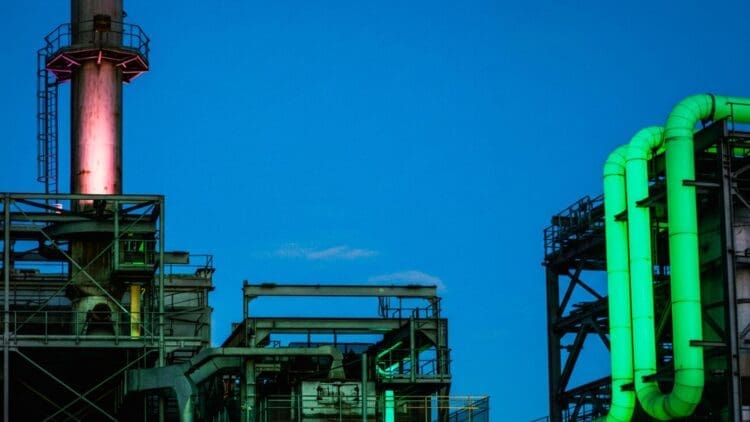
The UK is constantly working towards enhancing its renewable energy portfolio and this has been very evident as 2026 is now full underway. In the most recent news, the country took a major forward leap after a previously delayed state subsidy agreement has now officially been secured. Ultimately, this means that the UK has received the go ahead or approval to move forward into the construction phase of its hydrogen project and advance its portfolio of projects that are looking to achieve decarbonization.
Understanding the impacts of ownership shifting in the green hydrogen project
Tax paying residents are not usually concerned with the complex issues that arise during the execution of an energy project. Instead, their main concern is reaping the benefits of the electricity or power supply once a project has finally reached completion. In the UK, agreements under the government’s Hydrogen Allocation Round (HAR1) are expected to guarantee extensive revenue support that will permit the first phase of turning meticulous planning into a full reality. This is monumental for the European country considering that it is embracing something which it has not previously done in the past.
Much has been made about the UK receiving public support during its energy related aspirations, but what is an even bigger deal is how the agreement is set to initiate shifts in project ownership which investors are paying careful attention to. 2026 might be the year that the UK moves past the previous delays that have haunted its hydrogen production potential.


The United Kingdom’s green hydrogen project: Analyzing the role of the government
In most cases, the government is the only branch responsible for halting an energy project because private corporations require approval from it. Thus, when a government finally decides to play ball and take part in a project, countries along with their residents stand to gain massively. The UK government’s Department for Energy Security and Net Zero (DESNZ) created a lot of anticipation and excitement after breaking the news that an astounding 10 green hydrogen projects have officially signed Low Carbon Hydrogen Agreements with the state-owned entity Low Carbon Contracts allowing them to receive long term subsidies. The agreed contracts are expected to foster a compromise between green hydrogen and fossil fuels.
Now investors may fully commit to strategically planning for the construction phase with more confidence that it will come to fruition.
Assessing the ownership shift in the UK’s green hydrogen project
The agreed upon contract means that the UK state will be able to support hydrogen production in a timescale spanning over 15 years. According to reports, the UK is sure that the current structure will foster private capital and significantly assist the UK in becoming one of the leading countries in clean energy.
New investors’ involvement is imminent in the green hydrogen project
Following the renewed government backing, it is almost a certainty that many companies will be seeking to benefit from it by becoming investors just as is usually the case in energy projects. For instance, consumer goods manufacturer Kimberly-Clark is set to become one of the first industrial end users to utilize green energy hydrogen at a high scale. The company has reached collaborative deals with other corporations such as HYRO, Carlton Power, and Schroders Greencoat, with the intent of securing investment agreements that will amalgamate hydrogen production with its manufacturing resources in Barrow-in Furness and Northfleet.
2026 is set to become another groundbreaking year with many European countries increasingly showing a desire to achieve zero carbon emissions. In the United Kingdom, the government is now playing a significant role in helping developers to move forward with their plans to enhance its energy portfolio. While there might be a need to remain patient until the project is fully underway, it cannot be ignored that the country has ticked off yet another massive milestone.


