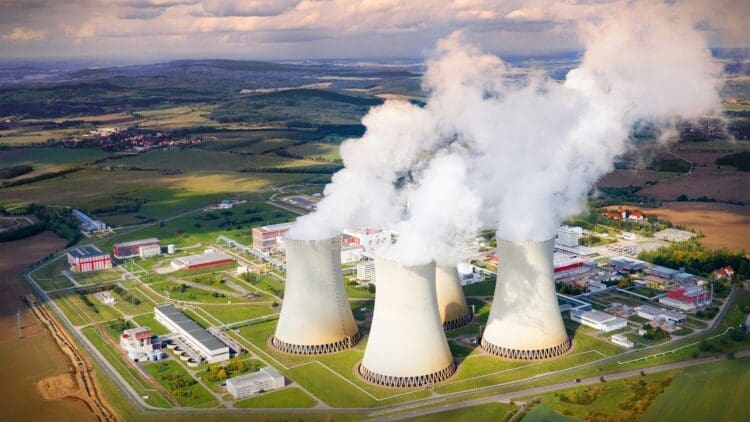

The revival of the global nuclear energy sector has been gaining traction in recent years as more nations aim to decarbonize their energy industries over the coming years as 2030 approaches. One such nation that has big plans for its nuclear energy sector is Poland. The nation’s Polskie Elektrownie Jądrowe, or PEJ for short, has recently announced its plans to begin construction work on what will be Poland’s first nuclear power plant this year. Poland is the latest European nation to revive its nuclear energy sector as a litany of countries aim to meet their respective clean energy and emission targets by 2030.
The first phase of the required geological studies has commenced
Poland has noted that the first phase of the necessary geological studies has kicked off at the site of its planned first nuclear power station at the Baltic coast in Pomerania. The state-owned developer Polskie Elektrownie Jądrowe noted that geological work focused on the Lubiatowo-Kopalino site, which is located northwest of Gdansk.
The site will feature three Westinghouse-made AP1000 pressurised reactor units, and PEJ has stated that the site studies were conducted in collaboration with US-based engineering and construction firm Bechtel. The studies focused on drilling 30 wells and conducting extensive geological studies beneath the planned nuclear islands and related infrastructure.
“We are starting with preparatory works for the construction of Poland’s first nuclear power plant – an investment project that will provide safe, clean and stable energy for decades. Its construction is a milestone in strengthening our energy security. I would like to thank all those involved on the side of the Pomorskie Voivodship Office and the investor for their efforts in bringing this strategic project to the next stage.” – Minister Wojciech Wrochna, State at the Ministry of Energy and Government Plenipotentiary for Strategic Energy Infrastructure
All relevant geological studies have confirmed the site’s suitability for the nuclear facility
PEJ has stated that the studies concluded that the area around the planned facility consisted mostly of soft sand and clay, which is perfect for the foundation of the nuclear facility. Research teams also found hydrogen sulfide pockets, an artesian aquifer, and glacial boulders, all of which will determine the viability of the site moving forward. The new deal comes as the European SMR Alliance recently released a roadmap to accelerate the revival of Europe’s nuclear sector.
PEJ has stated that all the relevant data from the extensive geological studies will form part of its site report and preliminary safety report for the Polish government, which will be required to get the necessary permits to advance the project into the next stage. The second phase of geological research is scheduled for 2026, pending the required permits and regulatory approvals.
“The beginning of preparatory works is an important landmark in our project, which is why obtaining this permit is so important to us. In accordance with the established schedule, we are consistently moving towards starting the key stage of the investment project, which is the construction of the power plant. Timely delivery of such a complex project would not have been possible without efficient and professional cooperation with government administration, in this case with the Head of the Pomorskie Voivodship and representatives of the Pomorskie Voivodship Office. – Marek Woszczyk, President of the Management Board of Polskie Elektrownie Jądrowe
The resurgence of nuclear energy has reached every corner of the world
The European revival of its nuclear energy sector has been a step in the right direction to decarbonize the international energy market. Even the United States has expressed similar ambitions for its own nuclear renaissance, with Terrestrial Energy’s IMSR “Project Tetra” moving closer to deployment. The evidence is pointing towards a new era of nuclear energy generation that encompasses the whole globe. Thankfully, the required safety and geological studies will ensure a safe and smooth transition to nuclear power.