
Pencilled across 20,000 acres of central Wisconsin farmland, up to 38 turbines are about to split a county into those cashing the check and those who realized too late that nobody ever asked them to vote
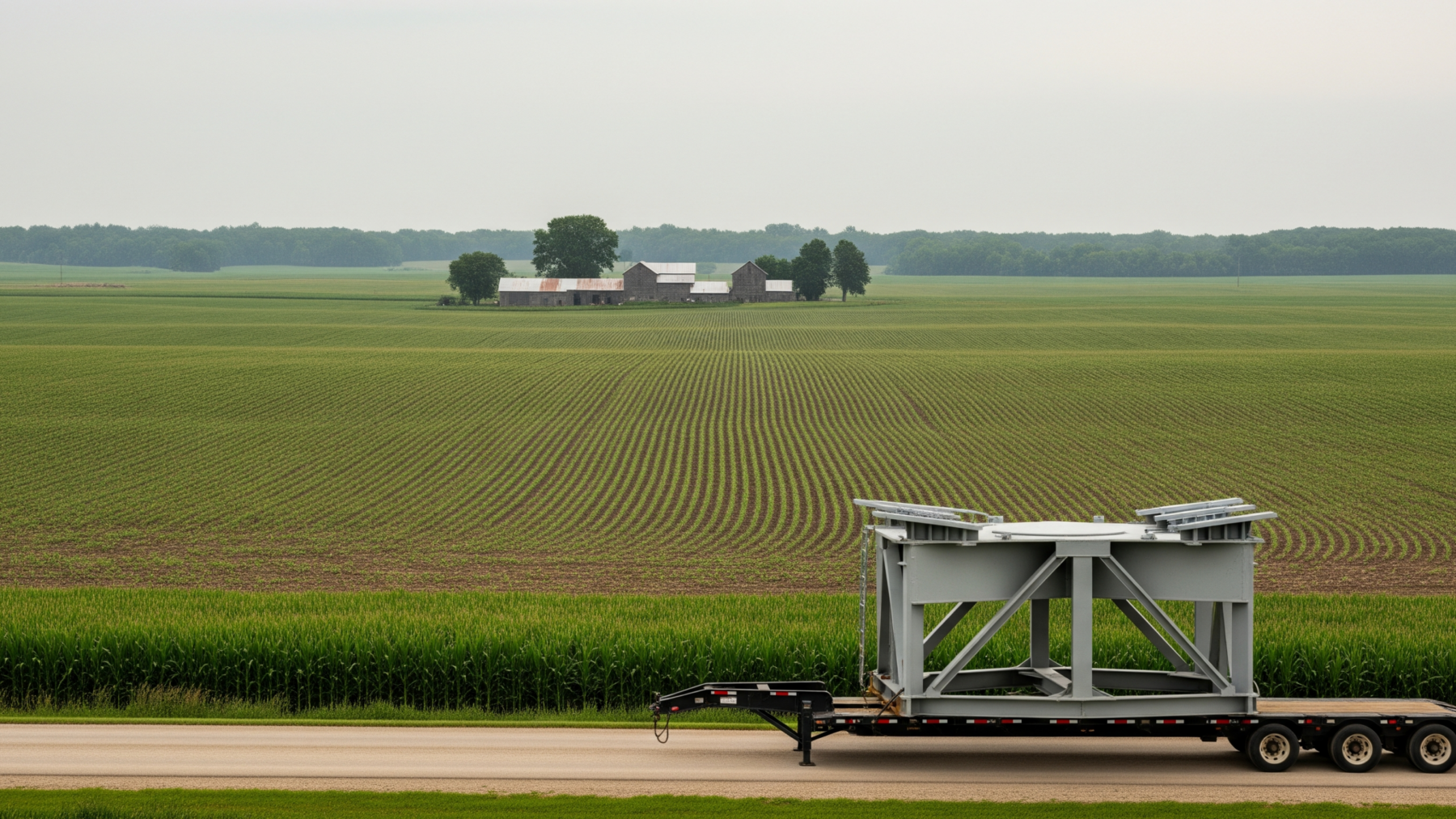
Six townships in southwestern Marathon County woke up this spring to find a 150-megawatt wind farm pencilled onto their landscape. The company behind it has already signed leases with landowners across 20,000 acres. The checks are real, the timeline is firm, and construction could begin as soon as 2028. What nobody posted on the community board was the thing that matters most.
A corner of Wisconsin that nobody outside it could find on a map
Marathon County sits in the geographic heart of Wisconsin, a stretch of dairy farms, timber lots, and small townships with names like Day, McMillan, and Eau Pleine. The land is flat enough to make wind engineers smile and quiet enough that a public meeting still draws most of the township to one room.
Southwestern Marathon is the kind of place where a neighbor’s decision about his field becomes everyone’s decision, whether he intends it or not. Alliant Energy, the Madison-based utility, has been working this ground since at least 2025, laying out plans for what it calls the Hub City Wind Farm: 28 to 38 turbines across six townships. The name is Wausau’s old nickname. The turbines would rise well south of there, on land that has never seen anything taller than a grain elevator.
The project would contribute through Wisconsin’s shared utility revenue program, up to $5,000 per megawatt annually split between the hosting county and towns.
The numbers Alliant brought to every meeting
The turbines would reach as high as 680 feet at the blade tip, roughly two and a half times the height of the Dudley Tower in Wausau. At that scale they become the most visible structure within miles, seen on clear days from townships not even inside the project zone. Nearly 30,000 homes per year, the company says, would run on what Hub City generates.
The project would contribute through Wisconsin’s shared utility revenue program, up to $5,000 per megawatt annually split between the hosting county and towns. At 150 megawatts, that is roughly $750,000 a year flowing into local coffers. For communities that have watched young people leave and budgets tighten for a generation, it is a serious number.
The neighbors who didn’t sign the lease
Not everyone in southwestern Marathon County is counting the money. Residents have raised concerns about property values, road damage from heavy construction equipment, noise, and the transformation of the rural landscape. In a county where families have farmed the same parcel for three or four generations, a 680-foot machine in the next field does not feel like an abstraction.
Local opposition has organized across the affected townships. One of its most visible figures, Trine Spindler, supervisor for the town of Day, has argued that state wind regulations have not kept pace with the scale of turbines now being proposed. That gap, she argues, is not a technicality. It is the whole problem.
The vote that nobody in Marathon County gets to cast
Here is what no listening session can change. Under Wisconsin law, wind projects at or above 100 megawatts go through the state Public Service Commission rather than local township boards. At 150 megawatts, Hub City clears that threshold by a wide margin. The townships where the turbines would actually stand have no binding vote.
“We will not have the opportunity to approve this project,” said Lauri Miskimins, Marathon County’s Director of Conservation, Planning and Zoning. The county can submit comments and document concerns. What it cannot do is say no. A similar reckoning over who controls the ground beneath a turbine project played out on Scottish grouse moor, producing an unexpected audit of wind wealth. A German repowering showed how state permitting and local sentiment can shape years of negotiation when communities have time to prepare.
Trine Spindler put it plainly at the June public forum. “The right question is not to ask, should we have an agreement?” she said. “It is should we even be doing this?” That question, technically, belongs to Madison, not to the town of Day.
What gets built, and what gets left behind
Alliant’s timeline runs from 2026 to 2029. A permit application goes to the Wisconsin Public Service Commission first, and if approved, construction starts in 2028. The lease network is already in place, stitched together field by field before most people realized what was being assembled.
The landowners who signed will receive annual payments for the life of the project, income that can make the difference between a farm that survives and one that does not when commodity prices grind for years. Their neighbors who did not sign will watch the turbines rise and receive nothing but the shadow they cast on certain afternoons.
Alliant told the county it would not send representatives to the June public forum, submitting a written statement instead. The spokesperson wrote that the project “represents a significant investment in Wisconsin’s energy future.” Whether those words land as comfort in the town of Day is a question the Public Service Commission will not be asked to answer.

Hugo is an engineer with strong technical expertise. Multilingual from an early age, his writing combines technical clarity with a strong interest in science and energy.
