
A simple chemical “shield” lets solar cells be built in open air and still break efficiency records
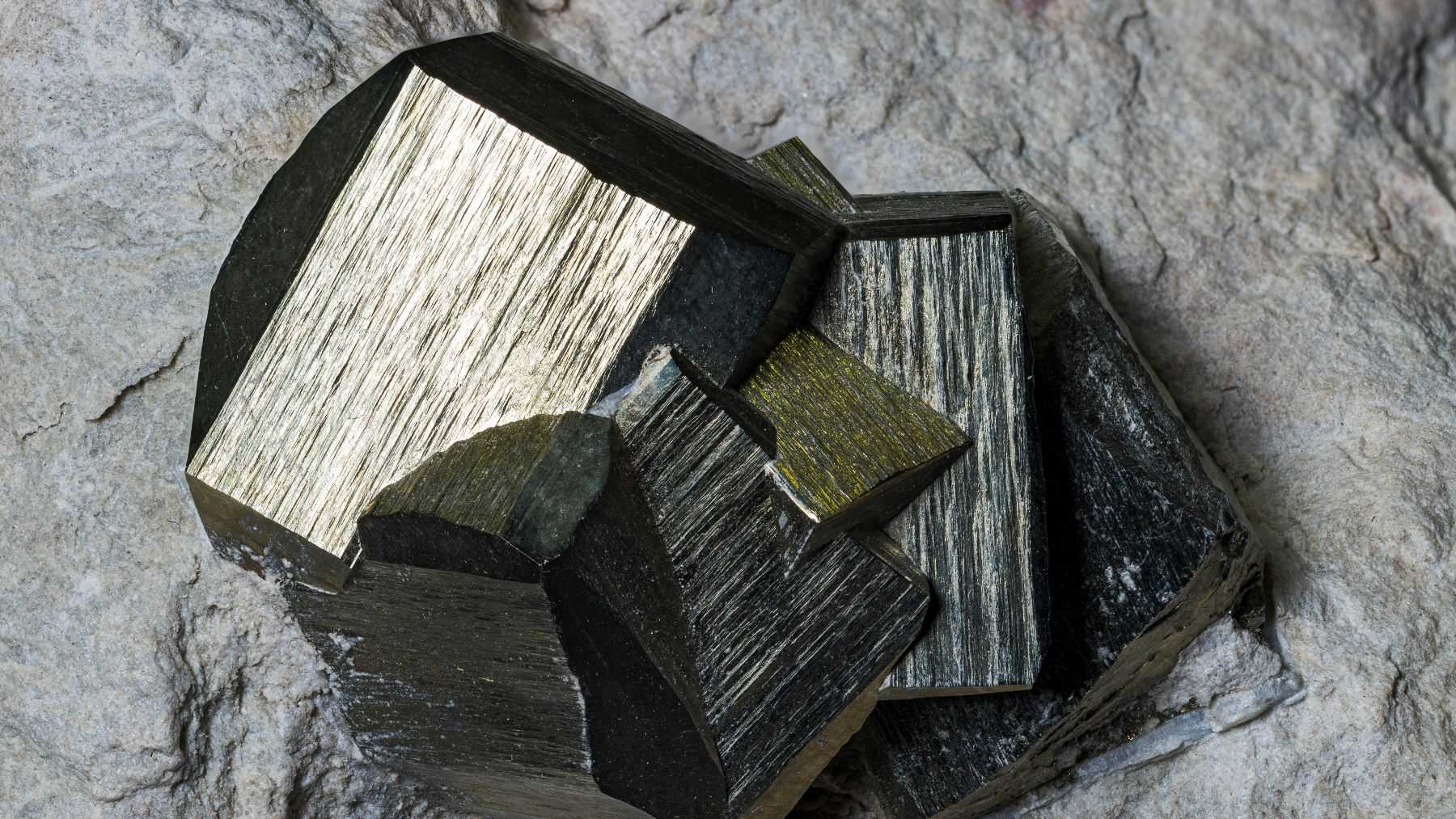 Image of perovskite, one of the most promising materials for solar panels
Perovskite solar cells have spent years promising to reshape clean energy — their efficiency rivals silicon, and the materials are far cheaper to produce. Yet scaling them up has meant retreating into tightly controlled cleanrooms, shielded from the moisture that quietly degrades their most sensitive layers.
Now, researchers report that blade-coating perovskite cells in ordinary ambient air — at humidity levels as high as 80% — may no longer require that controlled sanctuary. The key could be a surprisingly straightforward adjustment to the solvents used during fabrication.
The moisture problem that kept perovskites in the lab
Perovskite solar cells have posted efficiency numbers that rival conventional silicon — but their most sensitive functional layers have made large-scale production genuinely difficult. Two of those layers are particularly problematic: organoammonium halide passivation layers and self-assembled monolayers, or SAMs. Both are highly hygroscopic, meaning they readily absorb water from the air and degrade quickly when exposed to humidity.
Two main failure modes were prevented by the low-hygroscopic solvent system: hydrolysis of the organoammonium halide layers and desorption of the SAMs.
The problem compounds itself. These layers are typically processed using alcohol-based solvents — and alcohols are themselves hygroscopic. Moisture absorption during deposition can trigger hydrolysis and cause the layers to desorb, undermining the very interfaces that make high-efficiency devices possible.
Blade coating is the deposition method the industry needs: scalable, compatible with roll-to-roll manufacturing, and far more practical than the spin-coating techniques used in most lab settings. But applying moisture-sensitive layers via blade coating under ordinary ambient conditions has rarely been demonstrated successfully. That’s the gap this research targets directly.
A two-ingredient solvent that blocks moisture at the source
The solution the team developed is disarmingly simple — blend the alcohol with a low-polarity alkane. Each component does a specific job. The alcohol retains its ability to dissolve the functional materials, the passivation agents and SAMs that need to be deposited. The alkane, being low-polarity, suppresses moisture uptake during the blade-coating process itself.
Think of the alkane as a chemical shield. By reducing the overall polarity and hygroscopicity of the solvent mixture, it limits how much water the solution picks up from surrounding air before and during deposition. The functional materials still go down properly — without dragging moisture along with them.
The researchers describe this as a general approach, not something tuned to one specific compound or layer. The same solvent strategy works across multiple hygroscopic materials, which matters enormously if the goal is a manufacturing process capable of handling an entire device stack.
What the chemistry confirms: characterization results
The team ran comprehensive chemical and optoelectronic analyses to verify that layers deposited with the new solvent system retain their structural and functional integrity under high-humidity conditions.
Two main failure modes were prevented by the low-hygroscopic solvent system: hydrolysis of the organoammonium halide layers and desorption of the SAMs. Both processes typically accelerate when moisture infiltrates the deposition environment. With the alkane present, they’re suppressed. The findings held consistently across different layer types — supporting the team’s claim of a broadly applicable approach rather than a narrow fix for one material — and the optoelectronic data showed that device-relevant properties, not just structural ones, were preserved throughout.
26.1% efficiency — certified, and made in open air
The headline result is a certified power conversion efficiency of 26.1%. That number comes from devices where all three key layers — the SAMs, the perovskite absorber, and the passivation layer — were blade-coated under ambient air conditions.
Certification by an external body carries different weight than self-reported lab measurements. Those can vary widely depending on conditions and equipment, so this independently certified figure places these ambient-processed cells among the highest-performing scalable perovskite devices reported to date.
Perhaps the most striking detail: performance showed negligible decrease even when fabrication took place at 80% relative humidity. That’s not a cleanroom figure. That’s the kind of humidity you’d encounter on a muggy afternoon, and the devices held up.
What this means for the future of solar manufacturing
If perovskite solar cells can be manufactured without humidity-controlled environments, the economics of production shift considerably. Cleanrooms are expensive to build and operate, and removing that requirement could lower the barrier for manufacturers who want to enter the perovskite market without current infrastructure costs.
Blade coating’s compatibility with continuous roll-to-roll processing means this approach could slot into industrial production lines. The research team at the University of Science and Technology of China frames the work as resolving one of the most challenging barriers to scalable perovskite photovoltaics — and the certified efficiency figure suggests scalability doesn’t have to come at the cost of performance.
Open questions remain. Long-term stability under real-world conditions and demonstration at module scale, rather than small research cells, will be the critical next tests. Those results will determine whether this solvent strategy becomes a genuine manufacturing tool or stays a promising laboratory finding.
More information is available here: Li, Z., Zhao, W., Gao, J. et al. Low-hygroscopic solvents enable ambient blade coating of efficient perovskite solar cells. Nat Commun 17, 7418 (2026). https://doi.org/10.1038/s41467-026-72581-8
Daniel García is an Editor-in-Chief with strong expertise in structural work and engineering principles. He combines this technical foundation with deep knowledge of energy, spatial design, and emerging technologies, bringing a forward-thinking and analytical approach to editorial leadership.
