
Pittsburgh nonprofit’s rooftop solar project took three years to build and now it aims to light up an entire neighborhood
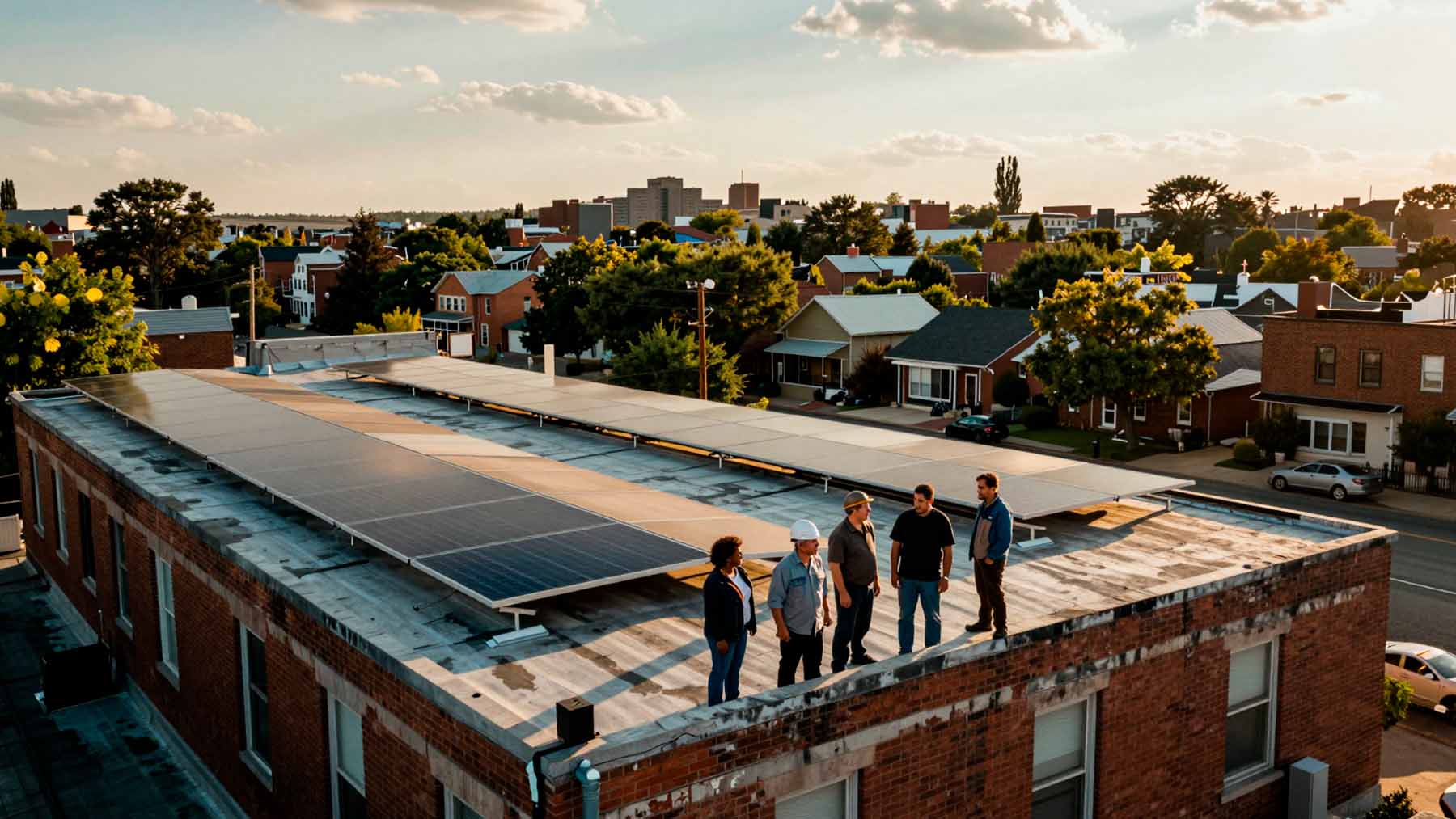 Image generated with artificial intelligence
On a rooftop in Wilkinsburg, a small borough on Pittsburgh’s eastern edge, a nonprofit recently marked the end of a three-year effort — and what its leaders hope is the beginning of something much larger. The Wilkinsburg Community Development Corporation’s 23.4-kilowatt solar array is now generating power, already outpacing early projections. But for the people behind it, flipping the switch was never really about one building.
They see this rooftop as a test case — proof that a neighborhood organization can navigate the complexity of solar development and come out the other side with something real.
Three years from idea to operating array
WCDC began pursuing solar in 2023 — a year that now feels like a distant starting line. Getting from that first conversation to a functioning array took nearly three full years, and the path wasn’t straightforward.
WCDC’s work in Wilkinsburg already spans multiple fronts: rehabilitating houses, preserving historic buildings, driving local development across the borough.
Nonprofits don’t typically have in-house expertise in energy policy, contractor vetting, or utility interconnection. The Pennsylvania Solar Center stepped in to fill that gap. Through its GET Solar program, the Solar Center helped WCDC work through policy hurdles and find the right installation partner — work that might otherwise have stalled or derailed the project entirely.
The contractor they landed on was EIS Solar, a Pittsburgh-based firm. That local connection mattered. The 23.4-kW array went up on WCDC’s roof, and by summer 2025 it was fully operational. Early results have been encouraging: in its first month, the system generated 7% more power than initial projections estimated. A small margin, but enough to suggest the project was planned and installed well — not just completed.
Stitching together the funding
Few community solar projects run on a single funding source, and this one was no exception. WCDC assembled a layered financial structure drawing from private donors, a mission-driven lender, state incentives, and federal tax policy — each piece filling a gap the others couldn’t cover alone.
One of the more distinctive contributions came from Mahesh Sabhnani, a Google employee who also lives in the community. He donated $10,000 to the project, and Google matched it, bringing the combined private contribution to $20,000. It’s the kind of local-meets-corporate alignment that’s hard to engineer but powerful when it happens organically.
The Neighborhood Community Development Fund — an equity-focused financier — built a custom loan program specifically for this project. Standard commercial financing often doesn’t fit the profile of a small nonprofit, so having a lender willing to tailor terms made a real difference. The project also qualified for a state energy efficiency rebate, the federal investment tax credit, and a domestic content bonus adder. Each incentive exists independently, but stacking them together is what made the numbers work — and that kind of financial structuring is exactly what the PA Solar Center helped WCDC figure out.
Solar as a community tool, not just a utility bill fix
Yes, the array will reduce WCDC’s electricity costs. But Gordon Manker, the organization’s director of business development, is clear that saving money wasn’t the primary motivation.
“Let the WCDC be the trial run to see how it goes, to see how it gets more people involved, more businesses involved in getting solar on their roof,” Manker said. The framing matters: this is a demonstration project, not just an operational upgrade.
That philosophy connects to something Leo Kowalski, director of transformation at the PA Solar Center, articulated about solar’s broader potential. “It’s a democratizing force,” he said. “What’s so exciting about solar is that we can really get our hands on it as people.” His point is that solar isn’t reserved for well-resourced institutions — everyday organizations can pursue it, especially with the right support structure.
WCDC’s work in Wilkinsburg already spans multiple fronts: rehabilitating houses, preserving historic buildings, driving local development across the borough. Solar fits naturally into that mission. It’s another way to build neighborhood capacity rather than just maintain it. With the array now running, the organization plans to host community workshops aimed at helping local businesses explore their own solar options — turning the rooftop into a conversation starter, a proof point for anyone who asks whether it’s actually doable.
What comes next for Wilkinsburg
WCDC isn’t treating this as a finished project. It’s a foundation.
In the coming years, the organization hopes to expand solar adoption across Wilkinsburg more broadly — new partners, new building owners, community stakeholders who weren’t part of this first round but might be ready to engage now that there’s a local example to point to.
Kowalski echoed that forward momentum. “Hopefully in the next couple years, we’ll be doing so much more,” he said. “Maybe it’s new partners, maybe it’s new folks. But we’ll find the community and build the new project.”
What makes this model worth watching isn’t just the solar itself. It’s the combination: local contractor, layered public and private funding, nonprofit leadership, and an outside organization reducing the complexity that typically stops smaller groups from ever starting. That formula could travel.
Other neighborhoods — in Pittsburgh and beyond — face the same barriers WCDC did in 2023. They need guidance on policy, help finding contractors, and financing structures built to their scale. If this project demonstrates anything, it’s that those barriers aren’t insurmountable. They just require the right scaffolding.

Carlos is an engineer with strong expertise in technical and industrial topics. He previously worked at international companies such as Siemens and is multilingual.
