U.S. companies are showcasing their financial capabilities when it comes to investing in energy developments. As one of the most economically advanced nations, it is not surprising that the companies are using their resources to secure groundbreaking developments that may not be easily attainable in less developed countries. The latest company to pursue a monumental initiative is Plug Power, which has now finalized a $132.5 million infrastructure deal to expand strategic assets.
Plug Power’s plan to develop high-quality infrastructure for its strategic assets
Plug Power is adopting an interesting strategy, which can be viewed as its way of preparing for the imminent surge in energy demand. The American company was founded in 1997, and its headquarters are in Latham, New York. As of today, the firm is recognized as a prominent player in the green hydrogen and fuel cell technology sector.
When it was made public just how much the company was going to make from its infrastructure, some people questioned how it had amassed such momentum to warrant such money. Its longevity and involvement in some of the most monumental projects are the reasons why it is able to earn so much money. Energy enthusiasts are aware of the progress that the company has made ever since its inception.



Plug Power finalizes deal worth $132.5 million: A brief overview
In a move that is sure to strengthen the company’s balance sheet and reiterate its dedication toward clean energy initiatives, Plug Power Inc. (NASDAQ: PLUG) has reached an agreement worth $132.5 million to sell key infrastructure assets to Stream Data Centers. With the energy industry experiencing such high activity, it would seem that the company’s decision is ill-timed.
However, there is a strategy that was meticulously planned for a long period. The deal is officially the first completed phase of a larger $275 million strategic infrastructure optimization program that aims to place the hydrogen technology company in a better position to participate in the ever-changing power and data-infrastructure markets.
As technological innovation continues to break boundaries, it is able to penetrate every industry, including the energy industry. It is up to the leading developers to decide whether they will lean on technology or rely on the traditional methods of generating energy. In terms of hydrogen development, companies have shown a willingness to apply the advice provided by scientific experts.
Understanding what the company’s latest agreement symbolizes for hydrogen production
Plug Power is accustomed to being in a position where its counterparts are carefully observing its next move to assess whether it signals the future direction of energy development.
According to reports, the agreement is set to play a massive role in assisting the company in navigating the challenges of liquidity as it aims to generate more profit. As more companies are finding ways to use hydrogen, data centers are also increasing in relevance.
As such, Plug Power is aiming to capitalize on the rising demand for data center capacity across the U.S. It will be hoping to convert legacy holdings into cash that can support hydrogen production and fuel-cell deployment.
Reviewing Project Gateway and its role in the agreement
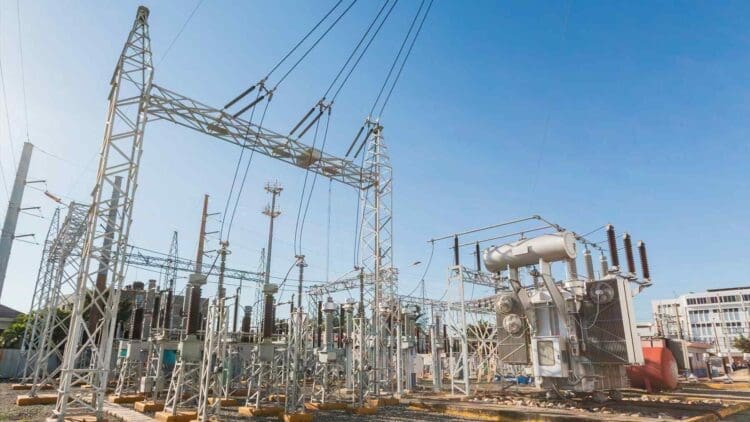
One of the most standout aspects of the agreement is that it is dependent on or revolves around Plug Power’s Project Gateway property at the STAMP (Science, Technology and Advanced Manufacturing Park) in Western New York. The assets include things like land, infrastructure, and some electrical substation rights.
Despite detractors’ opinions, the sale comes at the most appropriate moment for the company. In 2025, it reported roughly $710 million in revenue for full-year 2025. Some experts believe Plug Power made a brilliant decision because it aims to achieve a good reallocation of capital.
Plug Power’s energy initiative is different from the usual ones in the modern landscape, but it has the luxury to make unique decisions about its status. Nonetheless, another U.S. project is at the center of attention in 2026.