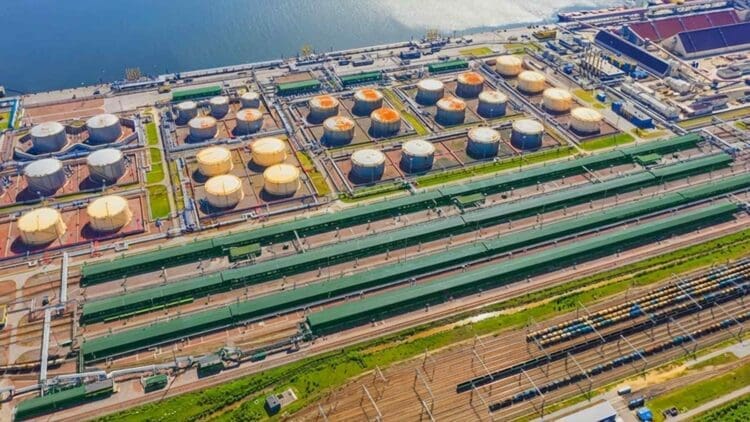
Some European energy transitions happen gradually and quietly, yet when public policy begins to influence industrial decision-making, these changes occur rapidly. An example of this type of gradual quiet transition is green hydrogen – an idea that has been debated for years, yet which has seen little real-world application due to limited scalability. Yet, recent policy developments are beginning to position Europe’s refineries – unlikely champions, at least initially —as critical building blocks for expanding hydrogen in Europe.
A sector forced to accelerate at a pace never before anticipated
Across Europe, discussions about policy regarding the production of green hydrogen have escalated. Some political leaders, such as French President Emmanuel Macron, argue that the stringent sustainability standards that are being implemented in the production of green hydrogen are limiting the amount of green hydrogen that is being produced. It appears that numerous large-scale green hydrogen projects throughout the EU are facing significant delays and cancellations.
However, unlike what is happening with green hydrogen projects across the EU, the refining sector within Europe is experiencing a shift. The new regulations under the revised EU energy directives require refineries to significantly reduce their reliance on carbon-based hydrogen supplies using green hydrogen instead. Analysts believe that refineries will require approximately 500,000 tons of green hydrogen per year by 2030 — representing the replacement of approximately 1/3 of today’s fossil-based hydrogen use.


Together, the regulatory pressure and industry needs that exist today have combined to present a unique moment — a sector that has traditionally relied upon hydrogen derived from fossil resources is now creating rapid increases in early-stage green hydrogen capacity in Europe.
The policy push behind new demand
Under the EU’s Renewable Energy Directive (RED III), refineries are provided with a high degree of encouragement to preferentially use green hydrogen over transitional blue hydrogen. As a result, the level of investment uncertainty is reduced, and it has already resulted in more than $5 billion in commitments to refinery-related low-carbon hydrogen projects — representing a significant portion of the 6 million tons Per Year (Mtpa) of hydrogen capacity approved for development.
In addition, EU-level auctions are providing strong indicators of demand for green hydrogen. Refining companies have demonstrated the greatest willingness to pay premiums for green hydrogen, with bid averages exceeding $9.23/kg — significantly higher than modelled cost ranges for refinery-aligned projects. These bids reflect the willingness of the sector to obtain early volumes of green hydrogen to satisfy regulatory timelines.
Although there is ongoing debate among policymakers concerning whether the current set of rules governing green hydrogen is overly complex, the refining sector is already responding to the policy mandates and industry-level decarbonization needs. Evidence indicates that both regulatory mandates and refinery-level decarbonization needs are driving more capacity commitments than in several emerging hydrogen markets.
New momentum at industrial hubs
This growing level of policy-backed certainty is allowing Europe’s refineries to emerge as early adopters of industrial-scale green hydrogen. Several projects that target refinery supply chains are currently aligned with long-term EU decarbonization pathways. In addition to decarbonizing their own operations, refineries are also positioned to provide hydrogen-derived fuels to aviation and shipping — two sectors expected to represent significant demand centers by 2030 and beyond.
While some policymakers are concerned that overly stringent environmental rules may impede the overall roll-out of green hydrogen, researchers suggest that regulatory changes should be based on evidence to avoid exchanging existing delays for new uncertainties.
The slow rate of scaling of EU green hydrogen — only 7% of the global projects scheduled for 2023 to go into operation were actually completed. Europe’s refining hubs, supported by increasingly firm policy frameworks, have emerged as unlikely drivers of green hydrogen capacity. Early commitments made by these refineries indicate the potential for regulatory certainty to promote industrial adoption.