PowerBank Corporation is a North American-based company that is renowned for its commitment to utility-solar and battery storage. Solar energy is increasing in importance because many countries are depending on it as a reliable option to replace fossil fuels. Thus, solar energy-producing companies are thriving more than ever as various nations are desperate to be led by them. In the latest turn of events, PowerBank secured safe-harbor status for 15 distributed solar and storage projects across New York.
Putting things into perspective: PowerBank’s 15 distributed solar and storage projects
PowerBank is not the only company, but it is the latest one to reach an agreement that requires it to deliver a multitude of developments in the United States. The events that transpired are monumental for both the country and the company, which both stand to gain. For instance, PowerBank will get to increase its name value and amplify its reputation as a solar-producing corporation, whereas the US will be able to reduce greenhouse gas emissions.
As soon as the news broke out, many people were eager to learn the financial aspects of these 15 projects coming soon to New York.



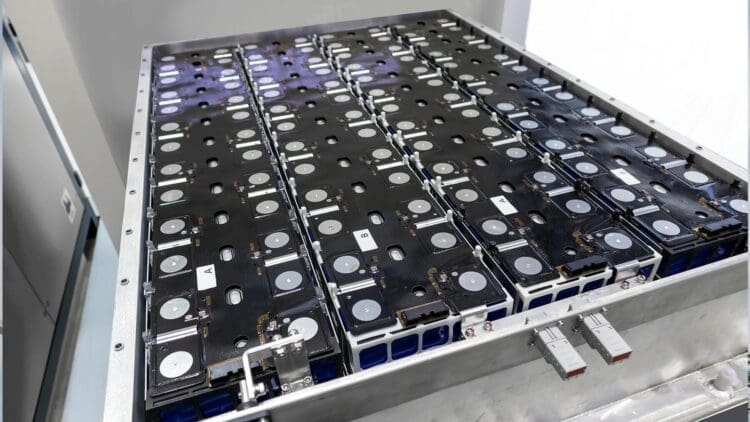
The projects are worth roughly US$168 million in construction value, and all in all, the energy initiatives are expected to provide about 67 megawatts (MW) of solar capacity and 11 megawatt-hours (MWh) of battery storage to communities throughout New York state.
It goes without saying that the New York residents are the biggest winners from this particular development, as they will receive a massive amount of guaranteed energy if the project is executed flawlessly. The safe harbour aspect of the initiative is one that assists the company in securing an estimated US$65 million in Investment Tax Credits (ITCs) attained through meeting the IRS “Physical Work Test” deadline.
Delving deeper into the New York State initiative: One Big Beautiful Bill Act
As per the One Big Beautiful Bill Act of 2025, projects must begin physical work or meet specific requirements by July 4, 2026, to become eligible for the ITC. This law is one that companies are inclined to follow because it is a subsidy that offers a 30% tax credit and a potential bonus that can be used for solar and energy storage developments. PowerBank has been meticulous and intelligent in obtaining critical equipment and commencing physical work before December 31, 2025, which means that all of its 15 projects qualify for the safe-harbor criteria.
New York prepares to benefit from 15 solar and storage projects
According to reports, once the development has been executed, just as it has been laid out on paper, an estimated number of 7,500 homes will benefit from it. Another crucial facet is that most of the developments will function under community solar and net-metered frameworks, which means that the public can enjoy reduced electricity bills. Cutting bill costs is a huge objective in most nuclear initiatives.
Meeting one state’s climate goals means meeting the entire nation’s goals
America’s approach towards energy generation shows that the government understands the importance of meeting the targets of each state if there is any chance that the entire nation can meet its own objectives. New York has ambitious clean energy goals to generate 10 gigawatts (GW) of distributed solar and 6 GW of energy storage by 2030. One would imagine that if PowerBank remains disciplined in its approach within the 15 projects, the state will be able to meet its objectives easily.
There is no stopping the US in 2026 as the nation is heavily committed to diversifying its clean energy portfolio and significantly reducing carbon emissions. The most commendable aspects of America’s approach to energy development are that it is pursuing significant developments in various states, and it is also willing to invest government resources to ensure that there are no financial hurdles that prevent clean energy generation.