
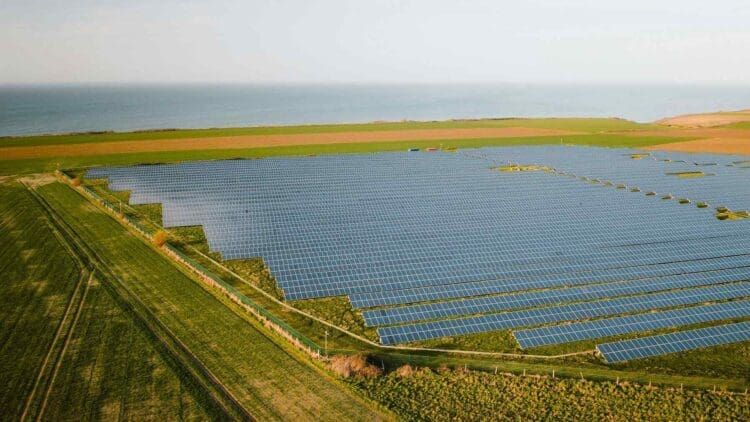
There is a recurring theme of countries partnering up with foreign nations for the betterment and diversification of their energy portfolio. Companies that have the most proven experience and standout reputation are likely to obtain opportunities to deliver large-scale developments that will be profitable for them and the countries for which they are working. It also helps when a country and a company have been affiliated with each other for a long time, meaning they trust each other more.
The United States collaborates with Recurrent Energy for 2 solar projects
In yet another groundbreaking occurrence in 2026, Recurrent Energy closed down a US$825 million financing package for Desert Bloom storage and Papago solar developments in Arizona.
The United States has, in the past, received criticism for contributing to carbon emissions and not putting in enough effort to create a cleaner environment. The primary reason why the US did so was that fossil fuels are more profitable in the short term compared to cleaner energy. However, the country has changed its approach now. According to reports, it invests over US$300 billion per year in clean energy with the intent of driving economic growth, creating high-paying jobs, and increasing energy security. Ultimately, the US has a goal to reach a net-zero economy by 2050, which, if it keeps investing at this rate, it will be able to reach that goal comfortably.

The latest financing deal is regarding the construction of the 600 MWh Desert Bloom Storage battery facility and the 150 MWac Papago Solar plant. The two facilities are located in Maricopa County and are planned to commence operations in the first half of 2026. This is massive for the US solar landscape, considering that there are already a multitude of solar developments that are beginning in 2026.
The reason why the funding is monumental is that it represents a significant step forward for Recurrent Energy’s long-term partnership with Arizona Public Service (APS), which is one of the state’s largest utilities.
Breaking down Recurrent Energy’s strategy behind funding $825 million
When companies dedicate such an enormous amount of money to a development, they do so with a strategy in mind and a plan to also benefit from it. For instance, the Desert Bloom Storage is an individual battery energy storage system that will effectively support grid stability by storing excess energy and providing it when demand is at its highest. On the other hand, Papago Solar is a photovoltaic project that is expected to deliver a considerable amount of clean energy production and battery storage.
What is the role of the financing partners in Arizona’s next development?
Financing partners come together with the intention of sharing the risks and the costs of a development that they are not willing to assume on their own. In this case, the collaborators complement each other to the tee. For instance, Wells Fargo will provide tax equity, while Nord/LB, Mitsubishi UFJ Financial Group (MUFG), CoBank, and Siemens Financial Services will be underwriting the construction loans.
Analyzing the local impacts of Desert Bloom and Papago Solar
Since the developments are expected to come in 2026, the people of Arizona can already look forward to receiving hundreds of construction jobs. Recurrent Energy is well respected for its community involvement, including supporting local organisations like Arlington Elementary School.
The population has generally received the upcoming facilities very well, considering the benefits that they come with. For instance, Desert Bloom and Papago Solar are unique in that they provide dispatchable clean power that can be turned on in times of emergency. When it comes to solar energy initiatives coming in 2026, the US is undoubtedly facilitating one of the most standout ones in the world. Not many corporations are willing to invest close to a billion dollars for clean energy, so Recurrent Energy is sending a clear statement to the rest of the world.


