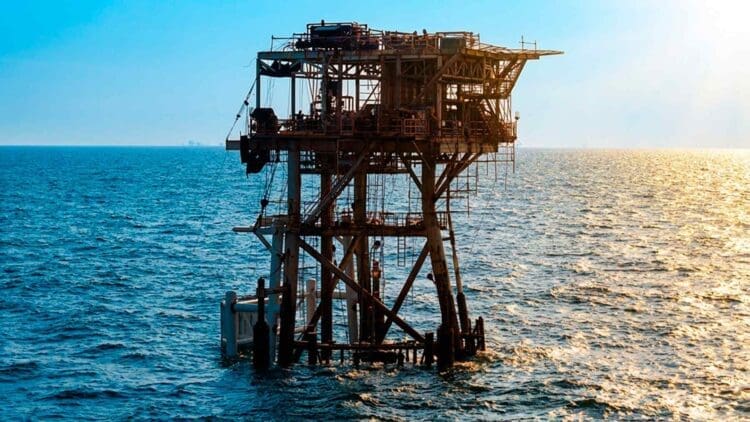
The Gulf of Mexico has played a vital role in the domestic energy market in the United States over the years. As the new year presents energy companies with a new opportunity to expand operations, Repsol has boosted the already dominant oil production in the region by bringing the Leon and Castile fields online to deliver first oil, positioning the company at the forefront of the remarkable US energy expansion this year.
Can Repsol deliver on its long-term commitment in the Gulf of Mexico?
Repsol has built a wide energy portfolio over the years, from the conventional oil and gas sector to the more transitional renewable energy market. Repsol has a finger in many energy pies in the United States, and recently delivered on a significant development in the Gulf.
Repsol has been active in the Gulf region for more than 20 years and has been a major player in several discoveries in the region. The company participated in the drilling operations in the Buckskin and Leon discoveries in 2009 and 2014, respectively.
Repsol also plays a vital role in the partnership developing the Shenzi field, and holds an interest in over 200,000 net acres earmarked for exploration activities in the US Gulf. Additionally, Repsol is dabbling in the renewable energy sector with 140,000 acres of pore space leased near Corpus Christi to advance its latest carbon capture and storage project.
Repsol leverages its consortium partners to bring online the Leon-Castile fields
Respol and its consortium of partners, including LLOG Exploration Offshore and O.G. Oil & Gas, have reached a key milestone by producing first oil at the deepwater Leon-Castile fields, which are located offshore in Louisiana.
The project has been identified as strategically important for the company’s long-term commitment to the prolific basin in the Gulf region, and it has noted that it plans to add two additional wells this year.
“Since Repsol drilled the discovery well at Leon in 2014, we have been working diligently to advance this important project to supply secure, reliable and affordable energy in the Gulf for decades to come. The opportunity to jointly develop Leon and Castile reflects our strategy to safely and efficiently deliver better barrels in established basins like the Gulf, where we already have the technical expertise, experienced partners and a strong legacy of success.” – Repsol’s Gulf of America Business Unit Director, David Ramos
Repsol has made a refurbishment to a historic facility in the Gulf
Alongside the notable first oil from the Leon-Castile fields, Repsol has made a significant refurbishment to the historic Salamanca floating production unit, in which the company owns a 2.5% interest.
The facility is the first to be refurbished in the US Gulf region, and now plays a vital role in reducing emissions from the operation as it delivers a 87% reduction in emissions when compared to constructing a new unit. Outside of the US, Repsol is working with TotalEnergies and HitecVision to create a new upstream platform in the United Kingdom.
“We are especially proud of the economic benefits this project has delivered for local communities on the Gulf Coast by supporting energy workers, and the technical and environmental milestone of being the first project to repurpose an existing production platform in the Gulf of America.” – Repsol’s Gulf of America Business Unit Director, David Ramos
How much longer can the Gulf play a vital role in the US upstream market?
According to the expectations of multiple energy analysts, the Gulf of Mexico will see energy operations decline over the coming years; however, that has led to several companies expanding operations and pipelines in the region to benefit while they still have time. Repsol will continue to work on advancing its standing in the US energy market this year, if the current project details are anything to go by.