

The Revolution Wind initiative has been the center of attention in the United States wind energy landscape since the latter part of 2025. The initiative first received coverage after the Trump administration came into power and decided to prohibit it from moving forward. This was before a U.S. federal court in early 2026 granted a preliminary injunction against the stop-work order and allowed the 704 MW project to resume. As of late, the Revolution Wind project by Ørsted and Skyborn has started supplying electricity to the grid.
Revolution Wind is expected to start providing electricity to people
There was uncertainty in the U.S. wind energy landscape when the president halted developments that were close to completion. Nevertheless, companies have moved past that as they look to invest in initiatives that will provide clean electricity for the people. Revolution Wind might a project studied for a long time, as it encapsulates the difficulties faced by developers before an initiative can materialize.
The U.S. offshore wind sector has reached a major milestone after the Revolution Wind project officially began delivering electricity to the New England grid. This is a huge achievement for Ørsted and Skyborn Renewables, who are playing a critical role in the nation’s transition toward clean energy.
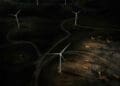


The wind farm is located off the coasts of Rhode Island and Connecticut and is expected to enhance the regional energy supply. After years of development, regulatory hurdles, and construction challenges, the wind farm has finally arrived.
An in-depth understanding of how Revolution Wind will benefit the public
There is no doubt about just how beneficial the facility will be for the people of New England who have been forced to remain patient. Revolution Wind is a 704-megawatt offshore wind farm established to supply renewable electricity to New England.
The project has now begun supplying power into the grid and will continue amplifying output in the coming weeks until it reaches full operational capacity.
When the time comes for it to reach full operation, the facility will generate enough electricity to power more than 350,000 homes and businesses across Rhode Island and Connecticut. The wind farm possesses 65 large-scale turbines installed roughly 15 miles off the coast, making it one of the most essential offshore renewable energy projects currently operating in the United States.
There have been some question marks about how exactly wind facilities generate power. The electricity generated offshore is transferred to land through submarine cables and integrated into the regional grid.
Reviewing the economic boost brought by Revolution Wind
One of the main elements of a project for the general public is how they might benefit from it. For the people of New England, Revolution Wind is expected to deliver great economic and energy system benefits to the region.
The project was made official through long-term power purchase agreements, which offer price stability and predictability for consumers. This is a component that the general population appreciates, as they won’t have to face unexpected increases in power prices.
Ultimately, Revolution Wind can help lower wholesale electricity costs over a prolonged period while improving grid reliability. This will be most evident during the winter months when energy demand peaks. In the construction of this project, local employment increased as more than 1,000 workers were hired.
Assessing the political and regulatory challenges faced by Ørsted and Skyborn
As briefly touched upon earlier, the path to completing Revolution Wind was not simple. When construction was temporarily halted following a federal stop-work order citing national security concerns, there was no hope that it would someday materialize.
Nonetheless, the project moved forward and added yet another large-scale facility to the U.S. Its launch demonstrates the growing importance of offshore wind in the nation.