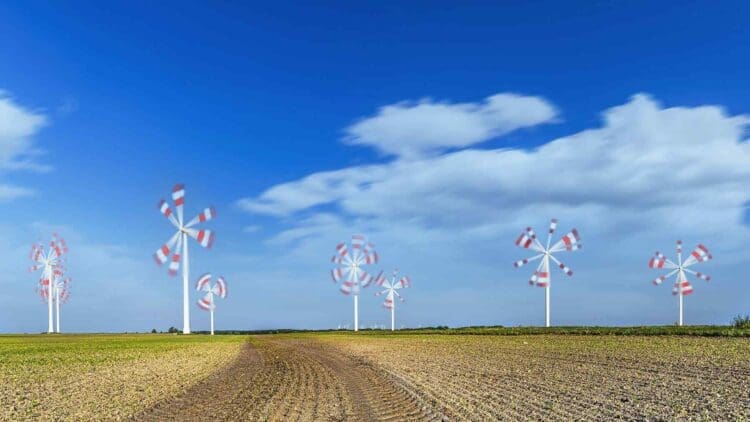

RWE is heavily benefiting from establishing a healthy relationship with the United States, as it is one of the non-local companies that is repeatedly permitted to pursue energy projects in the nation. As a firm that has a reputation for delivering on its promises, it is more likely to be chosen by various nations as they are on a quest to build renewable energy facilities. After already providing key establishments in the 2026 wind energy landscape, RWE has recently brought 15 U.S. energy projects online, featuring multiple new wind farm installations.
RWE AG continues to expand its wind energy portfolio in the United States
Some people may be critical of the United States for relying on foreign companies in its energy initiatives. Still, globalization has made the entire world so interconnected that companies can fit in effortlessly. Additionally, RWE is not just a random company without lengthy accolades. It is a leading global energy company that is based in Essen, Germany, which is the leading wind energy-generating country in Europe.
Having been founded in the late 1800s, the company is a veteran of the industry that has the ability to adapt to different eras of clean energy generation. At the moment, it is heavily committed to the international green energy transition.
The German energy giant has significantly expanded its portfolio in the United States after commissioning 15 new energy projects across the country. These new initiatives add approximately 2 gigawatts (GW) of capacity. This amount is enough to elevate the company’s position as a powerhouse in renewable energy.
RWE’s 15 U.S. energy projects: Unpacking the company’s specific initiatives
According to reports, a large portion of the installations will include onshore wind farms, proving wind energy’s continued importance in the U.S. transition to cleaner power. There was some pushback from the Trump Administration on the importance of wind facilities, but the nation seems to have moved past that period now.
Andrew Flanagan, who is the CEO of RWE Americas, stated:
“The U.S. is at a pivotal moment for electricity demand, and RWE is helping to meet that demand with 15 new projects commissioned across the country in 2025, bringing our total generation capacity to approximately 13 GW.”
Ultimately, the initiative represents a win-win scenario for both the company and the entire country. RWE confirmed that the projects, completed by the end of 2025, occupy several states, including Texas, California, New York, Illinois, Arizona, Kentucky, and Louisiana. Among the 15 installations, there is a mix of wind, solar, and battery storage facilities.
Reviewing the importance of wind energy to the United States renewable landscape
The United States has shown great commitment to reducing carbon emissions and replacing fossil fuels with clean energy throughout all the states. Wind farms are integral to the transition, as onshore wind remains one of the most established and cost-effective renewable technologies in the United States.
A report from the U.S. Energy Information Administration unveiled that wind energy continues to account for a significant amount of renewable capacity additions, although solar is the overall fastest-growing.
The reason why onshore wind plays a central role in the clean energy transition is that it is scalable and considerably cheaper compared to other energy sources. RWE continues to invest in the United States, signaling how lucrative the market is.
Examining the economic impacts of the 15 projects in various states
According to information provided by RWE, construction activities supported approximately 3,500 jobs. The long-term operations are expected to continue providing employment opportunities in local communities. The projects are expected to bring more than $500 million into regional economies through taxes, land lease payments, and community investments.
The finances can support schools, emergency services, and infrastructure development. Ultimately, the United States has managed to utilize clean energy initiatives as a major driver of economic growth.