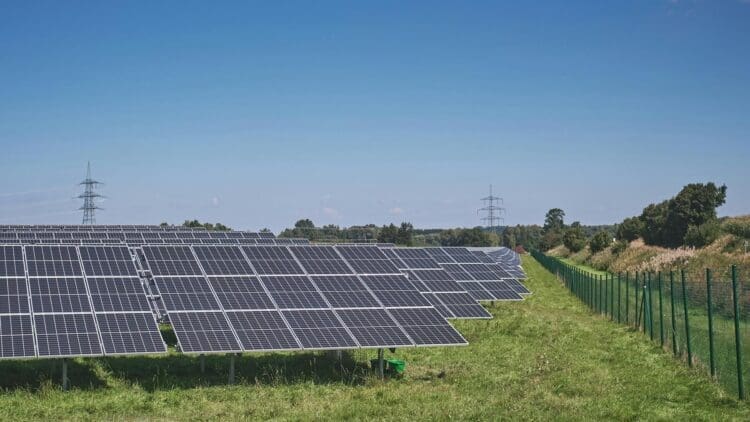
Foreign companies collaborating with different countries is not a new occurrence in the energy industry, but it has drastically amplified in the contemporary landscape. A Norwegian renewable energy developer named Scatec won a 25-year power purchase agreement for a 120 MW solar facility in Tunisia, which is a massive statement, particularly from the perspective of Africa, which does not have as many resources as developed countries.
Unpacking the 25-year power purchase agreement for solar in Tunisia
In the latest events that unfolded, Scatec ASA was the center of attention after announcing its lengthy contract to supply solar energy in Tunisia. The Norwegian corporation signed a 25-year Power Purchase Agreement (PPA) with the Tunisian state utility Société Tunisienne de l’Électricité et du Gaz (STEG) for a 120-megawatt (MW) solar facility.
Many people were quick to question the significance of this agreement, especially considering that it was unexpected. Tunisia is simply on a quest to diversify its energy portfolio and, most importantly, reduce its reliance on fossil fuels, for which it has previously received criticism. It is also important to note that Scatec would not been involved with this project if it did not have anything to gain from it as well.
When reflecting on the agreement, Scatec CEO Terje Pilskog stated:
“Tataouine strengthens our platform in Tunisia and reflects our ability to scale through repeatable, high-quality opportunities in our growth markets. With long-term contracted revenues and a capital-efficient development model, this project supports our strategy for profitable, self-funded growth.”
Essentially, the agreement allows Scatec to strengthen its name value and gain recognition, which is bound to provide it with bigger and better opportunities in the future.
An unlikely partnership: Understanding why Scatec ASA chose Tunisia
The partnerships that arise in the energy industry emerge to assist countries and corporations in managing the expenses and multi-layered nature of energy projects, which one company cannot handle on its own. Thus, Tunisia will be able to benefit from Scatec’s involvement by sharing risks and gaining access to technologies that are not currently available in Africa. Under the 120 MW solar project, Southern Tunisia will be supplied with reliable electricity to the national grid.
Another crucial facet of the agreement is that it came about through a competitive government tender, which basically means that the government is on board with the development of the new solar facility. The government’s approval is integral because it can either make or break the development of a facility.
Delving deeper into the financial agreements in Tunisia’s 120 MW solar facility
According to reports, the approximate capital expenditure (capex) for the project is around €80 million (US$109.5 million). The Norwegian company has complete ownership of the project at the moment. Still, it is considering inviting equity partners in order to manage the finances and share the risks of handling such a large-scale project, just like Bhutan did.
Scatec’s strategic plan to lead the energy production landscape in Tunisia
When a company finds success and develops a good working relationship with a country, they become enticed to work on even more projects. This is the case for Scatec, which has a solid presence in Tunisia already. For instance, it has developed solar projects such as 60 MW facilities in Sidi Bouzid and Tozeur in partnership with Aeolus SAS, a subsidiary of Toyota Tsusho Group. Ultimately, Scatec is now the key driving force behind Tunisia’s aspirations to achieve net-zero emissions and create a cleaner environment.
Scatec’s victory in the 120 MW solar facility in Tunisia is massive for the country’s overall energy objectives to generate 30% of electricity from renewable sources by 2030. This particular development joins elite company in terms of those that are already in the works for 2026. As long as countries remain committed to generating renewable energy, then carbon emissions on Earth will be drastically reduced.