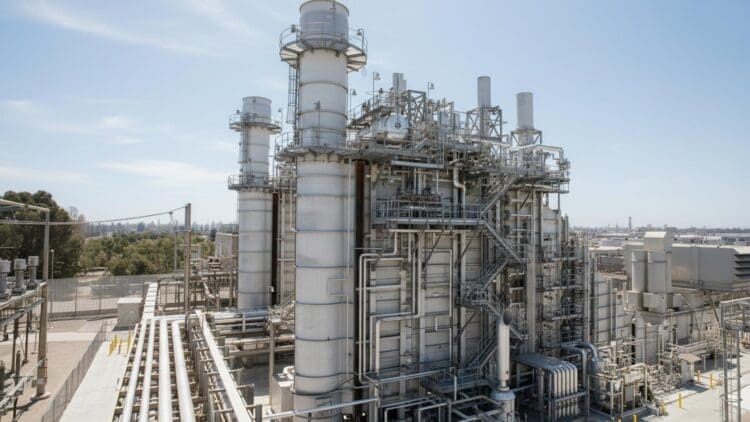

The war in Ukraine has devastated the European energy industry. Several nations lamented Moscow’s invasion of Ukraine in 2022 and subsequently imposed sanctions on Russian energy companies. The Russian-owned oil firm NIS has now stated that it has secured feedstock to restart operations at a Serbian refinery, thanks to a waiver on sanctions by the US government. The revival of refining operations at the Russian-owned NIS refinery in Serbia comes as a new pipeline for Russian oil in the region provides some much-needed relief for Russian energy companies.
NIS’s Serbian refinery has restarted operations following a two-month pause
According to Serbia’s Energy Minister Dubravka Djedovic Handanovic, the NIS-owned refinery has restarted operations following a waiver on sanctions by the US federal government.
The Minister noted that the refinery’s first diesel should be available for purchase on the market by January 27, 2026. The United States Treasury Department’s Office of Foreign Assets Control imposed sanctions on NIS, which is owned by Russia’s Gazprom, in October 2025 as part of a broader directive targeting Moscow’s energy market.



With Ukraine recently striking three oil tankers in the Black Sea that have links to Russian energy supply, the ongoing war has placed the global energy market in a tailspin, trying to secure significant energy resources supply from alternative nations and companies that have no ties to Russia.
The Russian government has reaffirmed its apparent commitment to peace in Ukraine, although the vast majority of nations around the world do not hold the Russian government in high regard.
“Our stand is crystal-clear – we want peace in Ukraine, which can only be attained through broad national dialogue in which all regions and all political forces of the country must participate.” – Sergey Lavrov, Minister of Foreign Affairs of the Russian Federation
Russian-owned NIS is running out of time to divest its assets and appease the US
NIS had until March of 2026 to negotiate a divestment of its stakes held by Russian energy firms or face the might of the US. NIS has noted that a new sale negotiation with Hungary’s MOL is reaching completion. Russia’s Gazprom and Gazprom Neft together own more than 50% of NIS, with the Serbian government owning a 29.9% stake.
Hungary’s Foreign Minister Peter Szijjarto noted, following a meeting in Belgrade with Serbia’s Energy Minister Dubravka Djedovic Handanovic, that the acquisition deal should be completed in the near future as the two parties aim to meet the deadline imposed by the US.
“In the coming days, there is good chance for the first milestone to happen: the first important agreement between MOL and Gazprom Neft could be signed as part of their talks,” – Hungarian Foreign Minister Peter Szijjarto
Once the transaction documentation has been approved by the United States, the deal can move forward. Serbia and Hungary are among the only nations left willing to do business with Russia, and are planning a new cross-border pipeline to move vast quantities of Russian oil.
“The goal is to complete these talks by the end of this week and to sign a binding agreement for the transfer of ownership of all shares from the Russian owners to the new owners,” – Serbian Energy Minister Dubravka Djedovic Handanovic
Russia’s economy has been devastated by the wave of sanctions
With the Ukraine war showing no signs of either side giving up, the current geopolitical climate in Europe and the US is reaching fever-pitch. The European Union has recently outlined a new plan to eliminate the flow of Russian oil into the continent. Serbia and Hungary are offering a lifeline to the Russian energy firms that have seen dramatic losses in recent months. The restart of refining operations at the Serbian refinery has accelerated the need to divest assets for Russian-owned NIS.