
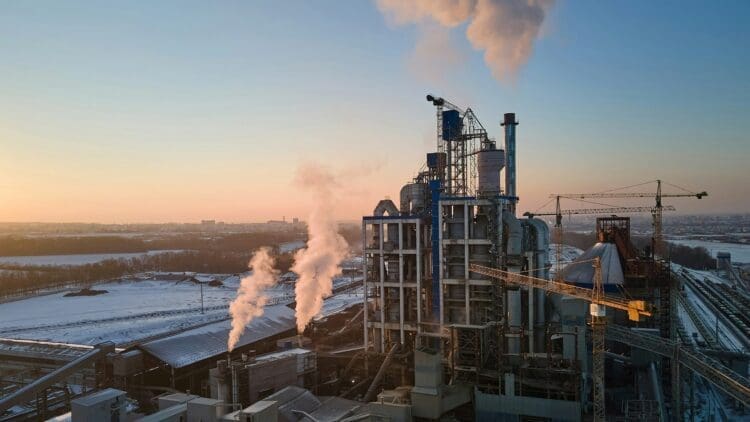
Sinochem’s Quanzhou Petrochemical Company has stated that it is currently preparing to restart operations at the Quanzhou refinery following an extensive maintenance program, as well as a fire that halted operations last year. China is rapidly accelerating measures to diversify the nation’s energy mix, with coal and oil dominating China’s energy output over the past few years. The substantial maintenance program for the Quanzhou refinery took nearly two months to complete.
China is among the growing energy markets that require significant increases in production
China, along with several other high-use energy nations, is expecting a surge in energy demand this year. The vast majority of the nation’s energy is still derived from coal and oil, holding a 61% and 18% stake in the country’s energy mix, respectively.
In 2016, investments in electricity overtook investments in oil and gas for the first time in China. This represented the remarkable expected growth of the Chinese energy market. While the nation mostly still relies on coal and oil production to meet energy demand, the renewable energy market has been growing at an astonishing rate in the second-largest economy in the world.


Despite the gains made in advancing the renewable energy market in China, the coal and oil sector remains the top dog. According to market data, one of every four tons of coal burned around the world is to supply China with energy. China’s government has been pushing to advance the production and use of clean energy, such as gas.
China’s coal sector is relatively immature in the larger scope of things, with the International Energy Agency noting that China’s coal fleet is ten times larger than its gas sector. Despite that, the IEA has noted that China now dominates the global solar market.
“At the prevailing gas prices, new onshore wind and solar photovoltaic (PV) are much cheaper ways to generate electricity than new combined-cycle gas turbines (CCGTs). Under these circumstances, the major contribution of gas-fired generation to displacing coal is likely to be an indirect one, by aiding the integration of renewables. – International Energy Agency
Sinochem has announced the restart of the Quanzhou refinery
Following a two-month maintenance program that saw the Quanzhou refinery halting production, Sinochem has stated that the refinery is nearly ready to restart operations. The Quanzhou refinery mostly produces petrochemical products such as gasoline, diesel, jet fuel, and polypropylene.
The 300,000-bpd Quanzhou refinery was shut down last year to allow for a full-scale maintenance program to take place. Adding to the woes of Sinochem was a substantial fire that took place towards the end of last year. After dealing with the fallout of the fire, which injured up to seven people, Sinochem has noted that the maintenance program has now been completed.
With the growing needs of the Chinese energy market and the advancement of the renewable energy sector in China, the Quanzhou refinery has become extremely important to a nation that saw its GDP decline by 5% last year. With CHN Energy bringing a floating solar operation into reality, the renewable energy sector in China has been growing at a steady rate over the past few decades.
China’s petrochemical sector is set to reach for the stars in 2026
With the International Energy Agency noting that the “speed and scale of the expansion of China’s petrochemical sector dwarfs any historical precedent,” the new Sinochem refinery, as well as the Ningbo Refinery, will add much-needed capacity to the Chinese petrochemical sector in 2026. The reality of the current energy market in 2026 is that nations need to develop a more integrated energy mix that is significantly diversified. Thank goodness for the efforts of companies like Sinochem in attempting to meet an anticipated increase in demand.

