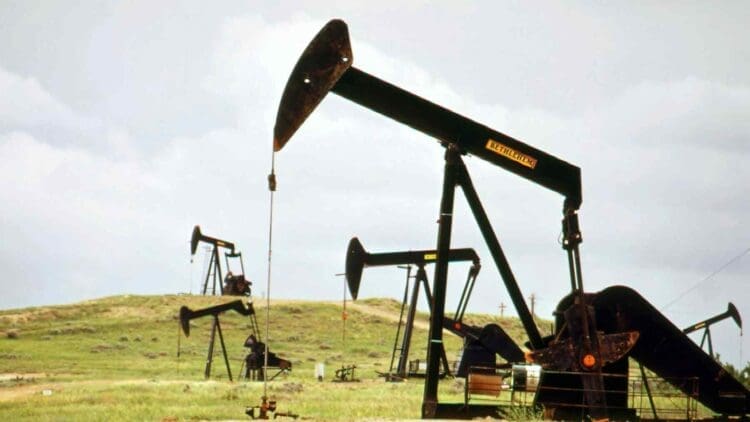

With the new year revealing the upstream growth potential for a plethora of nations, Indonesia is aiming to strengthen its energy sector through eight oil and gas developments, which are slated to begin operations this year. The nation’s energy sector regulator, SKK Migas, has outlined the planned oil and gas projects that are being developed to boost Indonesia’s energy resilience and reverse declining oil and gas production levels in the Southeast Asian nation.
What does 2026 have in store for the Southeast Asian energy industry?
The need to strengthen the output capacity of energy resources in the Southeast Asian market has not been lost on Indonesia and its elected officials. In a move that aims to boost the nation’s capacity for oil production, the President of Indonesia recently formally opened the nation’s Balikpapan oil refinery.
Indonesia is the largest nation in Southeast Asia by geography and population; as such, the country regularly needs to facilitate increases in energy resources production. The archipelagic nation consisting of over 17,000 islands does not have the luxury of wide open expanses which can be used to develop energy projects and a direct result of that is that any new developments require a certain pragmatic approach to the planning and execution phases to pass muster with regulators.


Demand for energy across the Asian market is set to increase over the coming years
One factor that has definitely influenced Indonesia’s energy market is population growth. Every year, the global population increases, and Indonesia has one of the largest populations in the Southeast Asian region. All those people need electricity to power their daily lives, and without the efforts of SKK Migas, the nation may be in peril of not meeting demand.
Will SKK Migas deliver on its eight planned oil and gas projects this year?
For Indonesia, 2026 is set to be a great year as far as oil production goes. According to SKK Migas, several new projects are being developed by a litany of energy companies. One such project is the Sedingin North-1 field production facility, being developed by PT Pertamina Hulu Rokan. The facility is targeting full-scale operations by Q4 of 2026, which will see the project adding 325 barrels of oil per day to Indonesia’s upstream sector.
On the gas condensate side, JOB Pertamina-Medco E&P Tomori Sulawesi is targeting a Q1 2026 commissioning of the Senoro Selatan Phase II project, which aims to produce approximately 110 million standard cubic feet per day of gas, as well as 2,800 barrels of condensate per day. Other planned gas projects are also set to boost the nation’s natural gas production capacity further along the timeline, such as the Tangkulo offshore project.
“The total capital expenditure for these eight projects reaches $478 million. Additional production in 2026 is projected at 8,200 barrels of oil per day and 214 MMSCFD of gas.” – SKK Migas Head Djoko Siswanto
Overall, the upstream sector in Indonesia is growing, with additional gas production capacity in 2026 targeting 214 MMSCFD, while incremental oil production is set at approximately 8,200 barrels per day. Through the eight approved projects that are set to begin full-scale operations in 2026, Indonesia has started the year off on the right foot and is targeting an expansion of its upstream production capacity.
Can SKK Migas ensure the more than half a billion investment is worth it?
While the nation has placed the upstream sector growth plans at the top of the long list of priorities, the reality is that the eight projects that are set to come online this year in Indonesia represent more than half a billion dollars in investments for the nation, and that perhaps the government should consider investing in the renewable energy sector to alleviate some of the energy-producing burden that the upstream sector holds on its exceedingly broad shoulders.