
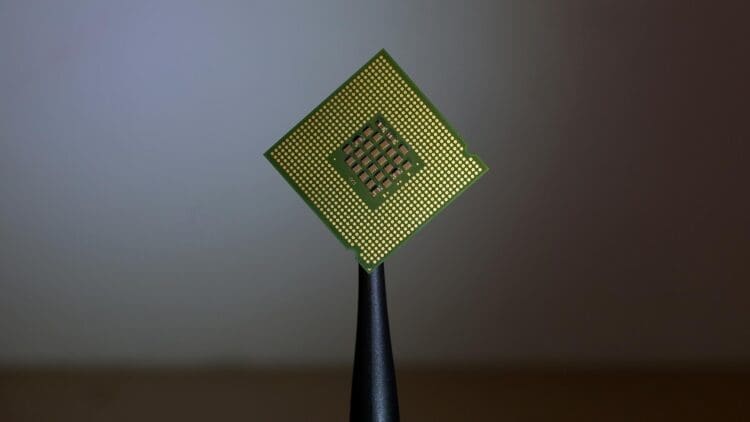
The world has evolved technologically, thanks to fast-paced advancements in high-tech research and production. However, some industries still face challenges in integrating advanced technologies due to high costs and limited resources. Now, this could all change, as the first solar-powered nanobot in the world has been developed by a team from the universities of Pennsylvania and Michigan. This nanobot is smaller than a grain of salt, but its potential is gigantic.
Pennsylvania and Michigan universities’ technological breakthrough
While the world has technologically evolved at an exponential rate, there is still a significant “digital division,” especially in some industries that cannot afford to integrate high-tech solutions into their operations. Furthermore, producing sustainable high-tech solutions is no easy feat, especially in nanotechnology.
Nanotechnology, especially nanorobotics, is vital in our modern society and plays a key role in those same industries that sometimes cannot afford its integration. According to an assistant professor at Electrical and Systems Engineering at Penn Engineering, Marc Miskin,
“Building robots that operate independently at sizes below one millimeter is incredibly difficult. The field has essentially been stuck on this problem for 40 years.”
Fortunately, all of this is about to change. Miskin is a member of a team from the universities of Pennsylvania and Michigan that achieved a significant technological breakthrough in the world of science and robotics.
The first solar-powered nanobot is smaller than a grain of salt
The team created the world’s first solar-powered nanobot. What’s more, these nanobots are reportedly entirely programmable and can operate independently. Miskin, who is also the lead author of the study, stated:
“We’ve made autonomous robots 10,000 times smaller. That opens up an entirely new scale for programmable robots.”
They have a scale of 200 x 300 x 50 micrometers, evidently making them smaller than one grain of salt. This means their operations scale is similar to that of a biological microorganism.
To top it all off, these nanorobots are powered by micro-scale silicon-based solar panels that generate 75 nanowatts of power. Its program instructions were scaled down into highly efficient circuits, which decreased the nanobots’ energy consumption over one thousand times. While this technology may not be feasible for local communities’ solar microgrids, it is tremendously valuable for some industries.
It has tremendous value for these industries
These solar-powered nanobots have unique abilities, including “swimming.” By producing electrical fields, ions in a surrounding solution are moved. The ions move water molecules in turn, which animates the solution around the nanobot. These electrical fields are adjustable, which makes the nanobots able to move in various complex ways for extended periods when powered by LED lights.
Additional benefits:
- Electronic sensors allow them to measure temperatures
- Measurements and/or data are encoded in small dance “wiggles”
- The “wiggles” can be perceived under a microscope to decode signals
- They are individually programmable with light pulses
- They can perform coordinated, multi-tasking processes, memory storage, and sensing activities
- They are cost-effective
Their potential for industries such as healthcare and manufacturing is exponential. In healthcare, they can potentially assist with target drug delivery, early diagnosis, and precision surgery, whereas in manufacturing, they are vital for precision production. For now, as Miskin said:
“This is really just the first chapter.”
You can read more about the team’s first solar-powered nanobots in the scientific journals Proceedings of the National Academy of Sciences and Science Robotics. To conclude, this breakthrough could truly revolutionize the world, as it shows that advancing industries on a micro-scale can be affordable and sustainable. Soon, the world will be covered in robots in all shapes and sizes. In China, triboelectric nanogenerators in hybrid solar cells to produce energy from raindrops are currently being tested.
Disclaimer: Our coverage of events affecting companies is purely informative and descriptive. Under no circumstances does it seek to promote an opinion or create a trend, nor can it be taken as investment advice or a recommendation of any kind.

