
It only takes a spark to get a fire going, and it seems there is already a renewed burning desire.
And no, it does not involve arson whatsoever, but rather a desire to increase access to solar panels.
Germany has embraced the ideal invention to meet this desire, and now, its popularity is growing in three American states.

Could this finally ensure that the world produces clean power more easily?
How access to solar power is not a given yet
Have you ever looked at something and wondered, “How on Earth am I supposed to make that work?”
If that something was a solar panel, then you are not alone. Adding solar power to a business or homestead is not as easy as “one, two, three.”
The typical flat solar panel is the most common design worldwide, yet worldwide adoption is limited.
Physically, these panels are heavy and big, making installation difficult. This already makes them unsuitable for most rooftops and buildings.
Funding is available for large-scale projects. But for those who want to lower their carbon footprints, financing becomes an issue.
Yes, solar panels have become much more affordable, but once labor and maintenance are added, most cannot afford them.
Remote and urban regions share these burdens, which is why solar power is not entirely a given worldwide yet.
Fortunately, unique ways are being explored to address these burdens.
Raising the roof: The rise of solar
Cities struggle to adopt solar power, as installation space is significantly limited.
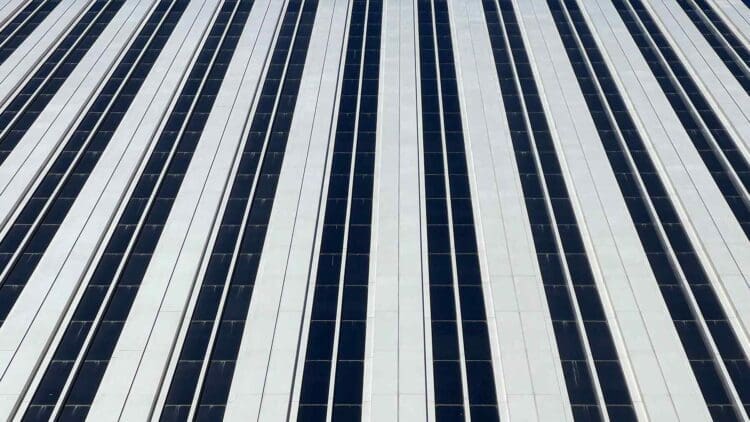
Now, some have been embracing the “invisible solar revolution” known as building-integrated photovoltaics (BIPVs).
BIPVs have solved space and aesthetic issues by making “rainbow” solar glass panels disappear into facades.
Unfortunately, BIPVs are also more ideally suited to newly constructed buildings and skyscraper facades. They will only present more obstacles for people living in apartments or on remote homesteads.
Seattle’s blooming 1.1 kW solar flowers may add an artistic touch while producing power. However, these are more symbolic, raising awareness about sustainability.
So, what else is there?
Fortunately, a certain solar panel design can make access to solar power seem like child’s play. Germany has tried and tested it, and now, it has sparked interest in the U.S.
Could this finally boost solar accessibility?
Plug-in solar that makes power access child’s play
Germany has explored numerous ways of exploiting solar power, all ranging from big to small.
At some point, solar panels weren’t even used, as Germany opted for 2,153 mirrors to generate 1.5 MW of power. In another approach, balconies were turned into power plants.
The invention behind it all?
Plug-in solar panels that produce solar power by hanging from balconies. Hence the nickname, “balcony power plants.” These kits are DIY-friendly, meaning no professional electrician fees.
At the start of 2024, amid Germany’s power crisis, over 50,000 small-scale plug-ins were registered. This raised Germany’s total registrations to over 400,000.
Now, millions of Americans could soon similarly benefit from easy access to solar power.
At the start of 2026, three U.S. states have been working towards introducing plug-in solar legislation. These three states include:
- New York
- Pennsylvania
- Minnesota
New York State senator, Liz Krueger, believes:
“Plug-in solar is a powerful tool to deliver enhanced energy independence and affordability to millions of New Yorkers who are currently shut out of the solar economy.”
It is a small-scale solution that is bound to have a large-scale impact. Whether it is for an apartment in New York or a remote homestead in Minnesota, clean power is always welcome.
Of course, the proper safety standards will have to be met. This includes developing U.S. electrical guidelines for plug-in solar panels.
U.S. solar growth stagnated due to permit issues, so careful implementation is key to boosting accessibility successfully. Is the “balcony revolution” the solution we’ve been waiting for?