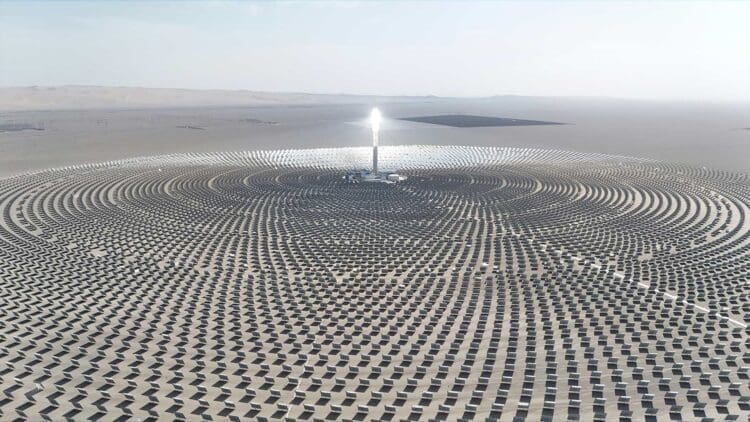

New York is starting one of the largest solar farms in the state’s history, the Cider Solar Farm. This farm will be 3,000 acres, have five hundred megawatts of renewable energy, and one million solar panels. It will be able to power the town of Elba and the village of Oakfield in Genesee County when finished.
This is an important milestone towards New York’s climate goals
According to Greenbacker Capital, Cider Solar Farm is the start of many important milestones toward completing New York’s challenging climate goals. It will allow the state to remain on track to New York’s 2030 goal to have 70% of the state’s electricity come from renewable sources. These large-scale solar farms are becoming the best way to meet these goals.
The farm will be able to provide enough electricity to power 125,000 homes, which will tremendously help to reduce the use of fossil fuels and carbon emissions. New York is becoming one of the leaders in sustainable infrastructure, and the use of solar energy on farms like this will allow it to maintain this leadership role.

The enormity of the Cider Solar Farm demonstrates the market’s need for clean energy sources. The facility will have one million solar panels and will be one of the largest in New York’s Northeast. The farm will also produce energy at a considerable scale and employ hundreds for construction and periodic maintenance.
Maximal solar contact will be achieved through the specific positioning of the panels
The solar farm will also economically benefit the region as well as the local populations through the creation of new jobs and the increased available tax revenue, which will allow for new investments to be made in the local economies.
According to Greenbacker Capital, the Cider Solar Farm complements the independence of the national energy grid and revitalizes economically depressed rural areas.
The farm will also have the positive externality of sequestering hundreds of thousands of metric tons of carbon dioxide each year, the equivalent of removing thousands of cars from the road. It will therefore help to transition the economy to a low-carbon one and mitigate climate change.
The risks of the project: What could go wrong?
While these solar farms do provide a multitude of benefits and are the starting point for greener solar energy in the U.S, these solar farms do not come without challenges. Without a doubt, one of the biggest challenges is land use. These farms take up a lot of land, and in an effort to minimize disruption of the land, including disruption of agriculture and wildlife, developers work with the local authorities to figure out a solution that is suitable for all parties.
Another of these challenges is the requirement of the electrical infrastructure feeding the power to the electrical grid of the state, and the subsequent planning that needs to go into it in order not to adversely impact the electrical grid’s reliability. There is always a risk of the solar energy systems producing energy and not being able to use it all, because of the risk of having the energy banked.
New York is setting an example in the renewable energy sphere
Battery systems are installed to mitigate fluctuations that can occur in solar energy output and ensure a reliable supply. Like Cider Solar Farm, many other solar farms are also the starting point of the use of solar power on a large scale in the U.S, and they are also the beginning of the use of solar power with minimal impact on the economy. The construction of Cider Solar Farm has begun, and with it, New York is starting to show how it can lead other states in the U.S in achieving a high level of sustainability.