
WhiteWater and partners approve construction of Solitude dual-pipeline system to move Permian Basin gas to the Gulf Coast
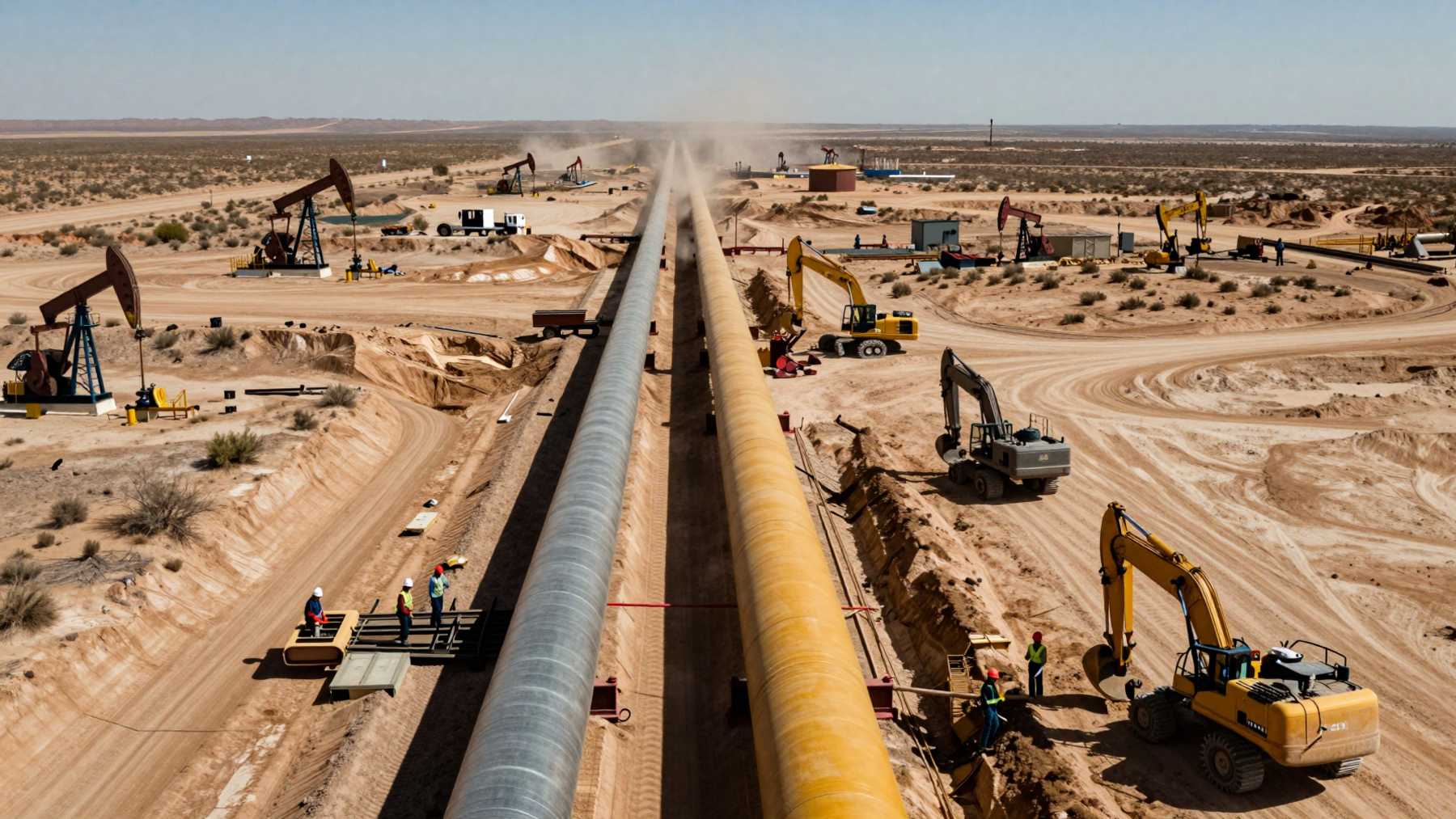
Five energy companies announced Monday they’ve cleared the final investment hurdle to build the Solitude Pipeline System — two parallel 48-inch natural gas pipelines running from the Permian Basin to Katy, Texas. WhiteWater, Devon Energy, MPLX, Diamondback Energy, and Western Midstream Partners made the call public from Austin on August 17, backed by long-term firm transportation agreements with predominantly investment-grade shippers.
Five-company joint venture clears investment hurdle
The Solitude Pipeline System is structured as a formal joint venture. WhiteWater holds the majority stake at 50%, Devon Energy comes in at 25%, MPLX at 10%, and Diamondback Energy and Western Midstream Partners each at 7.5%. That split reflects both financial commitment and strategic interest in locking down long-haul gas transportation out of the Permian.
The FID — announced August 17, 2026 — wasn’t a speculative move. Before pulling the trigger, the joint venture secured substantial long-term firm transportation agreements, predominantly with investment-grade shippers. That structure meaningfully cuts the revenue risk that typically shadows large infrastructure builds of this scale.
In an infrastructure sector where demand forecasts can shift dramatically over a multi-year construction window, that kind of built-in flexibility is a real hedge.
WhiteWater is the operator. The Austin-based infrastructure company already manages multiple gas transmission assets, bringing real operational experience to a project this complex. Two co-investors, I Squared Capital and FIC Partners Management, are participating in WhiteWater’s share — broadening the capital base behind that majority stake considerably.
Why the pipeline is being built: Permian growth and Gulf Coast demand
The Permian Basin is one of the most productive natural gas regions in the country, and output keeps growing. That growth creates a straightforward logistical problem: the gas needs somewhere to go. Existing pipeline infrastructure has periodically struggled to move volumes eastward fast enough.
Gulf Coast demand has been climbing at the same time. LNG export facilities along the Texas and Louisiana coastlines need steady, large-volume supply, and industrial consumers add further pressure on top of that. Rising Permian supply colliding with rising Gulf Coast consumption builds a structural case for more long-haul takeaway capacity — which is exactly what Solitude is designed to address.
The project’s stated purpose is to “support Permian Basin growth and expanding Gulf Coast consumption.” That dual mandate shapes both the routing and the phased capacity design. Rather than locking in a single fixed output level from day one, the system is built to flex with market conditions as they develop.
Pipeline specifications and phased capacity rollout
The physical build is two parallel 48-inch natural gas pipelines, both running the same route from the Permian Basin to Katy, Texas — a major hub serving as a pricing and distribution point for the broader Gulf Coast market. Running two large-diameter lines in parallel rather than a single larger pipe gives the project operational redundancy and meaningful phasing flexibility.
Initial capacity targets approximately 2.25 billion cubic feet per day (Bcf/d), with the first phase expected online in late 2029. A second tranche of 2.25 Bcf/d is planned for 2030, bringing total designed capacity to 4.5 Bcf/d. The system can expand further if shipper demand warrants it.
Capacity commissioning can be accelerated or deferred depending on how market conditions evolve — a deliberate design choice. In an infrastructure sector where demand forecasts can shift dramatically over a multi-year construction window, that kind of built-in flexibility is a real hedge.
Timeline, regulatory path, and ownership structure
The system is expected to enter service in the second half of 2029, subject to customary regulatory and other approvals. Large interstate natural gas pipelines typically require Federal Energy Regulatory Commission (FERC) authorization along with various state and local permits. The regulatory process can influence both timing and final route details, though the partners haven’t flagged any anticipated obstacles at this stage.
Ownership breaks down as follows: WhiteWater at 50.0%, Devon Energy at 25.0%, MPLX at 10.0%, and Diamondback Energy and Western Midstream Partners each at 7.5%. Within WhiteWater’s 50%, I Squared Capital and FIC Partners Management hold co-investment positions — a detail that matters for understanding how capital and governance weight are actually distributed.
I Squared Capital describes itself as a global infrastructure investor managing over $60 billion in assets. FIC Partners Management focuses on critical infrastructure across energy and power value chains, including gas transmission, power, utilities, and renewables. Their participation suggests that institutional infrastructure capital views Solitude as a credible long-term asset rather than a speculative bet.
Key takeaways
The Solitude Pipeline System represents a significant capital commitment by five established energy companies to close a real and growing gap between Permian Basin gas production and Gulf Coast consumption. The FID is backed by long-term, investment-grade transportation agreements — a structure that reduces speculative risk and points to genuine shipper demand already in place.
Construction will produce two 48-inch pipelines capable of carrying up to 4.5 Bcf/d once both phases are complete. The first 2.25 Bcf/d phase targets late 2029; the second follows in 2030. WhiteWater, as majority owner and operator, leads the project out of Austin. Regulatory approvals remain a pending step before that in-service date gets confirmed.

Carlos is an engineer with strong expertise in technical and industrial topics. He previously worked at international companies such as Siemens and is multilingual.
