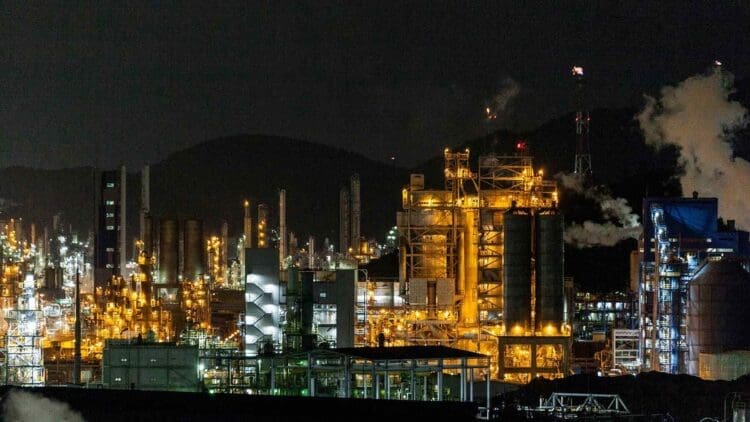

A quiet partnership between the Marathon Petroleum refinery in St. Paul Park and area schools has started to gain attention. On the surface, it is just another example of a company partnering with schools; however, the partnership shows a much larger effort by the refinery to expose students to a variety of real-world career options, including, but not limited to, those related to the energy field, skilled trades, and industry.
A normal partnership until you see the level of student engagement involved
During Fall 2025, the St. Paul Park refinery continued its partnership with Humboldt High School and added some new elements to the partnership, which included the addition of mentorship, career exposure, and hands-on learning. The refinery participated in BestPrep’s eMentors program, and 20 refinery employees were matched with 20 students for eight weeks. The two groups communicated via email during the eight weeks.
The refinery employees (mentors) met with the students once a week and discussed various topics, including their career interests, communication skills, and what they should expect in terms of employment.


This gave the students the ability to learn about multiple career options and receive guidance from professionals in the industry they are interested in. In the middle of the eight-week program, the students had the chance to visit the refinery, meet their mentors in person, and experience the real world of working in the energy field.
Training experience to change the lives and perceptions of students
The hands-on training experience will allow the students to recognize the benefits of pursuing a career in a technical or industrial setting
In addition to the mentoring aspect of the partnership, the refinery also welcomed Humboldt High School’s welding students back to the refinery for the second time and hosted them on-site for a day of learning about skilled-trade careers. While at the refinery, the students took a tour of the maintenance shop and observed demonstrations of welding, electrical work, instrumentation, rotating equipment, and heavy-equipment operation.
Refinery employees stressed the importance of safety and the accuracy required in each job when explaining to the students what types of jobs are available within an industrial facility. The staff members supporting the tour stated that the students showed a great deal of enthusiasm for the various aspects of the refinery, and that it could lead to students becoming more interested in the many available skilled-trade careers.
The refinery’s efforts are in line with the overall mission of Humboldt High School to increase students’ awareness of career options and show students how the skills they obtain in academics relate to actual, real-world job opportunities.
What this partnership suggests about regional workforce development
The company’s efforts demonstrate an increasing need for solid partnerships among schools and industry, particularly within areas of the country where both energy and skilled trade careers remain prominent. In addition to giving students an understanding of what work in an industrial setting is like, these types of programs may assist in building a future workforce that is better equipped to meet employers’ needs; they also allow employers to be active participants in developing their community.
Students who have had these early experiences will typically gain a better understanding of their own career aspirations, the specific skills necessary to achieve them, and the confidence required to excel in areas such as communication, teamwork, and problem-solving.
The partnership provides a means to develop local talent and build relationships with the community
The Marathon Petroleum St. Paul Park refinery has created a partnership with local students to help students become aware of various skilled and industrial careers by using mentoring and hands-on training. As more students interact with refinery employees and the real-world technical environment of the refinery, it raises additional questions regarding how early career exposure can impact the region’s future workforce.