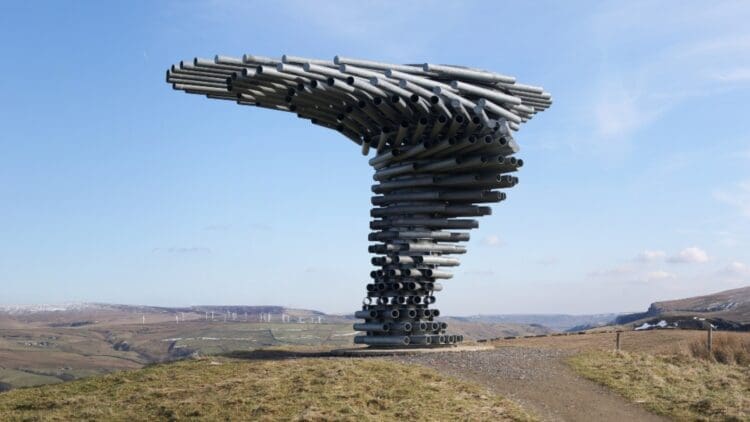

At first glance, it looks like a mistake. A wind turbine that doesn’t spin like it should. No blades slicing through the air. No cables carrying electricity away.
And yet, people keep stopping, listening, and coming back. Because this turbine does something no one expects. It doesn’t power homes. It doesn’t feed the grid. Instead, it turns wind into something far less practical — and strangely unforgettable.
When wind stops being about electricity
Wind power usually has one clear goal: produce energy. Big towers, spinning blades, clean electricity flowing into the grid. Simple.
But not everyone connects with that idea. For some, turbines feel noisy, intrusive, or out of place. Over time, engineers and designers noticed something important. Resistance often comes from emotion, not logic. People don’t reject wind because they misunderstand it — they reject how it feels in the landscape.

Explaining numbers rarely changes that feeling.
Turning a problem into curiosity
The creators behind this project decided to try a different path. Instead of asking people to accept wind energy, they asked: what if wind could be experienced first?
Rather than hiding wind behind technology, this design puts it on display. The wind becomes something you can hear, sense, and remember. No instructions. No explanation panels. Just an experience.
Curiosity slowly replaces skepticism. People stop seeing wind as a problem and start seeing it as part of the place.
This is where the story becomes real
The structure stands on a hill near Burnley, England, and it’s called the Singing Ringing Tree. It was created as part of a community art and architecture project, not an energy program.
The sculpture looks like a metal tree twisted by years of strong wind. It’s built from steel pipes, carefully arranged to catch air from many directions. When wind flows through them, the pipes vibrate and create haunting, organ-like sounds that change constantly.
There’s no button to press. No schedule. The wind decides everything.
Why this “turbine” matters more than it seems
The Singing Ringing Tree doesn’t generate electricity, but it generates attention and emotion.
Visitors don’t debate efficiency. They stand still. They listen. They look across the hills. The sculpture doesn’t fight the landscape — it becomes part of it. In doing so, it quietly solves one of wind energy’s biggest problems: acceptance.
People are far less likely to oppose something they feel connected to.
A strange idea with a bigger message
This project shows that renewable energy isn’t only about output. It’s also about trust, aesthetics, and how technology lives among people.
The Singing Ringing Tree won’t replace wind farms. But it offers a powerful lesson. If technology respects its surroundings, people may respect it too.
It shouldn’t even work.
And yet it does — not by making electricity, but by changing how people listen to the wind.