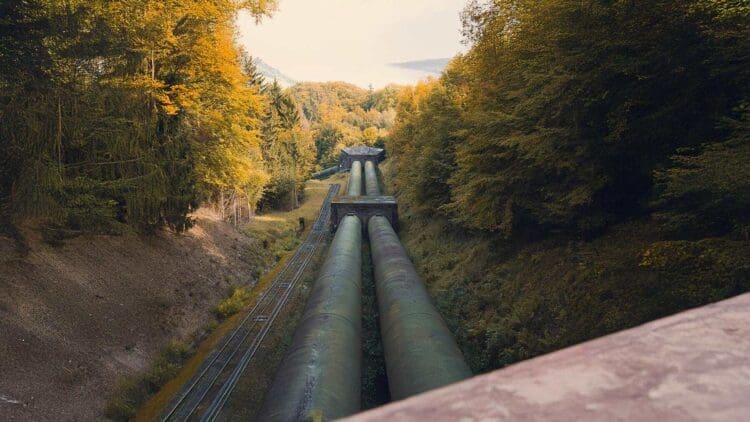

Pipeline capacity typically appears linear on maps; the true economic value of a pipeline is based on those who commit to utilizing it. Producers and investors have quietly watched the Double E Pipeline, which has suggested that there is some sort of underlying movement occurring below the level of constant flow. Recent developments seem to show that the overall picture will soon be clearer, even if we do not see clarity right away.
A pipeline built for growth, that finds itself trying to find its rhythm
The Double E Pipeline was built to provide more than just another delivery method for Permian natural gas. With the ability to deliver into major downstream markets, the Double E Pipeline represents a long-term commitment to continued production and consumption levels as opposed to just delivering high volume rates for a short period. However, similar to most large-scale infrastructure development projects, early usage of the Double E Pipeline has occurred in stages rather than an immediate payoff.
Summit Midstream has continually referred to the Double E as a strategic asset that has room to continue growing towards full capacity. This reference is extremely important today as producers begin to focus on where they choose to allocate their volumes, while taking into account the cost associated with having a takeaway option, along with their long-term access to a market and certainty of supply.


Therefore, the history of the pipeline has had less to do with engineering and more to do with timing and commercial alignment.
Why utilization matters now more than previously
In Summit’s recent quarterly and yearly earnings release, the company highlighted several significant additions to the number of shippers that have entered into agreements for transportation on the Double E Pipeline.
In essence, Summit has made considerable progress in building momentum toward achieving greater levels of usage of the pipeline. These are not temporary or one-time contracts, but instead represent contractual obligations that create stable volumes and help mitigate exposure to volatile fluctuations within commodity markets.
It is essential to understand the larger context of why this shift is happening
Gas production in the Permian continues to increase, as does demand downstream – primarily driven by increasing demand for liquefied natural gas (LNG) exports and electric generation — by tens of millions of cubic feet per day. Therefore, marginal improvements in utilization rates are not simply operating achievements; they contribute significantly to enhanced revenue and cash flow stability for investors.
By adding new contracts to the prior agreements already established, Summit Midstream is systematically closing the gap between available capacity and contracted volume. Over time, relatively small percentage point changes can substantially enhance the economic viability of the pipeline, all the more so when coupled with prudent capital management across the rest of the company’s portfolio.
What these new agreements mean for the near-term and long-term outlook for Double E
The new shipping agreements essentially respond to one of the primary questions regarding Double E — i.e., whether or not the pipeline would remain grossly underutilized beyond what was anticipated.
While Summit has clearly stated this is not necessarily a turning point regarding increased usage of Double E, it should be noted that it is implied that the pipeline is nearing its intended role as a primary takeaway solution versus being merely an alternative.
From a practical standpoint, greater utilization creates a stronger financial profile for Summit by providing greater visibility and predictability. Furthermore, the higher utilization demonstrates Double E’s continued importance as competition amongst Permian takeaway solutions grows. Instead of competing for spot shipments, the company establishing a more contractually secure base case. The progress illustrates how midstream values are developed quietly and incrementally — agreement by agreement — versus through sudden peaks.