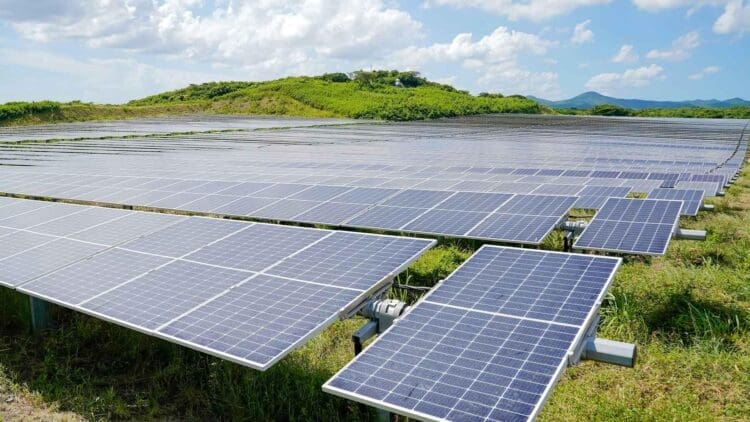

The energy industry is evolving so much that applying conventional strategies for energy generation would be ineffective in the current era. Although some purists may desire to remain committed to a certain way of generating energy, this is not beneficial in the energy industry. One of the strategies that is becoming increasingly utilized globally is the combination of solar energy generation and storage facilities. Take, for instance, Sunraycer, which has initiated the construction of a large-scale Texas hybrid solar and storage development exceeding 600 MW.
Texas maintains momentum in increasing its total solar energy capacity
One of the unmissable trends in the 2026 United States energy landscape is the great commitment shown by the government to diversify the energy sources of each state. The desire to reach this achievement is fueled by the longstanding intermittency issues that have affected large-scale energy facilities worldwide.
Sunraycer Renewables is a U.S.-based renewable energy development and acquisition platform that is specifically focused on utility-scale solar and battery energy storage (BESS). When it was founded, the objective was to accelerate the energy transition toward clean energy generation.


Now, Sunraycer Renewables has officially launched construction on a major hybrid solar and battery storage portfolio in Northeast Texas, reflecting yet another significant milestone in the U.S. clean energy transition. The development is over 600 MW in solar capacity and combines large-scale photovoltaic generation with integrated battery energy storage systems.
Delving deeper into the features of Sunraycer Renewables’ latest solar energy facility
The United States is in a position where every project pursued has to have a huge impact in the grand scheme of things or in the bigger picture. This particular project is positioned to enhance grid reliability and meet rising electricity demand.
At the heart of the development are three intertwined projects that are, namely: the Lupinus I & II Solar and Battery Energy Storage System (BESS) facilities in Hagansport, and the Eagle Springs Solar & BESS project in Lake Creek. In total, they will deliver more than 620 MWdc of solar generation and over 475 MWh of battery storage capacity.
The Lupinus projects will be responsible for generating the greater amount of the total output, as it will provide roughly 520 MWdc of solar power paired with 411 MWh of storage. On the other hand, Eagle Springs will bring 100 MWdc of solar capacity and 66 MWh of battery storage.
The importance of the hybrid strategy and the reason for its growing relevance is that it allows the facilities to store excess solar energy and dispatch it during periods of high demand, improving overall grid stability. Energy facilities have long been experiencing and looking for a solution to intermittency issues, which makes combined facilities beneficial.
A deeper analysis of the construction and potential timeline of the project
The construction process has already commenced at the Eagle Springs site, with commercial operations projected to start by late 2026. The groundbreaking procedure for the bigger Lupinus I & II facilities is slated for 2026, with full completion expected in early 2028. There are many departments and entities involved in the materialization of a large-scale facility.
In this particular initiative, the engineering, procurement, and construction responsibilities have been awarded to McCarthy Building Companies. This is a firm that has earned its position as it has extensive experience in building utility-scale energy infrastructure.
Unpacking the economic impacts of the Texas hybrid solar and storage facility
The project is expected to provide a wide range of economic benefits to Northeast Texas communities. For instance, construction is anticipated to create more than 200 local jobs and regional economic growth. It is good to witness that Sunraycer and its collaborators are focusing on local hiring and sourcing.
As the demand for clean energy continues to soar in Texas, projects like this will play a pivotal role in providing reliable power while eliminating carbon emissions. For the U.S., this is yet another display of dedication to clean energy generation.