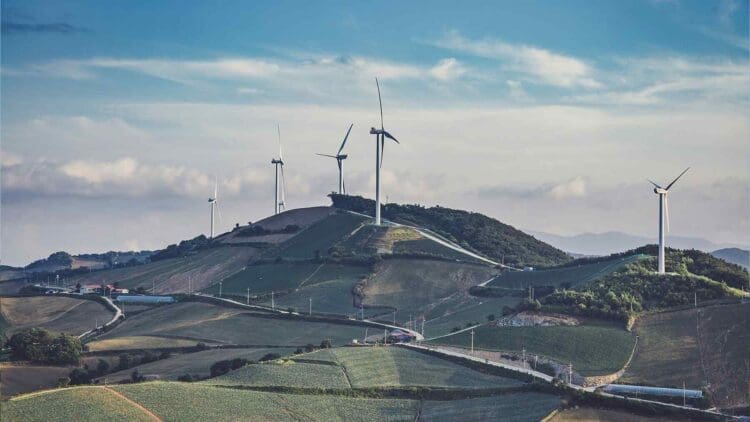

Wind energy initiatives in the United States are beginning to pick up some steam after the restrictions that emerged following the Trump administration’s return to power. In that timespan, when the U.S. was going through court cases, the European continent was displaying a great deal of solidarity to establish groundbreaking facilities. SunZia wind development in New Mexico sent shockwaves through the industry after awarding a turbine supply contract to GE Vernova.
New Mexico moves one step closer to receiving the SunZia wind development
When the suspension of wind energy facilities began in late 2025, it would have been difficult to imagine that there would be major facilities coming up in the United States early in 2026. The U.S. is still the second-ranked wind energy-generating nation in the entire world, and it has managed to keep this position by developing advanced facilities with an extensive lifespan.
In continuation of this approach, the SunZia wind development in New Mexico is also very massive. As a result, the general population residing in that area is excited as to what it can bring to them now and in the future. The project, which has been in the works for several years, has now made significant progress after GE Vernova was awarded a turbine supply and services contract.
Simply put, this means GE Vernova will have the responsibility of delivering hundreds of onshore wind turbines for one of the largest renewable energy projects ever built in the Western Hemisphere. Developed by Pattern Energy, there are high hopes surrounding the SunZia project as it is expected to transform the renewable energy landscape in the United States.
GE Vernova takes center stage after securing a record turbine supply contract
GE Vernova is experiencing an incredible amount of momentum in 2026 after its involvement in different initiatives. For instance, the company was the center of attention after IVPC Group selected its turbines for the 100+ MW Fortore wind project in Italy. The energy industry is interesting in that once there’s a new technology utilized by a single nation, others will be after it as it is the top-notch equipment.
As a result, the company, which is known for delivering that specific technology, will find itself involved in many initiatives, which has been the case for GE Vernova. The SunZia Wind development will feature a large fleet of turbines supplied by GE Vernova, which signed a paramount equipment and long-term services agreement with Pattern Energy.
According to the agreement, GE Vernova will provide 674 of its 3.6-154 onshore wind turbines. These are capable of generating more than 2.4 gigawatts (GW) of electricity. Ultimately, this reflects the largest single onshore wind turbine order ever received by GE Vernova, in terms of the number of turbines and the overall generating capacity involved.
A detailed analysis of GE Vernova’s monumental wind turbines
GE Vernova can expect to have a very active year because it possesses turbines that most companies and countries will want to have in their projects. The turbines are owned by the company’s workhorse platform, designed to balance power output with efficient logistics and construction requirements.
Each unit produces 3.6 MW of power and uses a rotor with a diameter of 154 meters. These specifications give it the ability to capture more wind energy while maintaining reliability. After signing the turbine supply contract, GE Vernova has solidified its position in the North American renewable energy market.
How is the SunZia wind development expected to transform the wind energy landscape?
There are very high expectations surrounding the development, which all point toward it being the cornerstone of modern wind energy facilities. The SunZia Wind project is located across Torrance, Lincoln, and San Miguel counties in New Mexico.
According to reports, it is expected to become the largest wind energy project in the Western Hemisphere when completed.
The United States can be excited for what’s to come in the wind energy landscape. This project will reach a total capacity of approximately 3.5 GW, which is enough to power millions of homes.