
Supertanker earnings on Middle East-to-China crude route hit $510,000 a day, a two-month high
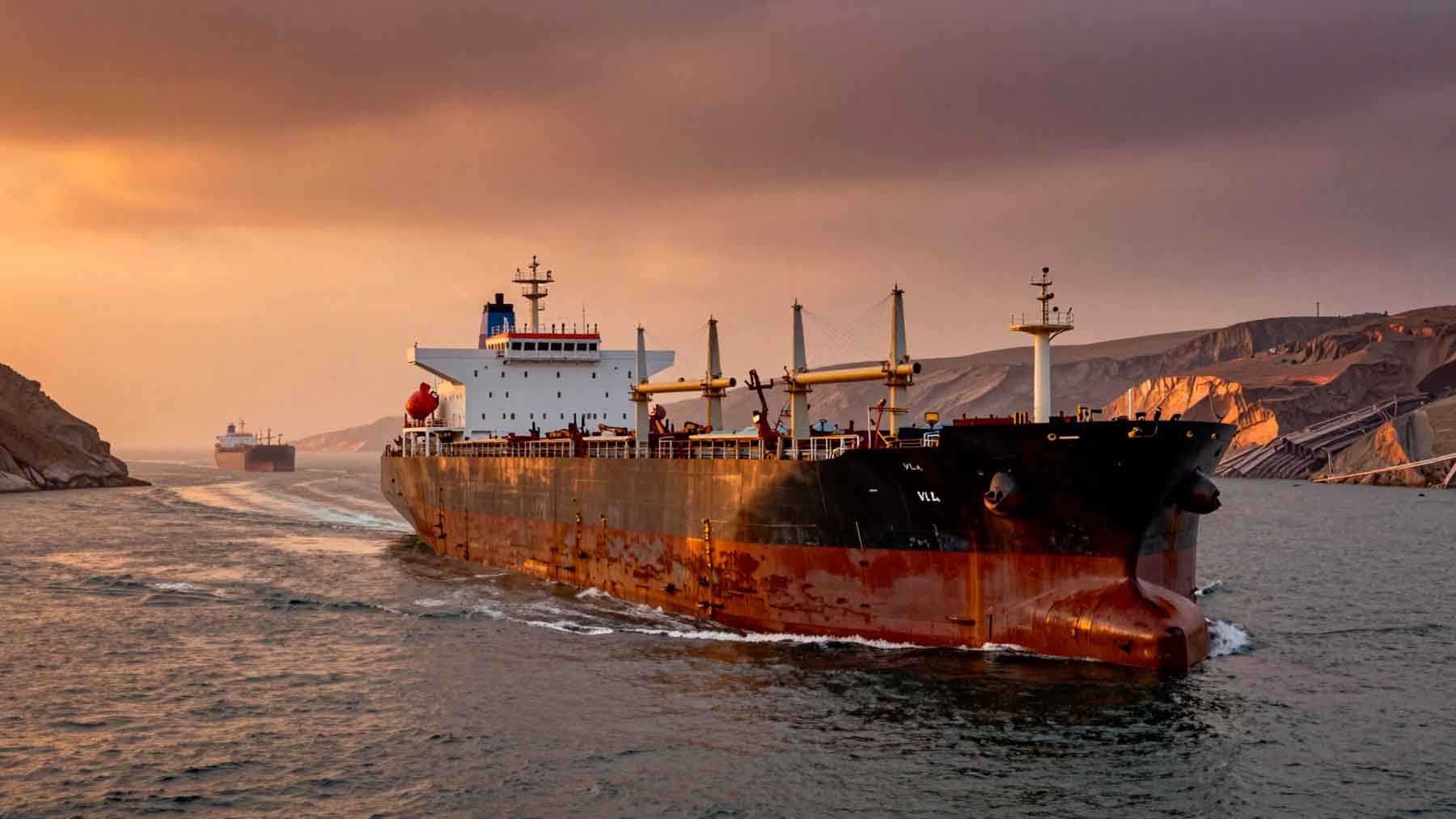 Image generated with artificial intelligence
Supertanker earnings on the Persian Gulf-to-China route hit nearly $510,000 a day recently—the highest since late June—according to Baltic Exchange data. Persian Gulf exporters are scrambling to lock in vessels willing to transit the Strait of Hormuz, even as the security situation along that chokepoint stays deeply unresolved.
Earnings spike to two-month high
Baltic Exchange data puts assessed earnings for the Middle East-to-China supertanker route at nearly $510,000 per day on Monday. That’s the highest reading since late June 2026—itself a product of crisis conditions in the strait.
Individual deals are adding texture to that benchmark move. The VLCC Mongolia Prosperity, operated by South Korean shipowner Sinokor Group, was booked at $31 million for a single voyage—570 Worldscale points—to lift crude from an unnamed Persian Gulf port on August 21. One trip. Thirty-one million dollars.
The jump is driven by Persian Gulf exporters, including Saudi Arabia and Iraq, scrambling to secure vessels for prompt crude deliveries through the Strait of Hormuz.
Baltic Exchange benchmarks reflect broader market trades and pricing trends, so whether the Mongolia Prosperity fixture directly drove Monday’s assessed rate isn’t confirmed. But both data points tell the same story: rates are climbing fast, and individual deals are being struck at premium levels.
Gulf exporters compete for scarce vessel capacity
Persian Gulf exporters are actively hunting for vessels willing to transit Hormuz, and competition for available tonnage is getting intense. This isn’t happening in isolation.
Saudi Arabia is offering prompt crude deliveries to Asian buyers from within the Persian Gulf. Iraq is leaning on Abu Dhabi National Oil Co.—already a major crude trader—to help move its barrels through the strait. ADNOC has built the infrastructure and relationships for exactly that purpose, sometimes working with Sinokor to get cargoes out.
Sinokor keeps showing up in this market for a reason. The South Korean shipowner has made itself one of the few operators consistently willing and able to handle these transits, and that experience gives it real leverage when charterers need barrels moved fast.
Several supertankers have also been privately booked in recent days, disappearing from available tonnage lists with no public disclosure of whether a deal was actually struck. Shipbrokers notice the pattern but can’t always confirm the details. That opacity makes this market genuinely hard to read.
Expired US-Iran ceasefire adds pressure on shipping
Monday’s rate spike isn’t a coincidence. A 60-day ceasefire between Iran and the United States expired, with no new agreement in place and no known plans between Tehran and Washington to resolve their competing claims over Hormuz.
Throughout the conflict, both sides have asserted authority over maritime traffic through the strait—a standoff that’s had a direct, chilling effect on shipping. Most tanker operators won’t take the risk. Only those with high risk tolerance, or prior experience on dangerous transits, are currently willing to accept crude loadings from within the Persian Gulf.
War-risk insurance premiums reflect that reality, currently sitting at about high single-digit percentages of a vessel’s hull value. Under recent fixture terms, charterers—not shipowners—absorb that cost. It’s a substantial added expense on top of already elevated freight rates.
The last time earnings hit this level was late June, when Iran resumed striking ships in the strait. That pushed rates to a peak before conditions temporarily stabilized. Now, with the ceasefire gone and no replacement framework in sight, the market is pricing in renewed uncertainty.
Limited transparency complicates rate benchmarking
One underappreciated challenge right now: there’s not much reliable data. Most booking activity on the Hormuz route is happening privately, fixtures aren’t being publicly disclosed, and ships are vanishing from tonnage lists without explanation.
That matters because the Baltic Exchange benchmark—the primary tool analysts and traders use to track supertanker earnings—depends on observable market activity. When deals go dark, figuring out where rates actually stand gets harder. Shipbrokers acknowledge the problem, and their own visibility is limited.
The market structure here also concentrates pricing power in a small number of hands. Exporter-controlled vessels and a handful of tanker owners—Sinokor prominent among them—dominate available capacity, giving them serious leverage in rate negotiations, especially when charterers are under time pressure to secure prompt loadings.
Iran’s resumption of attacks on ships transiting the strait in late June was the event that pushed earnings to their previous high. It also accelerated the retreat of mainstream tonnage from the route, leaving the field to operators willing to stay. That dynamic hasn’t changed—if anything, it’s tightened since the ceasefire lapsed.
Limiting transparency, making benchmark assessments difficult
Supertanker earnings on the Middle East-to-China route reached nearly $510,000 per day on Monday—the highest since late June 2026. The jump is driven by Persian Gulf exporters, including Saudi Arabia and Iraq, scrambling to secure vessels for prompt crude deliveries through the Strait of Hormuz. A 60-day US-Iran ceasefire in August with no replacement deal, leaving the security situation unresolved and war-risk insurance premiums at high single-digit percentages of hull value. Most booking activity is happening privately, limiting market transparency and making benchmark assessments increasingly difficult. A small group of risk-tolerant shipowners, led by operators like Sinokor, currently controls most of the available capacity on the route.
Kelly is an experienced writer with 15 years of experience exploring the big stories that shape our world, from tech breakthroughs and space exploration to climate, energy, and the fascinating quirks of science. She has a talent for turning complex ideas into sharp, memorable insights that stay with readers long after they’ve finished reading.
