
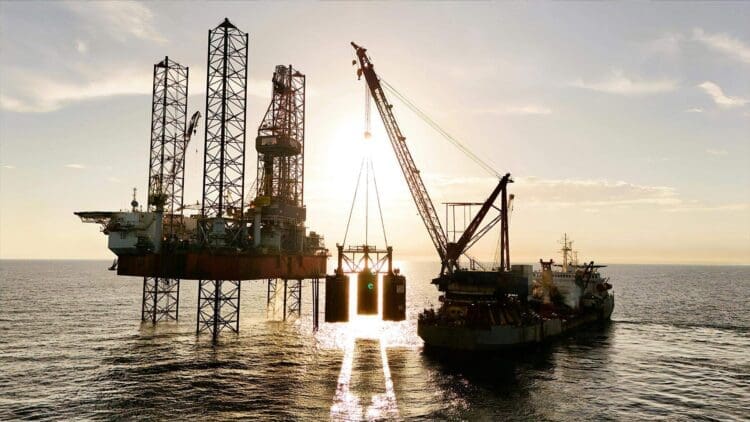
Suriname, a tiny South American nation with exceedingly big ambitions for oil production, has further dredged the Suriname River to allow for increased transportation levels of essential hydrocarbons. The decision by the government comes as the nation outlines a new strategic expansion of its oil refining sector to become the latest and most promising oil development in South America, aside from the obvious situation unfolding in Venezuela, of course.
Can a tiny nation expand its output capacity and become a major oil player
For a nation as small as Suriname, the river that runs through the nation has become of extreme strategic importance for the country’s economy. The Suriname River is a 300-mile-long stretch of water that has become a major economic driver for the nation, with its access points for not only the energy industry but for the tourism sector as well.
As crude oil production ramps up in Suriname’s neighbor, Guyana, Suriname has recently outlined a planned expansion of energy operations to transform the nation into a major oil producer on the South American continent.



Nearly 30 years ago, the U.S. Geological Survey found that the estimated underexplored regions of the Suriname-Guyana Basin held 13.6 billion barrels of oil and 32 trillion cubic feet (Tcf) of gas, just waiting for the right company and opportunity to transform the region into a major player in the global oil market.
The Surinamese government has made significant strides in increasing its output capacity for oil and gas through several agreements and deals with some of the largest and most experienced energy majors in the world, such as QatarEnergy and TotalEnergies. A few years ago, Suriname’s president announced a new strategy that allows all citizens to benefit from the nation’s booming oil and gas industry.
“Everyone shall benefit from this opportunity and no one will be left behind. You are co-owners of the oil incomes.” – Suriname President Chan Santokhi
A growing industry or a bubble set to burst in 2026 as new oil production reveals itself
As Suriname’s expansion of its oil and gas sectors gains momentum, the government has now revealed its plans to further dredge the Suriname River to allow for higher levels of energy transportation to meet increased demand.
The nation’s Public Works Ministry recently filed a final report on the environmental monitoring and management plan to further dredge the Suriname River. The ministry noted that the country’s namesake waterway is the main shipping route and access point to the Atlantic Ocean.
The expansion plan covers 55 miles from the river’s outer bank and involves widening the channel to 90 meters from the 70 it is at the moment. The government has noted that it plans to remove approximately 10Mm³ of sediment from the river, allowing for more commercial transport to pass through the nation.
As energy companies prepare to handle a wave of heavy crude from Venezuela, Suriname is hoping to become the latest player in the South American oil sector in the near future.
“It is expected that the further development of offshore oil and gas activities will inevitably lead to an increase in shipping traffic towards the Suriname river, partly because the country’s main ports, including the port of Paramaribo, the port of Paranam, and various private terminals and shore bases, are all located along this river,” – Suriname Public Works Ministry
Can the new Suriname oil opportunity attract the global energy majors?
That would be the intention, according to the government. Petronas, an energy major from Malaysia, has targeted a final investment decision on the Suriname floating LNG project, exemplifying the nation’s potential to become a major and strategic player in the global energy market this year. With the new dredging activities planned for the Suriname River, the tiny South American nation is targeting a new era of increased oil and gas production.

