
In Lockhart, Texas, a reactor the size of a swimming pool went critical at 15 megawatts eleven months after groundbreaking, and it stands as the fastest private nuclear build on record
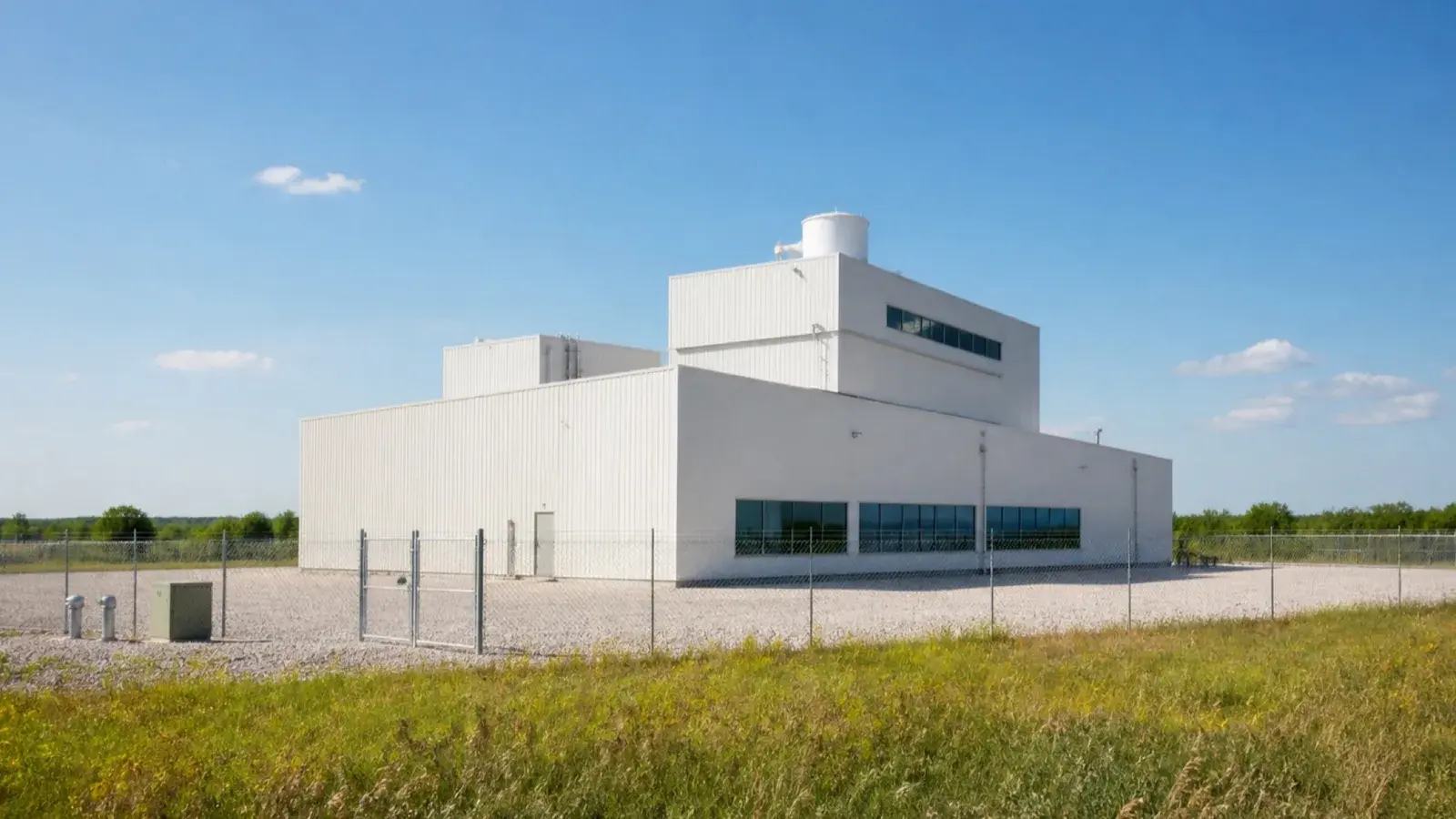
A reactor no bigger than a backyard swimming pool went live on scrubland outside a small Texas town last August.
Inside its steel lined basin, water glowed the faint blue that physicists call Cherenkov light.
That glow meant something precise had just happened.
Operators approach it by slowly withdrawing control rods, the neutron absorbing blades that keep the core quiet, while instruments watch the count rate climb.
Splitting atoms inside the pool had crossed into a self sustaining chain reaction.
Engineers call that moment first criticality, the real birthday of any reactor.
So what exactly has to line up inside that pool for the reaction to hold steady?
What actually happens when a reactor goes critical
Criticality is not a switch that turns a reactor fully on. It is the point where split uranium atoms sustain their own reaction without dying out or multiplying out of control, a balance engineers call k effective equaling exactly one.
Operators approach it by slowly withdrawing control rods, the neutron absorbing blades that keep the core quiet, while instruments watch the count rate climb. At Groves, that climb happened inside a pool type, water cooled reactor running at a modest 15 megawatts of thermal power, a fraction of a commercial plant’s output.
The water does two jobs at once. It slows fast neutrons so they split more uranium efficiently, and it carries heat away from the fuel, which is why the blue glow was never decoration, just the visible signature of particles moving through water faster than light travels in that medium.
A reactor built in under a year on a patch of private land
The facility sits near Lockhart, in Caldwell County, on a site tied to a planned development of prototype buildings and construction demonstrations. The privately financed reactor, built on a greenfield site, is meant to demonstrate reactor design, construction, startup and operations in support of future isotope production facilities.
There was no existing containment and no inherited infrastructure here, just bare ground roughly eleven months earlier. That timeline is the headline inside the headline.
The company announced its Groves Isotope Test Reactor achieved first criticality less than a year after groundbreaking, making it the first project under the Department of Energy’s Reactor Pilot Program to reach criticality on private land. Company leadership has called it the fastest privately funded reactor build on record, a claim that matters because speed has been the industry’s chronic weakness.
Commercial reactors routinely take a decade or more from permit to startup. A pool reactor is not a power plant, but building, licensing and fueling one in under a year on raw land is a different kind of proof, the sort of validation effort that echoes how a New Mexico enrichment plant proved itself cascade by cascade.
The moment itself, measured to the minute
Unlike a forecast or a target date, this is a milestone regulators and the company both logged precisely. The low power test reactor reached criticality at 9:19 p.m. Eastern time on August 5, achieving a controlled chain reaction. Federal officials confirmed the same timestamp independently through the Department of Energy’s oversight of the authorization.
The achievement made Groves the fifth reactor to reach criticality this year under a federal pilot program meant to accelerate advanced reactor testing, following three other test units built on federal land in Idaho and Utah. Those three took federal real estate and existing infrastructure as a head start. Groves had neither.
Jacob DeWitte, the company’s cofounder and chief executive, called it a defining proof point for the team. “Reaching criticality in less than a year is an incredible milestone for our team,” he said, noting the company developed the reactor from a greenfield site and manufactured or procured all components, including fuel, internally.
Why a 100 watt test reactor matters more than its size suggests
Groves will never power a home. The Department of Energy describes the reactor as designed to work at thermal power up to 100 watts, meaning the project is focused on testing, training and isotope production rather than electricity generation.
That low ceiling is deliberate. A test reactor this small lets engineers validate fuel handling, safety systems and operating procedures before scaling up.
Even so, the ambitions riding on it are large. Federal documentation, laid out on the Reactor Pilot Program page, says future development tied to the project could eventually produce more than 40 high value radioisotopes for medical, industrial, space, defense and research applications, isotopes that currently come largely from aging reactors overseas, not unlike the dependence tied to medical cobalt sourced from a handful of working reactors.
What still has to be proven before the real payoff
None of this guarantees the commercial platform the company is actually selling will run on schedule. Groves is a test reactor for isotopes, not the company’s commercial power business.
Its flagship powerhouse project meant to validate that platform is not targeted to start up until 2028, and a first phase meant to supply data center demand is not expected until early 2030. A 100 watt pool reactor and a full scale power plant are very different engineering problems.
Even critics of the broader push toward advanced reactors concede the basic physics checks out here. The open question is economics and licensing durability, and whether isotope demand materializes at the scale projected. Groves answers the construction question, not yet the market one, but for a program measured in months rather than decades, a glowing pool of water outside a small Texas town is a concrete place to start counting from.
Hugo is an engineer with strong technical expertise. Multilingual from an early age, his writing combines technical clarity with a strong interest in science and energy.
