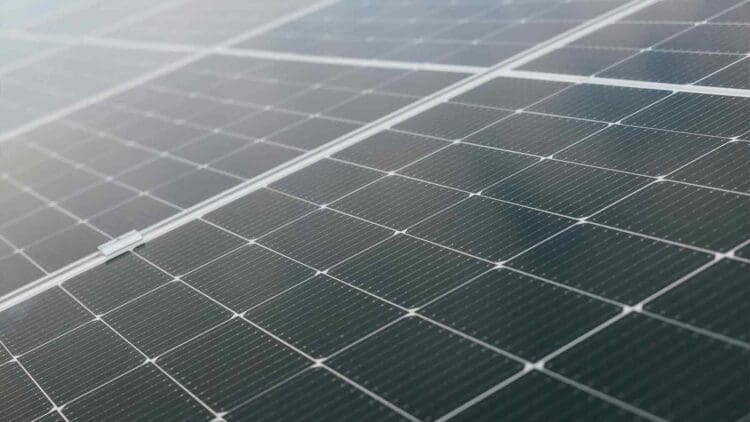

Despite the inability of developers to predict the availability of sunlight, there is still a growing number of solar energy initiatives which shows the confidence firms have to invest massive amounts of money. As companies continue to adopt technological initiatives, countries are able to receive groundbreaking facilities that will guarantee reliable energy generation in the present and the future. T1 Energy is the latest entity to push boundaries in solar energy after announcing the construction of G2_Austin Solar Cell Manufacturing Facility in Texas.
Analyzing the growth of the United States solar energy landscape
Gone are the times when the United States prioritized the short-term gains of fossil fuels, which generated a lot of profit for the nation. Nowadays, the U.S. is concerned with reducing carbon emissions and meeting certain objectives.
As such, there has been a growing movement in the solar energy landscape where companies are investing their money into building facilities. According to reports, the United States had about 30 gigawatts of solar capacity as of 2024, but that number has significantly increased as of 2026.

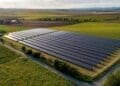
T1 Energy added fuel to the fire after revealing that the construction of its G2_Austin solar cell manufacturing facility in Texas is underway. The project is more than just a method of generating reliable clean energy, but it also displays the nation’s commitment to localizing solar manufacturing and reducing dependence on overseas supply chains.
The facility will be situated in Milam County near Austin and represents a significant financial and industrial commitment. California is still the leading solar energy-producing state in the U.S. Still, Texas has the fastest-growing solar economy with the largest utility-scale solar and energy storage projects in the country. The state is set to further elevate after the completion of this initiative.
T1 Energy’s role in heightening the United States’ solar energy capacity
T1 Energy is a company that has ties to other countries like Norway, but it is headquartered in Austin, Texas. Its G2_Austin facility is one in which an investment of roughly $400 million to $425 million was dedicated. The United States is one of the developed countries that can afford to invest such massive amounts of money into an energy facility without regressing economically.
The facility is undoubtedly one of the most significant solar manufacturing projects currently being built in the United States and globally. According to reports, the project will be built on more than 100 acres in Milam County, Texas. This is a region that is now becoming synonymous with renewable energy infrastructure.
The first phase of the facility is projected to deliver an annual production capacity of 2.1 gigawatts (GW) of high-efficiency TOPCon solar cells. This amount is expected to surpass the current U.S. capacity for silicon-based solar cell manufacturing.
Reviewing the overall impacts of the Texas-based solar energy plant
One of the most exciting aspects of the facility is what it stands to bring for the general public. Reports suggest that the plant will create up to 1,800 new jobs, which is enough to boost local economic development.
The G2_Austin facility consists of multiple phases of a project, and it has future plans to expand and reach a total capacity of approximately 5 gigawatts per year. Its second phase is expected to add 3.2 GW of production capacity.
Solar cells produced at G2_Austin will be used in T1 Energy’s G1_Dallas facility to manufacture solar modules. The approach of creating a vertically integrated production system is one that many companies are adopting in the United States.
Looking ahead: Examining the gradual progression of the G2_Austin facility
What we know so far is that construction of the G2_Austin facility began in late 2025 and commercial operations are expected to commence by the end of 2026. Once operational, the facility will become one of the largest solar cell manufacturing plants in the United States.
T1 Energy is at the heart of an initiative that could transform solar generation forever. Many countries will certainly be taking note of the facility’s progress.