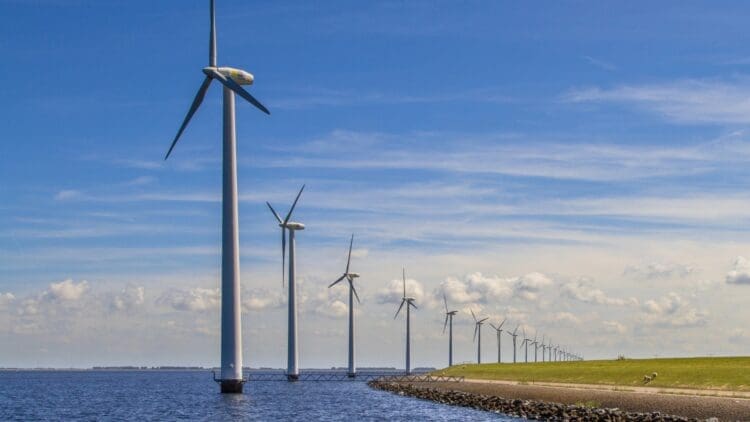
In a world dominated by the conventional energy sector, the upward trajectory of the renewable energy industry is a sign that things are changing. Several regions of the world are turning to the untapped and often overlooked potential that the renewable sector has locked away in abundance. Among those nations is a tiny island off the coast of China. Taiwan recently unveiled that its iconic Hai Long offshore wind farm is set to connect to the national grid next year, setting the stage for a regional boost in capacity that could reshape the energy market.
Taiwan’s flagship wind farm has positioned the nation to become a regional leader in the renewable energy industry
For far too long, the world has relied on the traditional energy generation methods that fossil fuels present. Gas and oil have served humanity well up until this point, but the other side of the energy coin is that the reliance on the conventional energy generation methods has devastated the global climate, with environmental damage reaching unprecedented levels.
The world came together to address the issues facing the environment in Paris in 2016, and developed a framework and emission targets for the litany of nations in attendance, while we should note that America has since pulled out of the Paris accord. One nation that is fostering a successful transition to the renewable energy sector is Taiwan. It has not had an easy ride over the past decade, with China claiming the island should rejoin its republic.
Taiwan’s geopolitical challenges have not stopped it from advancing the renewable energy industry
Taiwan recently announced that the Hai Long offshore wind farm is set to add to the capacity of the national grid in 2026. The wind farm is located roughly 45 – 70 kilometers off the Changhua coast in the Taiwan Strait and could potentially reshape Taiwan’s energy market for good. Taiwan’s proximity to China has led to several challenges for its economy and people overall, but that has not stopped the warm embrace of the wind power sector.
The Hai Long wind project exemplifies the progress made by the renewable energy industry
Taiwan’s government has stated that the facility is essential to the nation’s clean energy goals for the future. The nation has plans to build 15 GW of offshore wind by 2035, and it aims to achieve net-zero greenhouse gas emissions by 2050. Additionally, the Taiwanese government has noted its plans to install 40 to 55 GW of offshore wind power generation capacity over the next decade.
The project benefits from an exceedingly high level of engineering excellence, as well as the 30-year Corporate Power Purchase Agreement (CPPA) with an investment-grade counterparty. The deal will come into effect in 2026, when the Hai Long offshore wind farm becomes fully operational. Another equally impressive project in Taiwan recently got the added boost of Asia Cement Corporation sponsoring the cement needed for a 180 MW floating wind project.
Like it or not, wind power has become the darling of the international renewable energy sector
The perception that Taiwan and other nations have of the renewable energy sector is a sign of the changing times in the global energy industry. More and more nations are turning to the sector to meet demand and, more crucially, meet emissions targets by the end of the decade. Europe has seen 11 GW of new wind turbine orders in the first half of the year, pointing to a broader acceptance of the renewable energy sector across the globe. This is in sharp contrast to the US President’s feelings towards the wind power sector. Regardless, Taiwan’s Hai Long facility will be coming online next year, and the world could not be more excited.