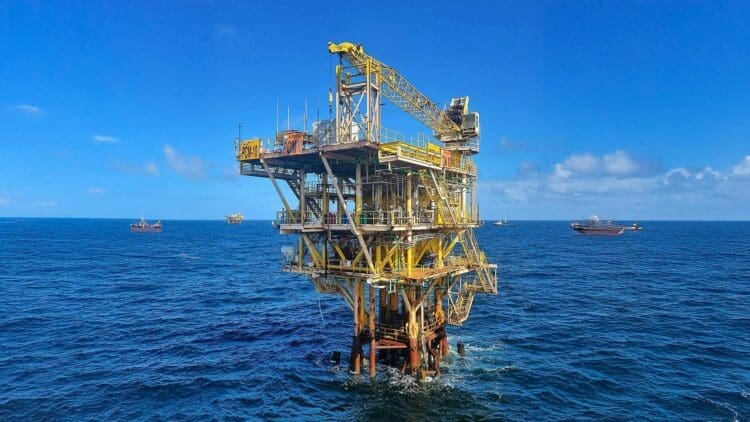
A new era of upstream exploration and discovery has swept through the United States in recent months, with a litany of companies enjoying the substantial backing from the federal government as it aims to increase output from the conventional oil and gas sectors, while rolling back any permits and even canceling certain renewable energy projects in some states. Talos Energy recently evaluated a new Gulf of Mexico target that could extend the company’s Katmai development in the new year.
Talos Energy’s Gulf of Mexico portfolio has grown substantially over the past few years
Talos Energy has been building its US portfolio through several developments that have reached crucial phases over the past few years. The company describes itself as a technically driven upstream exploration and production company that leverages decades of experience to deliver substantial assets across the Gulf of Mexico and the North American continent.
Talos announced that it has discovered commercial quantities of oil and natural gas at its Ewing Bank 953 well and has also boosted its operations in the region by entering into an agreement to provide its expertise and participate in the Sebastian prospect, which was drilled at the Mississippi Canyon Block 387 of the U.S. Gulf of Mexico.
The firm recently announced it is eyeing another opportunity in the Gulf of Mexico
Talos has announced that it hopes to develop new output from its Tarantula processing facility, which processes crude from the company’s Katmai field in the Gulf of Mexico. The company has been eyeing an increase in production at the Tarantula site, according to chief executive Paul Goodfellow. With 2026 around the corner, the US gas and oil market is set to see drastic increases in capacity next year.
Sustaining a reasonable output from its Tarantula facility is the top priority for Talos
During an earnings call, Goodfellow stated that the company has been working hard to reverse bottlenecking issues at the Tarantula facility to bring the site’s output capacity to more than 36,000 barrels of oil equivalent per day. The chief executive noted that sustaining the output at the Tarantula site will require three significant factors.
The first would be to “maximise throughput with the facility base we have,” according to Goodfellow. That would be without the need to spend additional funds on the facility. Second would be to expand capacity by up to 20%, following an extensive study relating to bottlenecking that the company is planning for 2026. The third and most important is the company’s plans to develop the Katmai North site.
The firm reported very high seismic data at the prospective Katmai North site and plans to develop the well as it did with the Katmai West site in 2024. With the Gulf of Mexico playing a vital role in the US energy industry, operations in the region are set to ramp up in the new year.
“We’ve had really strong performance from the Katmai wells. We started to look at what is the best way to optimise that, fully in line with the strategic pillars that we have laid out, but we want to work our way into it.” – Talos chief executive Paul Goodfellow
The United States is not the only nation increasing output in the upstream sector
Talos Energy’s ambitions for the US upstream sector come amid a wave of new upstream plans being developed by a litany of nations this year, with expectations being that 2026 will bring in a new era of exploration and production across the international upstream market. Nations such as Iran, Qatar, and Brazil have begun preparing for a significant increase in output in the new year. The future of the US energy industry is looking better than ever, thanks to new upstream developments set to boost output over the coming years.