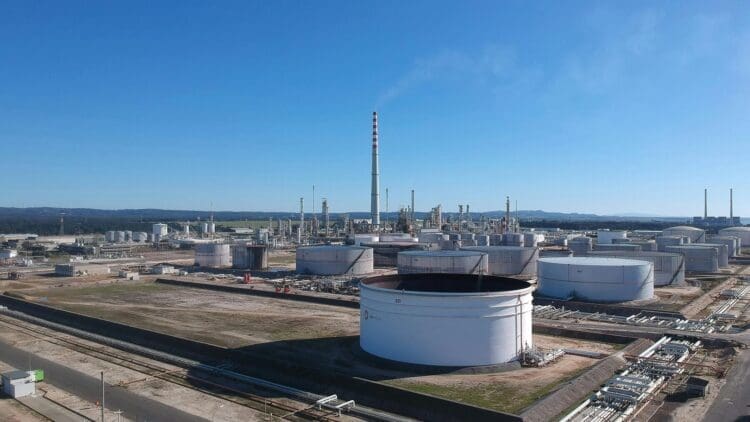

Scale, time, and opportunity have consistently defined the Permian Basin. However, when significant midstream companies make bold moves within one of the world’s most active and congested infrastructure landscapes, there is always a quieter question being asked: What was different enough about this moment to create such urgency?
Production in the Permian is a relatively continuous process
The pressures below the ground have changed. While producers were previously focused on achieving maximum growth (at all costs), today their priorities are centered around the need for reliability, cost control, and the ability to accommodate increasingly complicated gas mixtures. Therefore, gathering and processing systems that historically functioned as logistical “back-end” operations currently serve as equally influential factors in determining development strategies as do drilling economics.
Targa Resources has been an integral player in the history of the Permian, continuously developing its presence to emphasize integration over fragmentation. Targa’s current network connects numerous producing entities to multiple downstream end-markets. Scale in the Permian is a dynamic entity that continues to evolve. As each new well develops and comes online, each new well creates additional pressure, and as each new point of congestion occurs, behavior will adjust accordingly. Thus, midstream decision-making processes continue to anticipate future constraints rather than reacting to present-day volumes.


It is within this context that Targa’s recent actions fit into a larger paradigm, yet indicate that Targa may be pursuing something more deliberate than simply continuing business-as-usual.
The size of Investment: Why it is significant
On December 21, 2025, Targa announced that it had entered into a definitive agreement to purchase Stakeholder Midstream LP for $1.25 billion in cash. The purchase price represents approximately 480 miles of NGL-gathering pipeline along with approximately 180 million cubic feet per day of processing and sour gas treating capacity in the Permian Basin. The acquired assets include long-term, fee-for-service agreements associated with approximately 170,000 acres of land that are committed exclusively to Stakeholder. These agreements provide both reduced variability due to volume commitments and preserve upside potential.
What sets the transaction apart is the size of investment combined with the fact that the acquired assets directly support Targa’s existing capabilities in sour gas treating and carbon capture, which are becoming increasingly critical functions as emissions compliance and gas quality requirements become more demanding. Additionally, Targa estimates that the acquired assets will produce approximately $200 million in unlevered adjusted free cash flow annually, requiring no additional capital.
Collectively, these two data points demonstrate that the transactions shift from pure capacity expansion to strategic positioning as a utility-like partner versus a developmental choke-point.
From capacity expansion to strategic positioning
Ultimately, the stakeholder acquisition answers the question posed earlier. Targa did not acquire mere capacity—it created a more reliable environment for its Permian assets under rapidly evolving market conditions. By acquiring stable, low-decline assets, Targa enhanced its predictable free-cash-flow profile and provided producing entities with increased confidence that the infrastructure supporting their development will remain capable of handling increasing production levels.
Although the statement is somewhat veiled, there is a clear signal
In a basin where reliability is increasingly more valuable than speed, control over gathering, processing, and treating infrastructure provides a distinct competitive advantage. The stakeholder acquisition indicates that Targa intends to establish this advantage for the long term.
As the Permian matures, the dialogue surrounding the midstream industry is transitioning away from growth and towards durability. The stakeholder acquisition reflects this transition and implies that future success will be defined by integration and stability. Similar themes are beginning to emerge in other areas of U.S. energy infrastructure — primarily where carbon management and gas quality converge — a theme that is already shaping the course of other midstream corridors.