
Targa Resources announces three new Permian gas processing plants and a 70-mile pipeline set for 2028 operations
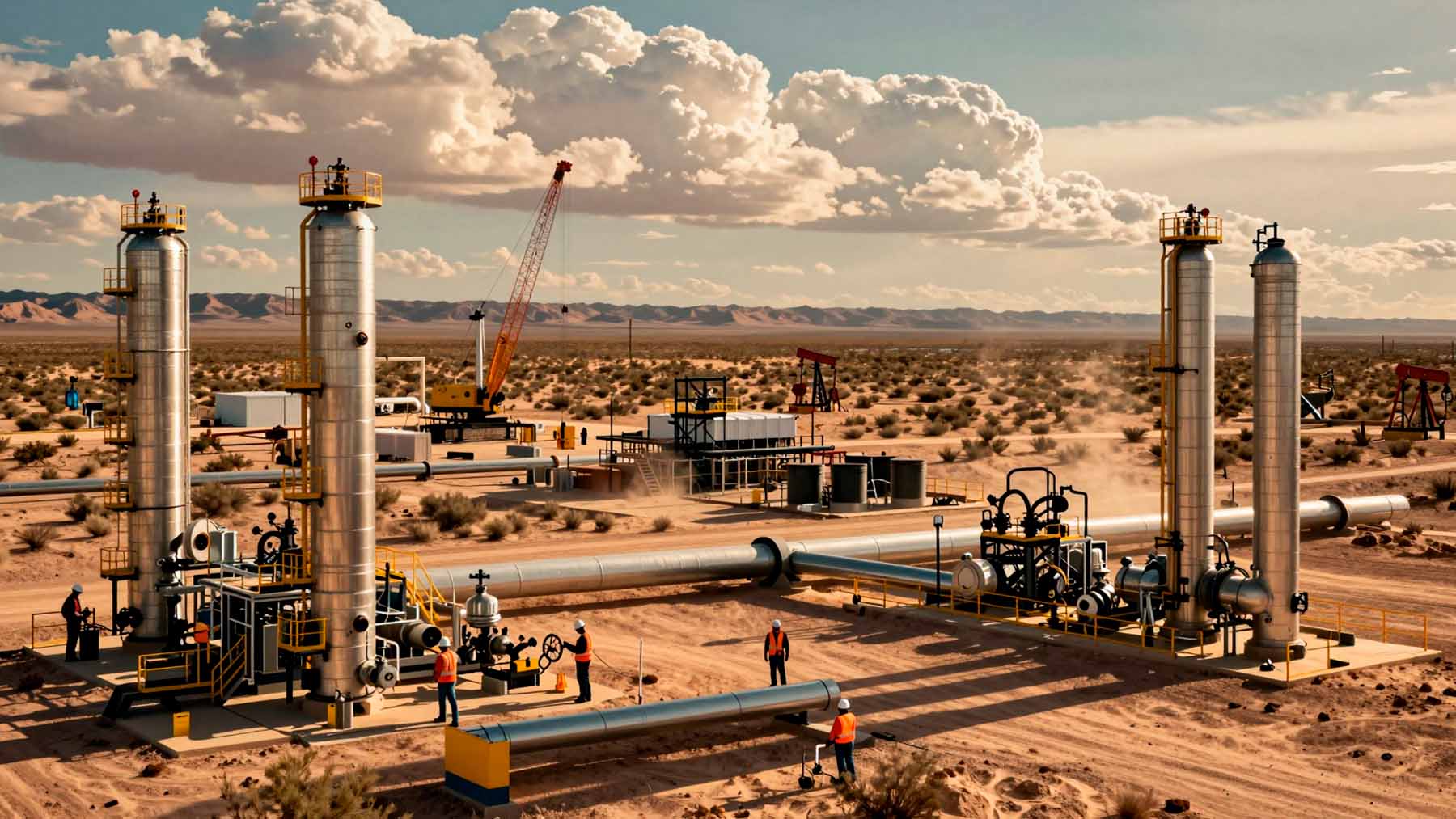 Image generated with artificial intelligence
Targa Resources is making one of its biggest infrastructure bets yet in the Permian Basin. The midstream company announced plans to build three new natural gas processing plants—Wrangler, Ranger, and Ranger II—alongside a new 70-mile pipeline in the Permian Delaware Basin. Together, the plants will add 825 MMcf/d of processing capacity, with both the facilities and the pipeline targeting operations in the first half of 2028.
Targa announces three plants and new pipeline
The three facilities—Wrangler, Ranger, and Ranger II—form the core of this expansion push. Once all three come online, they’ll combine for 825 MMcf/d of processing capacity. That’s a substantial addition to Targa’s existing Permian footprint, and it signals real confidence in sustained production growth across the basin.
Alongside the plants, Targa announced a new 70-mile natural gas pipeline as part of its Bull Run residue system in the Permian Delaware. The pipeline carries natural gas from the new processing facilities to the Waha hub—a key pricing and distribution point in West Texas. Both the plants and the pipeline are targeting operations in the first half of 2028.
Targa also announced 20-year, fee-based agreements with units of ExxonMobil covering natural gas gathering, processing, and downstream services in the Permian Basin.
Why Targa is expanding: demand drivers behind the investment
Targa isn’t building in a vacuum. Several converging forces are pushing midstream companies to accelerate capacity buildout across the Permian right now.
Oil and gas production in the basin keeps climbing. That upstream growth generates more natural gas that needs to be gathered, processed, and moved—exactly what midstream infrastructure does. More drilling means processors need more capacity to keep pace. LNG export growth is also driving demand for natural gas itself, with more U.S. liquefied natural gas terminals coming online and export volumes rising, putting growing pressure on domestic gas supply chains to deliver more volume, more reliably.
Then there’s power generation. AI data centers, cryptocurrency mining, and broader data infrastructure all require significant electricity—electricity that increasingly runs on natural gas. These aren’t temporary blips. They’re structural shifts that midstream operators are factoring into long-term investment decisions, and they’re showing up in capital commitments like this one.
Pipeline route, ExxonMobil deal, and fractionation expansion
The new 70-mile pipeline connects directly to Targa’s processing expansion strategy. By routing natural gas from Wrangler, Ranger, and Ranger II to the Waha hub, it ensures the additional processed volumes have a clear path to market. Without that takeaway capacity, new processing plants simply can’t run at full potential.
Targa also announced 20-year, fee-based agreements with units of ExxonMobil covering natural gas gathering, processing, and downstream services in the Permian Basin. Long-term, fee-based contracts like these provide revenue visibility and reduce volume risk—the kind of commercial foundation that typically supports major capital commitments. Locking in a 20-year deal with one of the world’s largest oil companies gives Targa a stable anchor for its expanded Permian operations, and it reflects a broader pattern: large upstream producers increasingly want dedicated infrastructure partnerships rather than relying on spot arrangements.
Targa is also evaluating the addition of another fractionation train at its Mont Belvieu complex in Texas. Fractionation separates natural gas liquids—ethane, propane, butane—into individual products for sale. If processing volumes rise as planned, more downstream fractionation capacity becomes a logical next step.
Longer-term expansion plans in the Permian Delaware Basin
Three plants and a pipeline may be just the beginning. Targa said it’s evaluating up to five additional processing plants in the Permian Delaware Basin over the longer term, contingent on continued production growth in the region. No timelines or investment figures have been announced for those facilities.
The caveat matters. These additional plants depend on production increases actually materializing. If upstream activity slows—commodity price drops, regulatory changes, capital discipline shifts among producers—midstream expansion plans tend to get revisited. Targa is signaling ambition while also acknowledging that future buildout will follow the data.
Targa’s not alone in scaling up, either. Several midstream companies are expanding infrastructure across the Permian to match accelerating upstream output. The basin remains one of the most active drilling regions in the world, and the race to build processing, transportation, and fractionation capacity is intensifying across the sector.
Operations targeted for the first half of 2028
Here’s what to keep in mind from Targa Resources‘s announcement. The company is building three new natural gas processing plants—Wrangler, Ranger, and Ranger II—adding 825 MMcf/d of combined capacity, with operations targeted for the first half of 2028. A new 70-mile pipeline will move that gas to the Waha hub as part of the Bull Run residue system. New 20-year agreements with ExxonMobil units provide long-term commercial backing for the expansion, and Targa is weighing additional fractionation capacity at Mont Belvieu.
Looking further out, the company is evaluating up to five more processing plants in the Permian Delaware Basin, depending on how production trends develop. The investment reflects a broader midstream reality: rising LNG exports, power demand growth tied to AI and data infrastructure, and strong Permian production are all pointing the same direction—more gas, more often, needing more infrastructure to move it.
Kelly is an experienced writer with 15 years of experience exploring the big stories that shape our world, from tech breakthroughs and space exploration to climate, energy, and the fascinating quirks of science. She has a talent for turning complex ideas into sharp, memorable insights that stay with readers long after they’ve finished reading.
