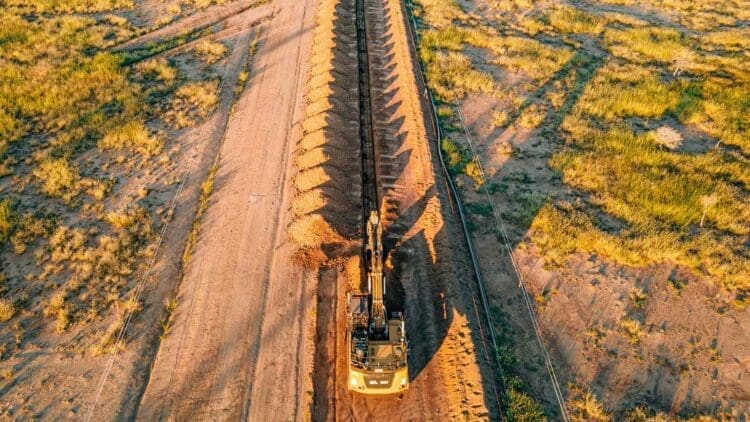

TC Energy’s success on the Southeast Gateway pipeline shows something different than simply doing the job. This project is going through its most difficult stage, and it is showing that there are many ways to create access to gas in southeast Mexico.
Providing reliable natural gas to those parts of Mexico without direct access
This project is built offshore. The Southeast Gateway pipeline was created to solve the problem of providing reliable natural gas to those parts of Mexico without direct access. The pipeline stretches roughly 715 kilometers, from Tuxpan, Veracruz, to two landfalls in the state of Veracruz: Coatzacoalcos and Dos Bocas (Paraíso), Tabasco. Roughly 90 percent of the total length of the pipeline is underwater in the Gulf of Mexico.
When TC Energy first proposed the project, they called it a “partnership” with the Mexican Federal Electricity Commission (Comisión Federal de Electricidad), CFE. The CFE did influence both the business model and the way the construction would be done in terms of scheduling.


The construction process for the offshore section of the Southeast Gateway Pipeline is very complicated. There were several specialized ships that were used for both deep water and shallow water sections. Pipelayers operated throughout an extensive period, which required close coordination between the pipelines being laid in the ocean and nearshore scopes.
In order to install the 36-inch pipeline over the very rough seabed contour, numerous inspections and pre-commissioning activities had to take place after laying the pipeline. In addition to advanced welding and testing technology used to assure the integrity of tens of thousands of welds, it emphasized that the primary goal was reliability over time, versus completing the project quickly.
How does the progress of offshore construction impact TC Energy?
There are two pieces of information that provide some insight as to how important timely and efficient offshore construction is. First, the pipeline will carry over 1.3 billion cubic feet of natural gas per day when complete. Second, the estimated total capital expenditure is approximately $3.9 billion.
Both of these statistics illustrate that if even minor delays occur during offshore construction, they could have significant financial implications for TC Energy.
Second, having completed offshore construction, TC Energy will now have the opportunity to link into Mexico’s growing electrical generation network. As planned, natural gas will be provided via Southeast Gateway to support the creation of new combined cycle electric generating facilities located primarily in the Yucatan Peninsula and Southern States of Mexico that previously have been supplied by diesel oil.
What does it mean to construct offshore?
As the offshore construction of Southeast Gateway progresses towards completion, it sends a message that TC Energy believes that the demand for gas in Mexico will continue to exist for years to come. The strategy employed by TC Energy in developing the project has focused on delivering a high-impact system that enhances energy security by utilizing already established transmission routes connecting U.S. South Texas Gas supplies.
TC Energy views constructing infrastructure quality
The view means how well a pipeline is constructed and connected — as more important than merely adding to the number of pipelines. Thus, offshore progress indicates more than mere construction activity, but rather a demonstration of strategic restraint.
Upon completion of offshore construction, and with the project transitioning to service-readiness integration and operationally ready status, attention will be directed toward integration and operational start-up. The performance of Southeast Gateway upon initiation of gas flow will serve as a precedent for future inter-border pipeline initiatives. At that point, the debate regarding offshore gas infrastructure will reopen in terms of serving regional demand — a topic we plan to continue exploring within our ongoing coverage of North American energy connectivity.