
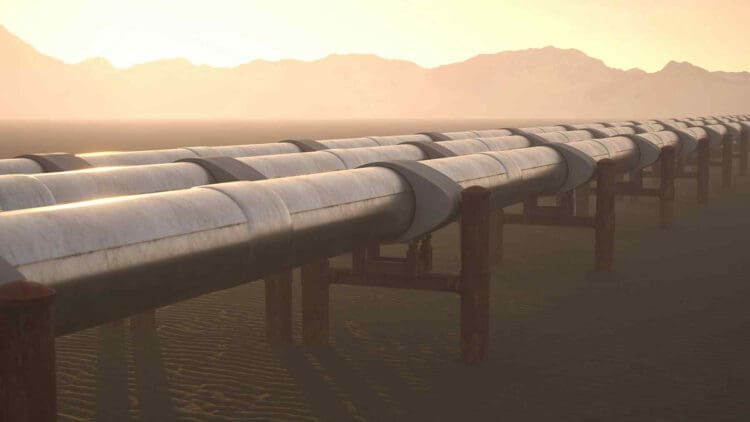

There is no question that energy demand across North America is increasing at an unrelenting rate, and with such momentum that meeting all of that demand may prove challenging. In addition to increased demand, new data centers, manufacturing facilities, and other types of power-generating projects have changed both how and where natural gas is being used.
TC Energy’s approach is based on building upon its existing network instead of developing from scratch
At the same time, TC Energy is preparing itself to continue to deliver natural gas to meet increasing demand with a strategic expansion plan.
With more than 25 percent of the natural gas in the United States delivered by its existing pipeline system (more than 31,000 miles), TC Energy views its current network as a foundation from which to build. This is a significant advantage, since it will not need to develop new infrastructure from scratch.


TC Energy has recently made several investments that demonstrate that thinking. For example, during the last few years, TC Energy has focused on expanding and improving the efficiency of its existing pipeline corridors. Specifically, TC Energy has expanded its ability to compress gas; added loops in certain areas of its pipeline system to improve flow; and modernized many of its facilities to increase their capacity. These actions allowed TC Energy to increase the amount of natural gas flowing through its system while minimizing the impact of land acquisition activities necessary for the expansion efforts and reducing regulatory risks.
TC Energy’s expansion plans are directly related to changes occurring within U.S. energy consumption
The power demand in the Midwest, Mid-Atlantic, and Gulf Coast regions is increasing dramatically due to the ongoing process of electrifying most forms of energy usage, conversion of coal-fired electric generation plants to natural gas-fired electric generation plants, and rapid increases in the number of data centers built.
As a result, TC Energy expects there to be a total increase in demand for natural gas in North America of up to 40 billion cubic feet per day by the end of the decade, providing opportunities for well-positioned natural gas transmission systems to provide connection points between natural gas supplies and new markets.
The recent sanctions and development of specific pipeline projects were specifically targeted at the areas experiencing the fastest growth rates in terms of natural gas demand. Additionally, TC Energy plans to anchor each new element of its pipeline system to long-term agreements with utilities, power generators, and industrial users to minimize commodity price exposure and create stable revenue streams.
Disciplined capital allocation provides support for incremental expansion
Although TC Energy is planning to add significant amounts of capacity to its natural gas pipeline system over the next few years, it is doing so using a series of modular expansions that can be implemented in phases. In contrast to traditional large-scale pipeline developments, TC Energy’s plans call for phased implementation, allowing for the opportunity to add additional capacity as needed in response to changing demand patterns.
Moreover, by implementing multiple phases of development simultaneously, TC Energy believes it can reduce the risks associated with executing individual phases of project development and allow for greater alignment between the timing of investments and the needs of customers.
Long-term potential for continued growth provided by a cross-border footprint
Finally, because TC Energy is able to implement each phase independently, it supports the concept of natural gas as a bridging fuel source that can help maintain grid reliability until renewable sources become even larger contributors to electrical generation. TC Energy’s unique position as a provider of natural gas transportation services extends beyond North America, as it includes Canada and Mexico.



