

Bigger, better, Texas. The entire U.S. has been actively working towards the global mission of achieving net zero by 2050, while also trying to meet its own climate goals. To make this possible, significant investments have been made in expanding the country’s hydrogen infrastructure, with Texas also looking for hydrogen. Instead, it may produce 1.4 million tons of “something that eats CO₂.” With so many investments and so little time, will Texas and the rest of the U.S. meet their goals? Let’s find out.
Expanding the U.S. hydrogen infrastructure
Hydrogen plays a key role in mitigating the effects of climate change, and especially plays a vital role in boosting the U.S.’s energy security while promoting economic growth. It is for these very reasons that the U.S. has been actively expanding its hydrogen infrastructure, as clean hydrogen will assist the country in achieving a zero-carbon power grid by 2035.
One of the states significantly invested in expanding its infrastructure is Texas. As far as perceptions go, “everything is bigger in Texas,” so its clean energy infrastructure may as well be also. The expansion shouldn’t be a problem, as according to the Center for Climate and Energy Solutions, the state’s existing infrastructure is already significant, boasting more than 900 miles of pipelines and gigantic underground salt cavern storage plants.


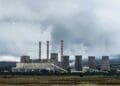
However, Texas may be looking for additional hydrogen, but it may start producing 1.4 million tons of “something that eats CO₂,” instead. Find out more below.
Texas went looking for hydrogen
Seeing as Texas’s electricity demand could almost double in six years, investments in expanding its infrastructure have never been more vital than before. Existing infrastructure that will expand includes Air Liquide’s $50 million strategic upgrades to its facilities’ pipeline system, as well as new compression and distribution equipment.
Another expansion strategy of Texas includes a 240 MW Green Ammonia Project, for which Synergen Green Energy has chosen Electric Hydrogen. The project will be integrating two of Electric Hydrogen’s flagship 120 MW HYPRPlants.
These plants will form part of the project’s front-end engineering and design (FEED) agreement. Once fully operational, 210,000 tons of ammonia will be produced annually, which will be used for European and Asian maritime and industrial applications. However, Electric Hydrogen will also help Texas produce “something that eats CO₂.”
It may produce 1.4 million tons of “something that eats CO₂”
Electric Hydrogen is no stranger to Texas. In fact, one of its electrolyzer systems is already operational at the Roadrunner Power-to-Liquids Facility in Pecos. HIF Global also selected the company to provide large-scale electrolyzer plants for its e-fuels-based facility for the ‘Matagorda’ project. The $7 billion project will reportedly generate 1.4 million tons of e-methanol annually.
This will be achieved by combining captured CO₂ with hydrogen. The company’s HYPRPlant technology is becoming increasingly popular as:
- It uses flagship proton exchange membrane (PEM) technology
- It is powered by renewable power
- It produces cost-effective, clean hydrogen at a commercial scale
- The plant’s installation costs are nearly 60% more cost-effective compared to others
“Our HYPRPLANT technology makes it possible for customers like Synergen Green Energy to produce radically low-cost hydrogen today. This collaboration reflects our shared commitment to accelerating the energy transition and delivering scalable solutions to enable new advanced fuel economies in the U.S. and globally.” – Electric Hydrogen CEO, Raffi Garabedian
So, while Texas has been looking for hydrogen, it has also stumbled upon more strategic ways to improve its current infrastructure and energy security. These projects will help the state to accelerate the renewable energy transition locally and globally, while promoting job growth within the sector and boosting its exports to generate much-appreciated income. For now, the U.S. energy market is dominated by the Permian Basin, but all of that could change soon.

