
Tie-backs the Most Preferred Profitable Option for Future Developments in US Gulf of Mexico

In the deepwater Gulf of Mexico (GoM), the existing pipeline and platform infrastructure have made tie-back opportunities a preferred way to optimize cost and commercialize discoveries, according to GlobalData, a leading data and analytics company.
An average daily production of 0.66 million barrels of oil equivalent (boe) is expected to be added to the US oil supply by 2023, from 30 upcoming projects, of which 23 are developed as tie-backs, with over US$67.4bn of total capital expenditures (capex) spent.
Tie-back developments require on average a development capex per barrel (bbl) of US$9.64 compared to US$14.76 on average for other types of development and their payback is quicker.
As a result the trend of using subsea system as preferred development method for small reservoirs will continue.
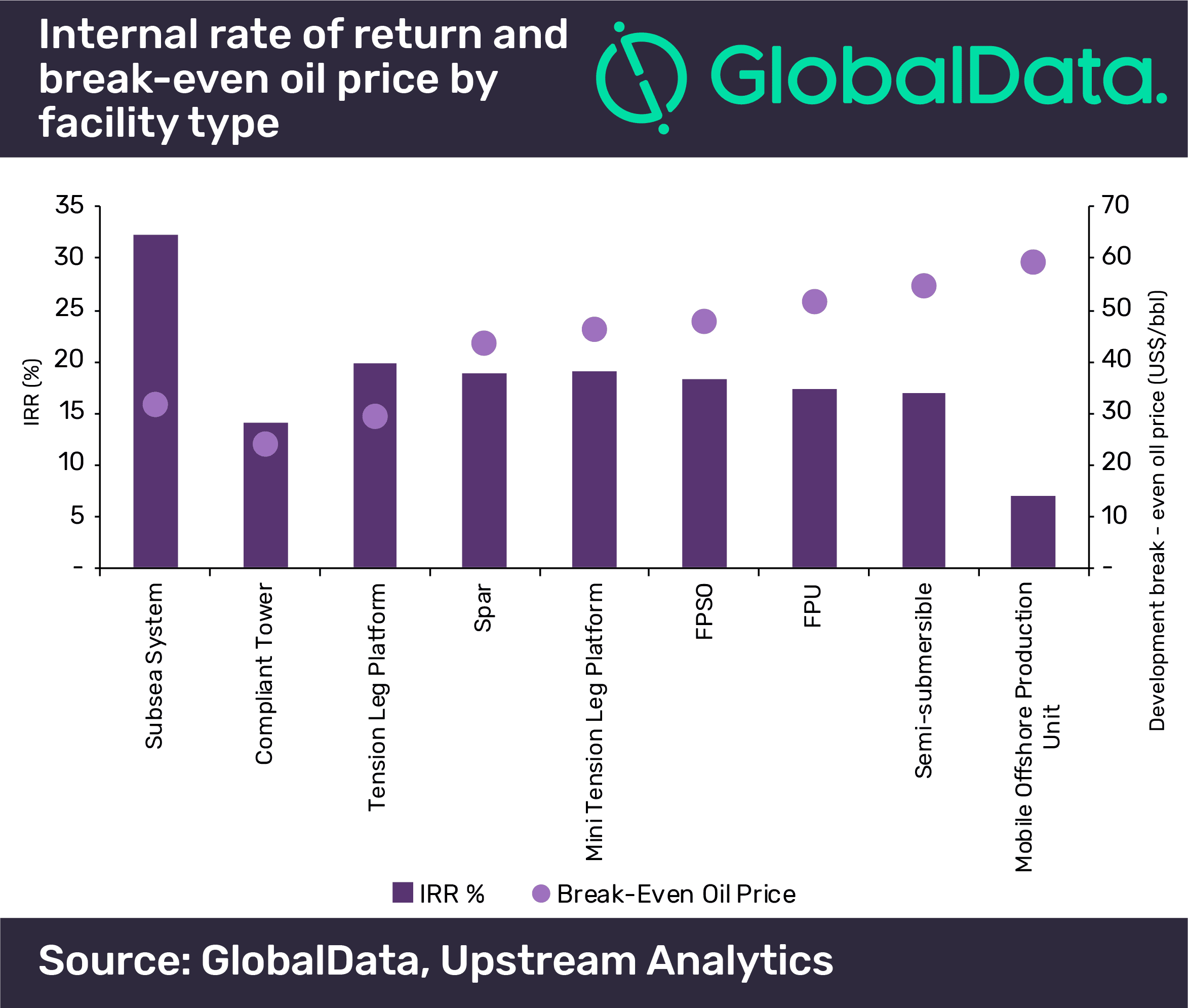
Gregory Bosunga, Oil & Gas Analyst at GlobalData, comments: “Tie-back developments have always been development options in the GoM for fields that were uneconomical with a standalone platform. Fields that are developed as tie-backs are smaller in scale than those developed with other facility types, have lower recoverable reserves, most of them below 100 million bbl and are mainly located in the proximity of the processing platform (less than 20 miles).”
The current trend in GoM is in developing fields with smaller reserves. This is also supported by the fact that fewer fields with larger reserves are being discovered. As a result the trend of using subsea system as preferred development method for small reservoirs will continue. Moreover, as fields are entering mature stages in the GoM more processing capacity becomes available and even when platform upgrades are needed to tie-back a field, this is usually less expensive than the cost of building a new platform.
About GlobalData
4,000 of the world’s largest companies, including over 70% of FTSE 100 and 60% of Fortune 100 companies, make more timely and better business decisions thanks to GlobalData’s unique data, expert analysis and innovative solutions, all in one platform. GlobalData’s mission is to help our clients decode the future to be more successful and innovative across a range of industries, including the healthcare, consumer, retail, financial, technology and professional services sectors.
