
Two sheep per hectare at a New York solar farm increased beneficial insects by 38% compared with mowing
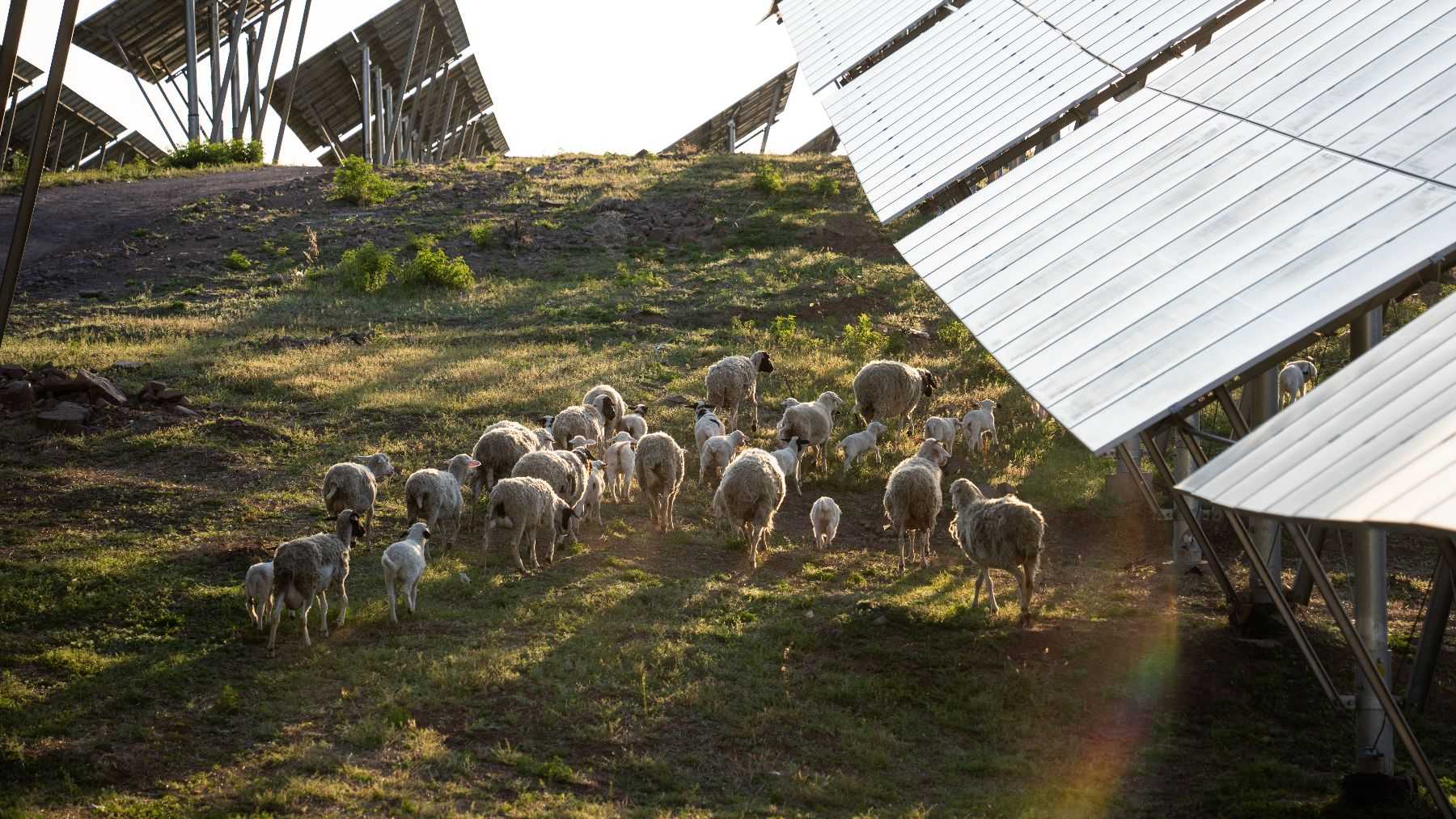
New York can now accelerate solar capacity growth by implementing an eco-friendly multi-use land strategy.
Across the United States, regions are under pressure to achieve ambitious climate targets, requiring rapid renewable deployment.
But photovoltaic projects in states like New York continuously face spatial, operational, and environmental challenges.
But strategic livestock grazing planning and management are crucial to ensuring that clean power generation protects local pollinator habitats.
Developers are now turning to agrivoltaics, focusing on livestock integration as an innovative solution.
Will merging sheep grazing with clean power generation enhance local ecosystems?
How rapid green capacity growth is key to meeting national climate ambitions
With climate change accelerating, national and international climate mandates have become stricter.
While these targets may seem ambitious, they are crucial to securing our future.
In the United States, interim federal targets include a 50% to 52% reduction in greenhouse gas emissions by 2030.
Interim targets drive progress toward a 100% carbon-free economy by 2050.
In New York State, this transition is bound by strict law.
Under the Climate Leadership and Community Protection Act, zero-emission power generation must be achieved by 2040.
However, in the midst of the digital and electric age, rapid grid decarbonization has become more challenging.
This is because AI and data center expansion and widespread electrification are surging the state’s electricity demand.
Utility-scale solar capacity growth offers a viable solution to overcome these simultaneous pressures.
It meets rapid green energy deployment requirements and produces bulk clean electricity, all while offsetting aging fossil fuel generation.
Yet the state has faced significant obstacles in accelerating photovoltaic development.
New York’s challenges in accelerating utility-scale solar growth
Solar farm development in New York can take years to reach completion and become operational.
This lengthy process can be attributed to statewide spatial, operational, and environmental challenges.
Large-scale photovoltaic projects require vast acreage, often triggering land-use competition with agriculture and local communities.
Operationally, site maintenance requires ongoing vegetation management.
When weeds and grass become overgrown, they cast shade across the panels. This significantly lowers clean energy output.
Traditional management methods entail using mechanical mowers to suppress plant growth.
However, this incurs high labor and fuel costs and also contributes to environmental challenges.
Heavy gas-powered mowing equipment releases greenhouse gas emissions, which conflicts with the project’s zero-carbon benefits.
This method also destroys local plant habitats, reducing insect biodiversity and vital pollinator populations like lady beetles and bees.
To resolve these issues, Cornell University began researching sustainable agrivoltaic solutions.
Integrating sheep grazing with solar production presented beneficial results, but only to a certain extent.
Finding the perfect balance in agrivoltaics
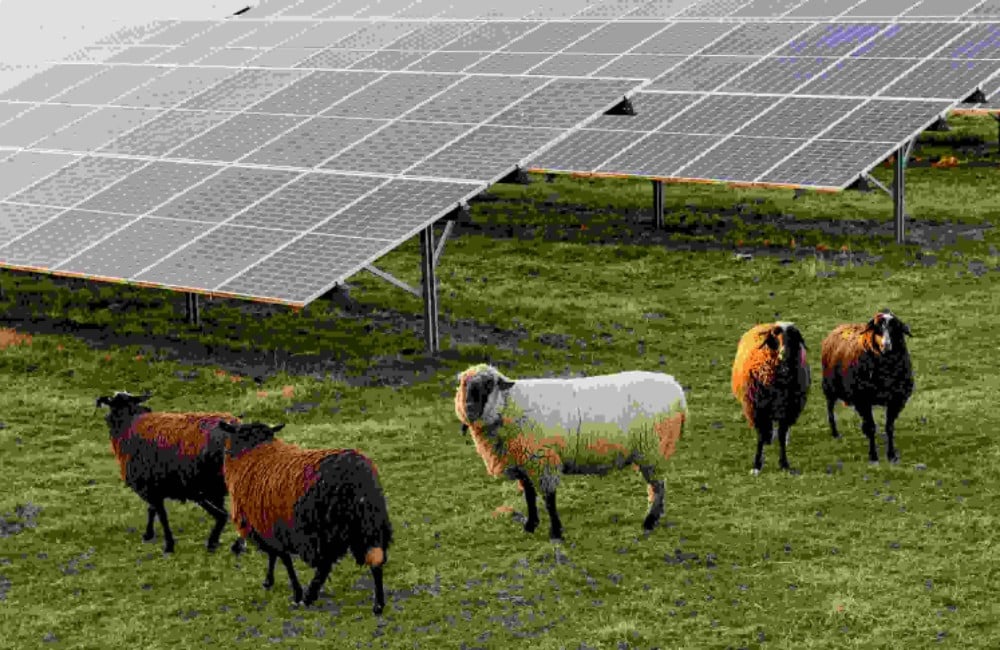
The future of American farmland is being reshaped by letting sheep graze beneath solar panels.
Cornell researchers evaluated this agrivoltaic practice over three years at the Cascadilla Community Solar Farm in Dryden, New York.
Different sheep stocking rates were tested to evaluate flock health, vegetation management, and insect biodiversity.
These results were compared to mowed control sites.
Distinct ecological trade-offs based on stocking density
Using two sheep per hectare increased beneficial insect populations by 38%. Honey bee populations, in particular, surged by 83%.
When four sheep per hectare are used, vegetation control becomes superior.
However, at this stocking density, insect population levels matched the levels of mowed control sites.
Weed control is maximized at eight sheep per hectare. Unfortunately, this reduced honey bee populations by 45%.
The researchers developed a spreadsheet-based decision tool to help farmers navigate these trade-offs.
This helps them to optimize developer contracts, flock size, and operating costs.
As for New York’s solar future, these study results established a clear roadmap to accelerate utility-scale deployment.
Combining sheep farming with solar production is key to overcoming the complex challenges developers often face.
But strategic livestock grazing planning and management are crucial to ensuring that clean power generation protects local pollinator habitats.

Anke Maree is a writer with a clear and engaging editorial style. Her work focuses on making complex topics accessible, informative, and relevant for readers across different areas of interest.
