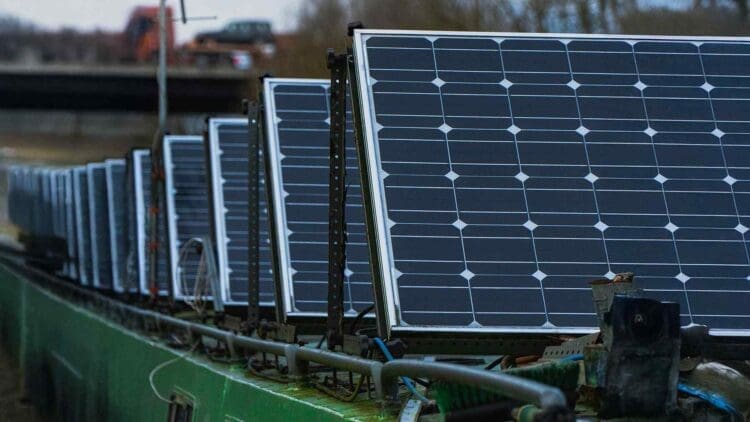
Every week that goes by in 2026, the United States of America is demonstrating just how dedicated it is to executing a wide range of renewable energy initiatives and diversifying its entire portfolio. The most interesting aspect of most of the developments so far is that the government is fully supporting them, increasing the likelihood of their materialization.
A general overview of how federal backing permitted the clean energy rollout
In the latest turn of events, the U.S. Energy Department backed a nationwide Sunwealth solar-and-storage rollout with a federal loan guarantee. A lot of 2026 energy-related initiatives in the United States have either failed or progressed solely because of the government and what it had to contribute towards them.
This time, the U.S Energy Department dedicated a US$289.7 million loan guarantee for Sunwealth’s Project Polo, which is part of the DoE’s Title 17 Clean Energy Financing Program. This is a massive moment for the entire nation, especially considering that the program was specifically designed to lessen financing risks for private innovators who are working towards essential energy infrastructure. When news first broke, a common question among the energy industry enthusiasts was, “What exactly does the guarantee mean?”
The federal loan guarantee means that Sunwealth Corporation will install up to 1,000 commercial-scale solar PV and battery energy storage systems that are situated across multiple states in the country. Many people will be pleased to learn that the initiative aims to ensure that people enjoy the benefits equally, rather than certain states being prioritized over others.
Delving deeper into Sunwealth’s solar and storage rollout to cater to a wide range of citizens
Technological innovation has opened up doors for every industry to use it to its advantage by giving corporations the ability to now execute developments that once seemed impossible. In this particular project, the systems will primarily be installed on commercial rooftops, multi-family residential properties, and community solar sites. All in all, they are expected to have an estimated capacity of 168 MW of solar and 16.8 MW (33.6 MWh) of storage.
One of the standout features of Project Polo is that it will function as a virtual power plant (VPP) using distributed energy management software from SYSO Technologies. This is yet another representation of technological innovation in the energy landscape, as a VPP accumulates distributed solar and storage units so they can operate harmoniously to supply grid services just as they are typically provided by generators.
Unpacking the economic implications of Project Polo
When an energy development comes to fruition, many people are excited by the amount of reliable electricity that they can receive, but another part of the population welcomes the economic benefits. Project Polo is predicted to generate thousands of jobs during the installation process. Ultimately, it could create approximately 3,700 new jobs, with about 1,900 positions in solar and storage installation and 1,700 in operations and maintenance.
Assessing the environmental impacts of Sunwealth’s large-scale initiative
Whilst employment is a huge thing to rave about, particularly for human beings, the environmental implications of the Polo Project cannot be ignored. Sunwealth predicts that the nationwide initiative could eliminate 4.07 million metric tons of carbon emissions over its lifespan. This is allegedly equal to removing hundreds of thousands of gasoline-powered cars from the road.
Most countries only develop strategies and theoretical plans to generate clean energy for the sake of the environment, but the United States is talking less and acting more in 2026. The Polo Project’s virtual power plant is expected to support electricity supply in up to 27 states, which is massive for the future of the nation. The DoE officials have commended the development for increasing access to renewable energy and enhancing grid reliability by evenly distributing generation and storage across the country.