
UK onshore wind industry marks 35 years of operation, now supplying 15% of national energy demand as repowering of early sites accelerates
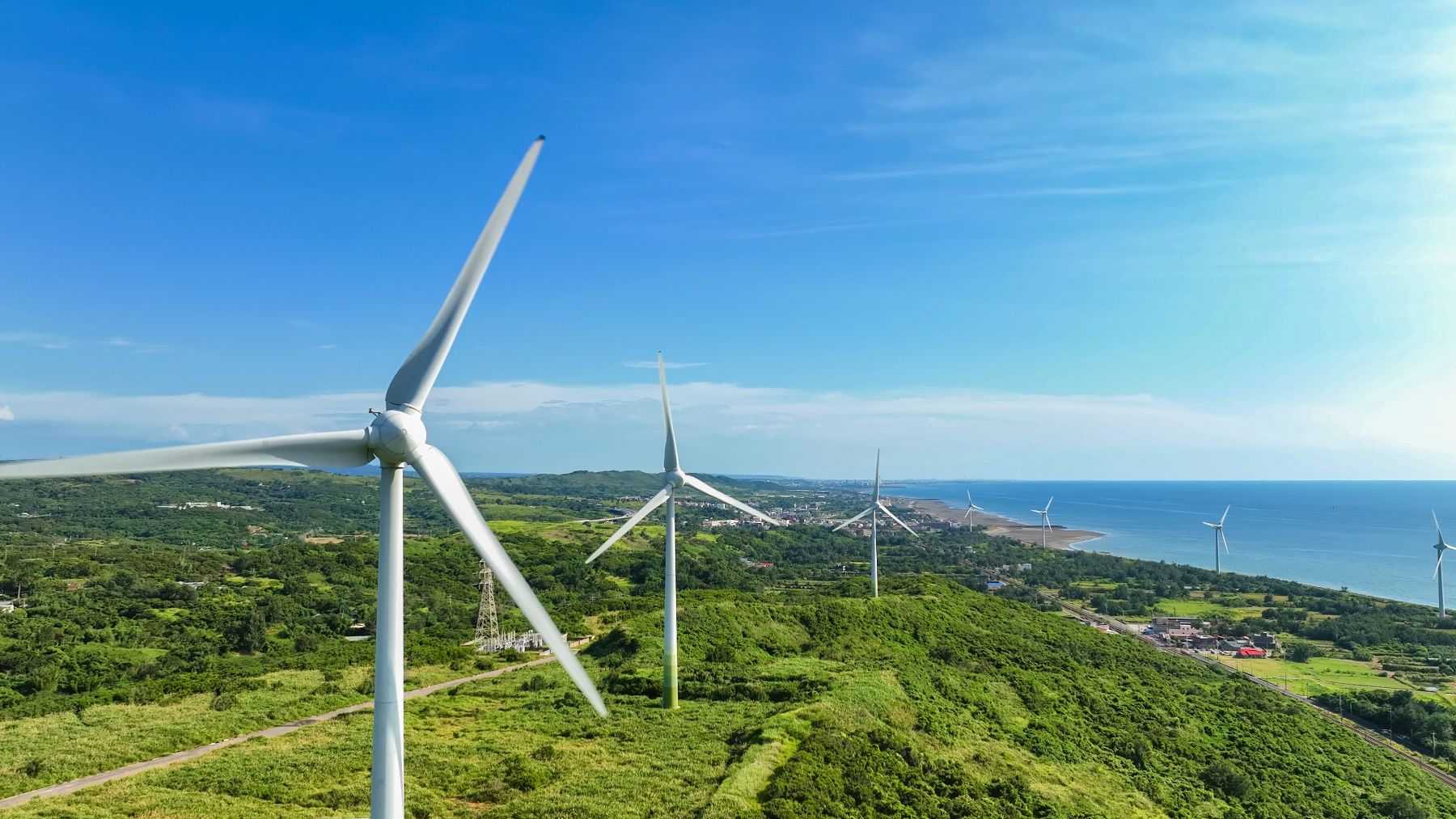
UK onshore wind turns 35 in 2026 — about as old as the internet. The first commercial wind farm went up in Cornwall in 1991, followed a year later by Carland Cross, also in Cornwall, built by RES with 15 turbines and a total capacity of 6 MW.
Three and a half decades later, the sector now meets 15% of UK electricity demand, according to RenewableUK figures from Q1 2026. As many of those earliest sites reach the end of their original design life, the industry is increasingly focused on what comes next.
UK onshore wind reaches 35-year milestone
RES actually goes back further than 1991. Founded in 1981, the company started with a small team of engineers determined to prove that wind could generate electricity at real scale. That team has since grown into what the company describes as the world’s largest independent renewable energy company, now operating across 24 countries with more than 29 GW of projects delivered.
RES currently supports 45 GW of renewable assets, using engineering expertise and digital tools to help owners optimize existing turbines and plan what comes next.
The technology has changed almost beyond recognition. RES subsidiary Bladena is currently testing an 289-foot blade with ORE Catapult — nearly twice the height of the original Carland Cross turbines. That single comparison captures just how far the industry has traveled in 35 years.
Growth of the sector: From nine employees to a global workforce
When UK onshore wind got started, RES had nine employees. Jack Noakes was number nine, and his first task involved a proposal linked to a 1 MW turbine design at a time when many engineers doubted a turbine that size would ever be practical. He’s still with the company today, now serving as Group Chief Engineer.
His career took him to King Mountain in Texas — one of the largest wind farms in the world when RES built it in 2001 — and to projects in France. It’s a trajectory that mirrors the industry’s own story: from small, skeptical teams to large-scale international operations.
Those original nine employees are now 4,500, spread across 24 countries. The sector’s long investment horizon shows up in one striking observation from RES: some of the engineers who’ll eventually repower today’s wind projects may not have been born yet.
Community benefit schemes have distributed over $13 million (£10 million) in bill discounts
For 35 years, communities across the UK have lived alongside onshore wind projects, and the industry has developed various ways to share the financial upside with those communities. According to RenewableUK, onshore wind community benefit funds now provide roughly $95 million (£75 million) per year across the UK.
RES went a step further in 2013, launching its Local Electricity Discount Scheme (LEDS) after consulting with communities near its projects. The scheme provides annual electricity bill discounts to properties closest to participating wind farms, regardless of which energy supplier those households use.
The numbers have stacked up considerably. LEDS has now delivered more than $13 million (£10.3 million) in bill discounts through over 50,000 individual payments. In 2025 alone, more than 7,000 properties across 37 projects in Great Britain and Northern Ireland shared almost $2.4 million (£1.9 million) in discounts.
Repowering of aging wind farms can multiply site output by up to ten times
Carland Cross offers a useful look at what repowering can actually mean in practice. When the original 15 turbines came down in 2013, they were replaced by 10 larger ones, and capacity jumped from 6 MW to 20 MW — more than three times the original output from fewer physical structures.
That kind of uplift isn’t unique to Carland Cross. Analysis by Nadara, cited by RenewableUK, suggests repowering can increase a site’s output anywhere from three to ten times its original capacity. Many existing sites already have grid connections and infrastructure in place, which cuts both the cost and complexity of upgrades considerably. Whether those projects move forward depends largely on the regulatory environment. Industry stakeholders argue that clear, stable planning and grid frameworks are essential to give private investors the confidence to commit.
Background: The regulatory and infrastructure context for the next phase of UK wind
Repowering isn’t automatically the right answer for every site. RES acknowledges that each project needs individual assessment based on its own technical realities and local circumstances — no universal formula applies.
The broader industry argument is still pretty straightforward: the UK has spent 35 years building wind sites, grid connections, and relationships with nearby communities. Making better use of what’s already in place is one of the more efficient routes to reducing electricity costs for homes and businesses. RES currently supports 45 GW of renewable assets, using engineering expertise and digital tools to help owners optimize existing turbines and plan what comes next. The company’s position is that communities that hosted wind energy first should be first in line for the benefits of next-generation installations.
What 35 years of UK onshore wind adds up to
The headline numbers tell a clear story. A sector that started with 15 turbines and 6 MW of capacity now meets 15% of UK electricity demand. A company that launched with nine employees now employs 4,500 people across 24 countries. A blade being tested today is nearly twice the height of the turbines that started it all.
The next chapter centers on repowering — getting significantly more output from sites that communities have already lived with for decades, using infrastructure that’s already built. How smoothly that transition goes will depend on planning frameworks, grid policy, and investment confidence. The foundation, both physical and social, is already there.

Kelly is an experienced writer with 15 years of experience exploring the big stories that shape our world, from tech breakthroughs and space exploration to climate, energy, and the fascinating quirks of science. She has a talent for turning complex ideas into sharp, memorable insights that stay with readers long after they’ve finished reading.
