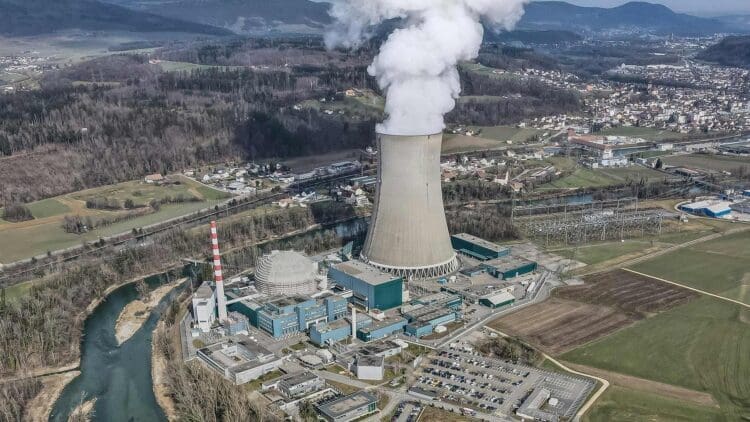

The United States and Kazakhstan have been affiliated with one another for many decades, and their relationship continues to strengthen year after year. Recently, the two countries reached an agreement to deepen their civil nuclear partnership during the early months of 2026. The agreement heavily features small modular reactors, also known as SMRs, which are small-scale atomic fission reactors.
Taking a step back: Analyzing the timeline of their United States and Kazakhstan’s affiliations
Since Kazakhstan is based in Eurasia and the USA in America, one would assume that the two countries are unlikely to be affiliated with one another. However, they have an extensive history dating back as early as the 1990s. The first significant moment between the pair came in 1991 when the United States became the first country to acknowledge Kazakhstan’s independence from the Soviet Union.
Kazakhstan was under communist rule during the Cold War, so it was a massive moment when the USA recognized the country’s independence, marking a significant moment in its pursuit of freedom. The two then went on to formally establish diplomatic ties, and a partnership built upon security and economic objectives became central to the relationship.

When it comes to nuclear-related agreements, the first came in the 1900s when the US helped Kazakhstan to eliminate its nuclear arsenal. Fast forward to 2018, they agreed to an amplified strategic relationship, which has now birthed the deep civil atomic partnership.
United States and Kazakhstan deepen civil nuclear partnership: What does this mean?
It was in December 2025 that officials from the US and Kazakhstan made the announcement of specific initiatives under the US State Department’s Foundational Infrastructure for Responsible Use of Small Modular Reactor Technology (First) program. The program is one that has existed for a long time, but Kazakhstan has made history by becoming the very first Central Asian based country to do so. The announcement is one that made it clear that the US and Kazakhstan were set to have a massive 2026 in relation to the civil nuclear partnership.
Delving deeper into the implications of the civil nuclear partnership
The First program established a classroom-based SMR simulator, which was developed by US corporations named Holtec International and WSC Inc. The simulator will be found at the Kazakhstan Institute of Nuclear Physics in Almaty with the aim of achieving workforce development. The simulator has received a lot of plaudits from enthusiasts who understand the meticulousness with which it was built. For instance, it is designed to supply Kazakhstan’s future nuclear workforce with real-world experience in emergency response, reactor operations, and safety systems.
A brand-new energy strategy: Kazakhstan returns to producing nuclear power
Kazakhstan has stunningly reignited nuclear power generation after more than 20 years without atomic electricity. The decision comes as a disappointment to many people; however, the majority of votes are the reason for the nuclear plants that the government has built. It did not come as much of a surprise that Kazakhstan was involved in yet another nuclear-related project, as the country already accounts for 40% of world uranium mine production. Interestingly, the Eurasian-based country is both a supplier of nuclear fuel and an upcoming nuclear adopter, putting it in a very unique position.
The US and Kazakhstan are committed to SMRs and have even initiated an SMR feasibility study, which is expected to conclusively determine which US-designed SMR will be suitable both economically and technically for Kazakhstan’s grid and overall conditions. Another upcoming nuclear project is that of Poland, which people will instinctively compare to Kazakhstan’s.
The United States and Kazakhstan’s civil nuclear partnership is one that has birthed a regional training hub facility, which is aiming to support nuclear-related dealings in Central Asia. The First program has an even bigger aim, which is to strengthen regulatory preparedness by instilling safety precautions and making sure that the SMRs are acceptable under the international non-proliferation and security standards, just like the ones in China.