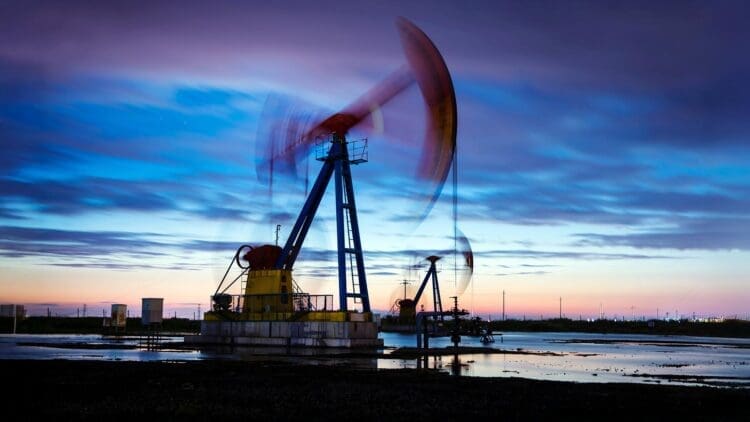
The United States Energy Information Agency has released some worrying statistics regarding domestic crude production this year. 2025 saw the US energy industry rapidly expanding to meet the expectations of the current administration, which is aiming to transform the US into a global energy superpower. Last year saw the oil and gas industry in the US surge to reach new, unprecedented levels of production that have raised concerns over the geopolitical power that the federal government now has on the world stage.
Can the US continue on its path towards global energy domination in 2026?
Not according to the US Energy Information Administration. While last year saw the rapid expansion of the oil and gas sector, this year is looking slightly less lucrative for the US energy industry.
The US Energy Information Administration has become a vital organization for the energy industry, painting a clear and transparent picture for the year ahead. The EIA recently released its latest Short-Term Energy Outlook report, and this year will see the rapid expansion of crude oil production decline slightly.



The EIA has reported that US crude oil production will average approximately 13.5 million barrels per day (b/d) this year, which is roughly 100,000 b/d less than in 2025. The forecast follows four years of substantial crude oil production growth in the United States.
The Permian Basin: A cornerstone of the United States oil and gas industries
Over the past two years, the Permian Basin has stood as the backbone of the significant growth of the US oil and gas market. In 2024, crude oil production in the US increased by 300,000 b/d, and last year saw an increase of around 400,000 b/d. This positioned the Permian as a strategically important region for the US energy sector, especially under the new expectations of oil production by the current administration.
However, 2026 will see the Permian’s role in the US energy market shifting as Alaska and the Federal Gulf of America experience substantial increases in crude production.
“Over the next two years, we expect sustained lower crude oil prices will result in a pullback in drilling and completion activity that is enough to outweigh ongoing increases in productivity. In 2026, we forecast modest production increases in Alaska, the Federal Gulf of America, and the Permian will be offset by declines in other parts of the United States. – EIA Short-Term Energy Outlook
Can the US effectively diversify domestic crude oil production in 2026?
That would be the forecast by the EIA. According to its Short-Term Energy Outlook, the EIA expects the West Texas Intermediate crude oil price to average around $51 b/d in 2026. The report also goes on to state that the lower 48 states, excluding the Gulf region, will average approximately 11.11 million barrels per day this year, and 2027 will see the slight decline continue with 10.87 million barrels per day.
The two most promising regions for crude oil production in the US this year will be Alaska, where the EIA expects to see 470,000 barrels per day in 2026. Furthermore, the Gulf region will average 2.00 million barrels per day in 2026, according to the EIA forecast. As the EU outlines a new method to end the dominance of Russian oil, the US has become a major crude producer on the global stage.
Will the US invest more in the natural gas and LNG sector this year?
As crude oil production in the US is expected to decline, many in the US energy industry have noted that the US gas and LNG sector will grow substantially in 2026. Energy Transfer, a major US-based company with several pipelines in the market, has outlined plans to invest $5.5 billion in natural gas infrastructure this year. The reality is that despite the slight decline in crude production, the US remains the energy superpower in 2026.