
Approved over a valley’s formal objection, eight turbines up to 200 meters tall cleared Scottish planning, and the hidden catch that sent the case to court had nothing to do with the wind
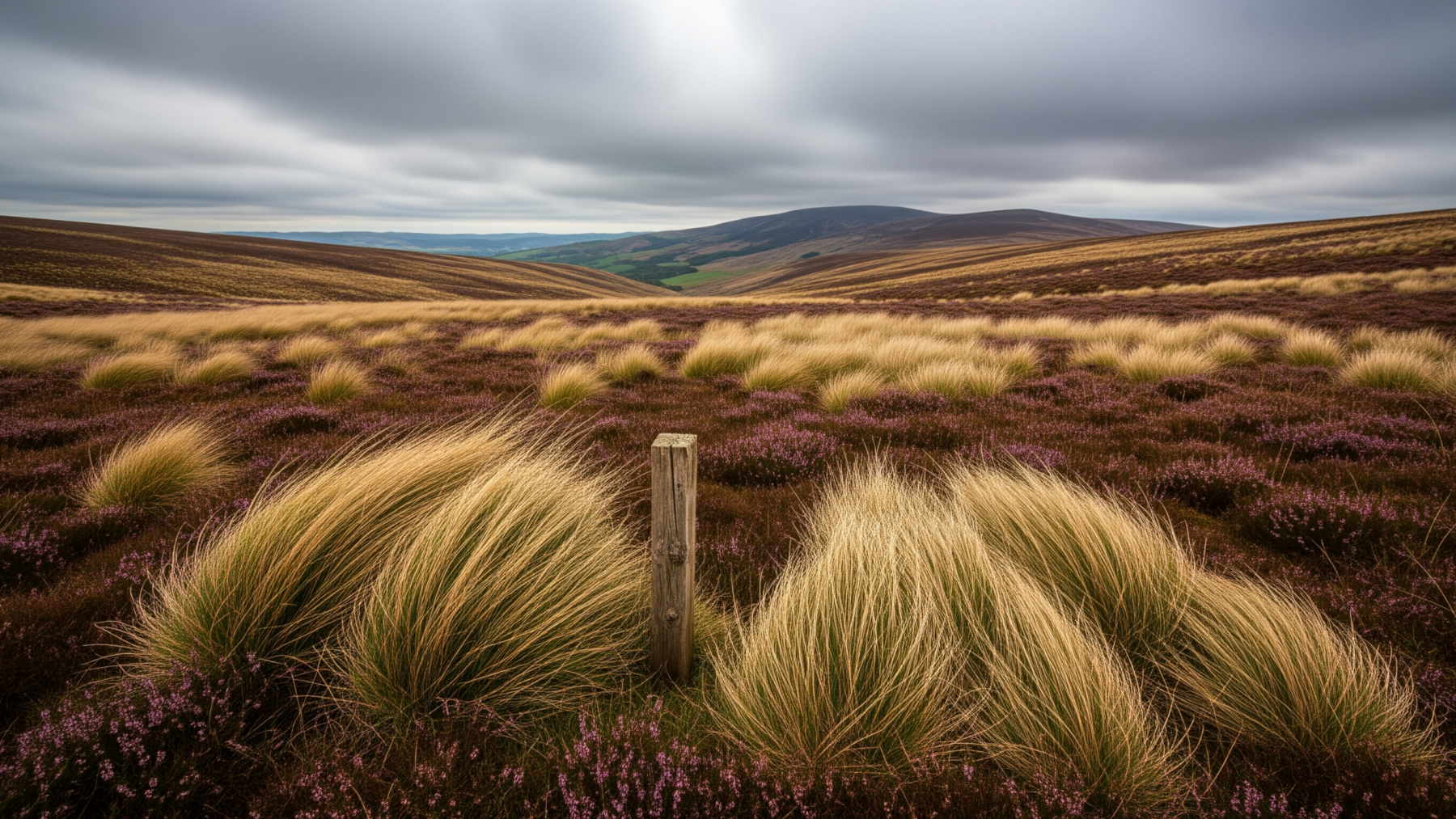
The valley north of Oxton, a small village in the Scottish Borders, has spent centuries looking the same.
Peatland stretches across its flanks.
Woodland drops into burns that meander through the floor.
The Scottish Government subsequently chose not to contest the judicial review, a move that effectively quashed the planning consent and halted the project.
Moorland rolls toward the Lammermuir Hills in every direction.
Then, in September 2023, a planning application arrived that proposed to change the skyline in a way no generation of Oxton residents had ever imagined.
The question of whether it would actually happen ended up inside a Scottish courtroom.
A proposal that arrived from the ridge
The application was for eight wind turbines, some reaching 200 meters into the sky, on the high ground of Ditcher Law.
The plan would also include a battery energy storage system, an anemometry mast, access tracks and drainage.
Five of the eight proposed towers would stand at the full 200-meter height.
The remaining three would reach 180 meters, roughly two thirds the height of the Eiffel Tower.
The area is designated as a Special Landscape Area, with peatland, woodland, meandering burns and moorland.
The application was submitted to the Energy Consents Unit in September 2023.
The Ditcher Law site sits in a part of Scotland that has already watched wind energy arrive: neighboring valleys carry turbines of an earlier generation, smaller and older.
This proposal was neither.
The moment a council drew a line
When the application moved through the Scottish government’s Energy Consents Unit, the local authority watched closely.
In September 2025, the council’s Planning and Building Standards Committee submitted a formal objection, citing significant adverse impacts on residential amenity and on the Lammermuir Hills Special Landscape Area.
That objection was not simply a protest.
It was a structured legal argument setting out why the hills and the community deserved protection.
Scottish Ministers received a large number of representations regarding Ditcher Law, with the overwhelming majority opposed.
In a valley where almost every voice spoke the same way, the decision that came back was a surprise.
A government that said yes anyway
Scottish Ministers approved the eight turbine scheme north of Oxton in February 2026.
The government overruled Scottish Borders Council, which had formally objected citing adverse impact on local people and the landscape.
The council had also raised a procedural concern: the developer submitted important additional information in April 2024, and the council was then given only five weeks to respond.
The council said that deadline was impossible to meet given its backlog of applications.
The Energy Consents Unit ruled that the concern was raised too late in the process.
For residents near the site, the approval carried an additional sting: the turbines could begin their march toward planning reality while a valley full of objectors watched from the floor.
The catch that no one had assessed
Scottish Borders Council did not accept the outcome.
The council lodged a petition to the Court of Session for judicial review in May 2026, arguing that the grid connection’s likely impacts were never assessed by the Energy Consents Unit.
The grid connection is the cable and infrastructure that would carry power from the turbines down to the national network.
Running that connection across a designated Special Landscape Area carries environmental consequences that, the council argued, were simply never put into the balance.
This legal approach follows a Court of Session ruling that quashed permission for the Wull Muir wind farm after the Inner House found the decision-maker had failed to assess whether the wind farm and its grid connection formed a single project for environmental impact assessment purposes.
David Robertson, chief executive of Scottish Borders Council, said the decision to seek judicial review had not been taken lightly and that specialist legal opinion had been sought alongside engagement with elected members across the political spectrum.
A landscape waiting for an answer
The peatland at Ditcher Law is not a passive backdrop to this dispute.
Peat stores carbon accumulated over thousands of years, and disturbing it during construction releases that carbon quickly and measurably.
The Scottish Government subsequently chose not to contest the judicial review, a move that effectively quashed the planning consent and halted the project.
A community spokesperson welcomed the council’s decision to seek review, following approval granted despite a formal objection referencing harm to local people and the landscape.
If the principle confirmed here, that a grid connection is part of the project and must be assessed as such, holds firm, it would reshape how every future application in Scotland handles transmission infrastructure.
Developers elsewhere are already learning that the route from turbine to grid carries its own scrutiny, as Sweden’s blocked offshore projects demonstrated when national interests collided with clean energy ambitions.
The burns still run through the valley north of Oxton.
The moorland still holds its color through the seasons.
And a legal precedent forged in Edinburgh may now determine what the ridgeline above all of it will look like for the next half century.

Hugo is an engineer with strong technical expertise. Multilingual from an early age, his writing combines technical clarity with a strong interest in science and energy.
