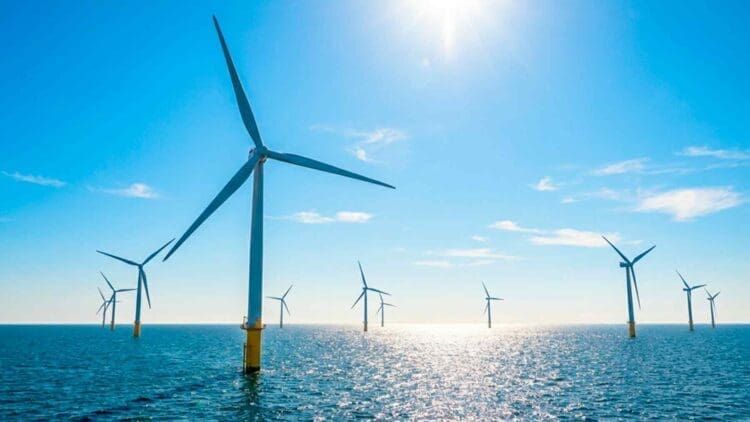

Ever since news broke about the suspension of Vineyard’s energy development, a lot of people have had their eyes fixated on the case to observe how it develops. Interestingly, this was not the only wind project halted after the Trump Administration returned to office, clearly showing there’s an agenda against wind energy. For Americans, the suspensions are not good because they reduce the amount of clean energy that may be generated in America, meaning people may start turning toward fossil fuels once again. However, there has been a positive result at least in this case, as Vineyard Wind was permitted to move forward with construction following a favorable court ruling.
Retribution for Vineyard Wind: Breaking down the circumstances before the court ruling
Before understanding the court ruling that has changed the trajectory of Vineyard Wind’s project, it is important to provide a general overview of everything that transpired in the case. In the latter part of 2025, the US Department of the Interior suspended construction on a number of significant wind developments that were ongoing.
Its primary reasons for doing so were national security concerns and the expensive nature of the turbines. In response, Vineyard Wind filed for a temporary restraining order and preliminary injunction in the US District Court. The argument presented by the company was that the decision was arbitrary and economically detrimental, especially since the site had been meticulously planned and developed prior to being prematurely halted.



The general public felt that Vineyard Wind, along with the many companies that were suspended, had been hard done by, and they were eager to learn whether the decision would be changed. Court proceedings often go on for an extensive period, so there were no further updates regarding the case until now.
Major legal victory allows Vineyard Wind to proceed with the construction of a wind facility
2026 has been off to a very good start for Vineyard Wind, as it received news that it was hoping for following the unexpected turn of events in the latter part of 2025. On January 27, 2026, the US District Court for the District of Massachusetts granted Vineyard Wind a preliminary injunction against a federal suspension order. The granted injunction officially nullifies the Department of the Interior’s suspension order, which had halted construction on a number of developments, including Vineyard. Judge Brian E. Murphy, who was appointed during President Biden’s reign, stated:
“The court finds that the plaintiff has demonstrated it is likely to succeed in showing that the order was arbitrary and capricious.”
Unpacking the consequences of the recent court ruling regarding wind projects
It is important to clarify what exactly the ramifications of the judge’s decision are because people might get lost in the technical legal terms. Essentially, the court ruling found that Vineyard Wind would suffer irreparable harm if the suspension remained in place, which would be an unfair outcome, especially considering that the government had not provided sufficient justification for halting the project. The judge’s decision took into account that Vineyard Wind had reportedly 95% of construction so the suspension was causing them to experience economic loss.
The bigger picture: How was the Vineyard Wind court ruling received?
A lot of groups and companies in the energy industry were pleased by the ruling because it meant that clean energy development in the US may continue, particularly in wind projects. The nation has net-zero goals that it would not achieve without freedom for companies to pursue wind initiatives. There are some critics, however, who believe that wind energy developments are detrimental to the environment, hence the suspension should have been upheld. The divide continues, but for Vineyard Wind and wind developments, the court ruling opens room for further investments.
The recent court decision comes after Dominion Energy’s Coastal Virginia Offshore Wind and Ørsted Revolution Wind received the go-ahead to continue constructing their wind energy facilities. In this instance, politics have failed to obstruct clean energy initiatives.
Disclaimer: Our coverage of events affecting companies is purely informative and descriptive. Under no circumstances does it seek to promote an opinion or create a trend, nor can it be taken as investment advice or a recommendation of any kind.