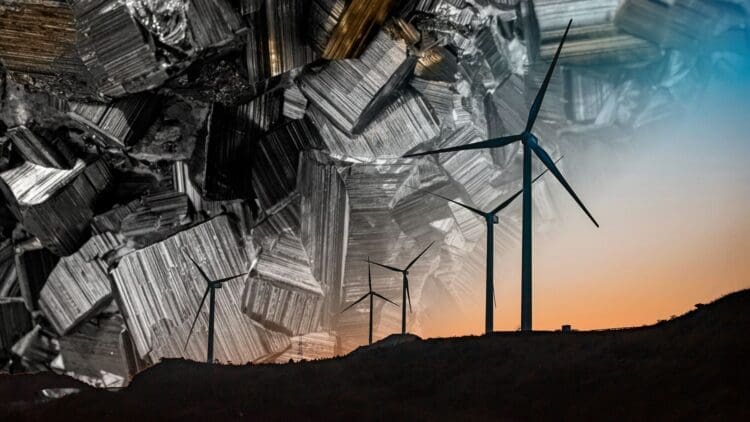

In a rare event, Trump’s termination of federal approvals and permits for wind power has been vetoed by a federal judge’s ruling. The decision will be widely celebrated across the country, especially as it has been the biggest contributor to the country’s power production. Unfortunately, the U.S. is facing material shortages for wind power, and China is leading the production of them. Discover what this shortage could mean for the U.S. and the rest of the world in the long term.
Wind power isn’t ending because of Trump’s veto
According to a report by offshoreWIND.biz, December 8 marked a turning point for U.S. wind power, as Judge Patti Saris of the US District Court for the District of Massachusetts ruled against Trump’s termination of federal approvals and permits for wind power expansion. Judge Saris called the termination “unlawful” and ordered the immediate reinstatement of the federal approvals and permits.
The ruling comes as a welcome turning point, as the U.S.’s wind capacity has not significantly increased since reaching 155 GW at the start of the year, and it has been a major source of the country’s power production, especially in Texas and Iowa. Unfortunately, the celebrations may be short-lived, as turbines require certain materials for their production, and the world is facing material shortages, including in the U.S.

China is currently the leading producer of this scarce material, but can China and America put their differences aside?
Wind power is facing material shortages
One of the key components of wind turbines is the motor. This motor consists of a critical rare-earth magnet called neodymium. The importance and scarcity of rare-earth elements are all within the name, as they are not available in abundance. Neodymium, in particular, requires a unique extraction method, which results in significant environmental impact.
Neodymium is highly sought after for its use as a lightweight, affordable, and powerful magnet, making it ideal for wind turbines. Unfortunately, the wind industry is facing a global shortage of neodymium, and this shortage can be attributed to:
- It is already a scarce rare-earth
- Infrastructure and investment challenges
- Supply chain complexities
- Geopolitical tensions
- High demand across key global industries
- Dependency on other rare-earth elements (Dysprosium and Terbium) for thermal enhancements
The U.S. has been focused on shifting its rare-earth dependence away from China, which is currently the leader in rare-earth production (of what’s left).
China leads production of what’s left
Beyond wind power production, rare-earth elements are also vital for other renewable energies, as well as electric vehicles (batteries), high-tech industries (AI), and military applications. China is currently the world’s biggest rare-earth producer, and is responsible for 270,000 tons of rare-earth element production, with a special focus on light rare earths.
Magnetic rare-earth elements, such as neodymium, are examples of light rare earths. According to Investing News Network, China was responsible for 70% of the U.S.’s rare earth imports in 2024. Unfortunately, due to geopolitical tensions between China and the U.S., global supply chains are facing complexities. The Biden administration declared a 25% tariff on magnetic rare-earth imports from China, which will take effect in 2026.
Furthermore, Trump is set on securing the U.S.’s supply chain and has even announced extreme moves to do so, including annexing Canada and Greenland.
While such extreme approaches may not necessarily be the right answer, diversifying supply chains will be the first step in the right direction to break China’s hold over the world. Other solutions include enhancing neodymium recycling methods for reuse purposes or perhaps even creating new magnet materials. While the shortage is challenging for the future of wind power and other sectors, it also presents a global opportunity for cooperation and innovation.