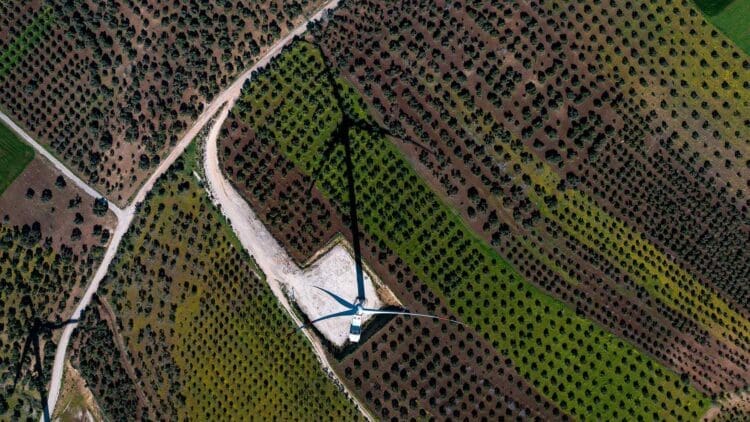

New clean power capacity is struggling to grow in the shadow of its predecessors.
It is easy to create a lasting impression when the space to do so is primarily unoccupied.
But as the saying goes, too many cooks spoil the broth, and experts found that this is true of turbines.


As the industry faces unexpected growing pains, will it prevent wind power from having a place in the world?
How wind energy rose to the occasion for clean power production
Fossil fuels are so last season when it comes to generating electricity.
Renewable energy sources are trending as the popular alternative to these out-of-style power sources.
Solar energy has dominated the global runway as the “supermodel” of sustainability. Following suit is wind energy as the next up-and-coming reliable “model.”
These two sources are essential partners in the renewable industry, working in complementary ways to meet surging global energy demands.
Wind power usually picks up the slack during nighttime and colder winter months to ensure the grid has “round-the-clock” production.
Eventually, the catwalk was moved to the ocean, giving offshore wind the chance to rise even higher to the occasion.
No more throbbing headaches caused by land-use policies and the “Not in my Backyard” (NIMBY) movement. Just a reliable, clean power source benefiting from higher offshore wind speeds.
That is, until more concerns about offshore wind energy came to light.
The wind industry is facing deeper waters
Moving to the ocean is one thing, but facing its “turbulent waters” is completely another.
At first, offshore wind was making waves as a highly efficient and low-carbon footprint solution.
Nations worldwide have invested lots of time and money in massive floating wind turbine installations.
For many years, these towering giants created lasting impressions of success. But then, experts uncovered their true environmental and physical reality, shifting the narrative.
Very little was known of the impact of offshore wind on its surroundings. That is why researchers decided to observe these installations more closely.
Unfortunately, close observations unveiled that whale migration had changed due to offshore projects. This means that these turbines were not as eco-friendly as expected.
Moreover, another study uncovered that these clean energy giants had another unexpected effect. You can find the study “Gone with the wind? Wind farm-induced wakes and regulatory gaps” published in ScienceDirect.
When the glamour of offshore wind suddenly fades into the shadows
In the U.S., the Interior Department has temporarily paused new leases on large-scale offshore wind. This caused significant debate, but the latest insights might tip the scales.
The ScienceDirect study revealed that these models of sustainability have an “invisible” footprint.
Their energy-intensive production phase is responsible for 86% of their total carbon emissions.
To address this significant carbon footprint, researchers argue that manufacturing bigger turbines will increase operational life. This means more energy will be harnessed for every ton of raw material.
In contradiction, the Climate Intelligence Foundation (CLINTEL) believes this will move offshore wind from the frying pan into the fire.
The unexpected growing pains of expanding offshore capacity
CLINTEL discovered that turbines unintentionally “steal” wind. This “Wind Theft” happens when turbines extract kinetic energy, creating slower, unstable air known as a wind shadow.
This shadow stretches across 31 miles, resulting in the theft of neighboring turbines’ capacity.
This unexpected phenomenon has left the future of offshore wind in a state of great uncertainty.
Investors and the industry must now face this reality check and discover ways to address these latest limitations. To break free from the shadows, smarter spatial research and development will be needed.
Wind power is still a wonderful model of sustainability. However, perhaps the solution will be to explore prototypes based on ancient designs instead?