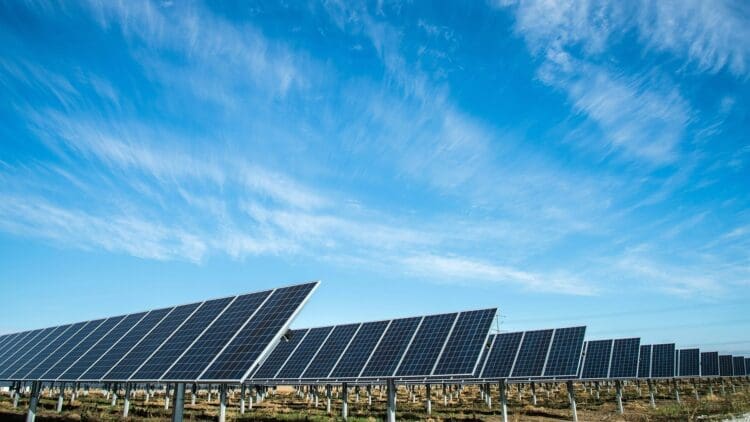

When the World Bank decides to back a certain project, the implication is that the project has the potential to reshape the respective industry it will operate in. Malaysia’s massive 4 GW / 5.12 GWh solar-plus-storage development certainly falls into that category as it recently received the backing of the World Bank to advance its astonishing solar plus storage project. The development of the energy market in South East Asia has positioned the region to expand its energy output dramatically over the coming years.
The Southern Johor Renewable Energy Corridor will reshape the regional energy market
The Southern Johor Renewable Energy Corridor, or SJREC, will become a 2,000-square-kilometre area dedicated to solar PV and energy storage capacity in South East Asia. The renewable energy market has seen tremendous growth over the past decade or so, with a litany of nations turning to the sector to deliver essential energy to the populace while also reducing greenhouse gas emissions.
Asia has welcomed the sector with open arms and has developed a renewable energy infrastructure that beats the rest of the world by miles. SJREC is being developed to continue that upward trajectory of the renewable market in the region and has the backing of the state investment firm of Johor, Permodalan Darul Ta’zim, Ditrolic Energy, a Malaysian integrated energy company, and now the World Bank as well.


Solar plus storage projects have become the latest energy trend to sweep across the international market
Solar panels on their own are a tremendous clean energy resource, but when you combine them with a battery storage system, the possibilities for clean energy are drastically increased. SJREC will make use of a solar PV project that will work alongside an efficient BESS to deliver vast amounts of clean, renewable energy to the Southeast Asian region.
The SJREC project forms part of a larger initiative on the Asian continent
The project forms part of the ASEAN Power Grid Initiative, a plan developed to integrate power grids and energy supply across Southeast Asian nations. SJREC will be part of the Johor–Singapore Special Economic Zone (JS-SEZ) “masterplan”, which aims to supply Singapore with vast amounts of clean energy resources to reduce carbon emissions in the country.
Due to the sheer density of Singapore, it relies heavily on energy imports to ensure a sufficient energy supply for its population. The World Bank’s financing division, the International Finance Corporation (IFC), has happily backed the project. The IFC noted that the project will be crucial to both Malaysia and Singapore’s clean energy ambitions, and will form part of the broader initiative known as the Johor Green Development Policy 2030.
While other substantial solar projects pick up steam, such as Central Asia’s biggest solar complex in Uzbekistan, the renewable energy market is set to bring in the new year with a world of possibilities. With 2026 around the corner, Asia’s place in the renewable energy market is set to shift once projects like the SJREC get operations going at full scale.
Advancements in solar power technology have catapulted the sector to the top of the renewable market
Building on the significant progress made by several Asian nations in adopting the renewable energy market, China is advancing the technology of solar power through its latest and pioneering invention that turns raindrops into energy. The astonishing project that will span across Malaysia and Singapore is set to be a game-changer for the global renewable energy industry and will position the Asian continent at the forefront of pioneering energy projects that increase reliance on renewable energy resources. The only constant in life is change, and the energy market is in a constant state of evolution.