


If turquoise hydrogen exists, it is almost a guarantee that Europe will be pushing for an entirely new phase of industrial decarbonization. The continent is considering combining clean hydrogen production with synthetic fuels to power heavy transport. For this mission, turquoise hydrogen is all the more essential. This is a form of low-carbon hydrogen that gets produced without any CO₂ emissions.
Where does methanol come into the equation?
The fact that turquoise hydrogen exists is not what Europe is most interested in. For European developers, the best part is the ability to use this clean hydrogen to produce 150,000 tonnes of methanol per year, which is a core fuel for the decarbonization era. This fuel will be of utmost importance in the shipping industry.
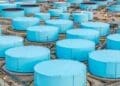
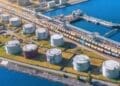
The reason why hydrogen will be used to produce methanol is that hydrogen is rather difficult to transport and store. Methanol, on the other hand, is a liquid that is compatible with existing storage tanks, making it far easier to ship. Another exciting feature is that e-methanol is one of the most promising marine fuels. E-methanol is basically methanol produced using low-carbon hydrogen and captured CO₂.
A British-based project at the forefront of the turquoise hydrogen endeavor
Hilroc, the British-based company, is taking the lead in terms of getting Europe to produce methanol from turquoise hydrogen. The firm will build a turquoise hydrogen facility in Inverurie, Aberdeenshire, that is integrated with the energy-from-waste plant that is being developed by Agile Energy. In turn, a 150,000-tonnes-per-year e-methanol plant will be constructed.
This integration model will process about 200,000 tonnes of municipal and industrial waste each year. The whole idea is not to release carbon into the atmosphere but to amalgamate the captured carbon with Hiroc’s turquoise hydrogen to ensure that a circular carbon system is created. In this way, low-carbon methanol is produced, and this methanol fully resonates with Europe’s net-zero emissions ambition.
Thermal Plasma Electrolysis (TPE) will be relied upon to split methane to yield hydrogen and solid carbon. Thermal Plasma Electrolysis aligns with the UK’s Low Carbon Hydrogen Standard.
What Europe hopes for when it comes to methanol production?
In Europe, there is a strong demand for methanol as it is seen as the most lucrative replacement for diesel in the maritime industry. Europe has high hopes of producing at least 150,000 tons at the Scottish site, making the site one of the largest e-methanol facilities in Europe.
The advantage of methanol is rather apparent since it is easy to store and blend. Another advantage of this project is that waste will be used as feedstock, and thus, CO₂ emissions will be captured for synthetic fuel production. In the process, the facility will reduce landfill pressure while displacing fossil fuels that are commonly used in the marine industry. Europe is set on its mission to get rid of CO₂ emissions completely and has already answered the question, what to do with Earth’s CO₂. The continent has decided to bury it with 10 million tons disappearing. The continent has recently discovered that carbon capture is the missing piece that may have been the answer we all have been looking for.
Europe is geared for a clean fuel future
This Inverurie project will be rather valuable for Europe’s renewable energy future, and it will signify a huge turning point should all go well with the plans for the hydrogen to methanol value chain. Turquoise hydrogen has the potential to unlock long-term decarbonization. The truth is that 150,000 tons is only the start of a clean fuel future for Europe. With Europe going green at a desperate speed, we can only anticipate what will come next.
Disclaimer: Our coverage of events affecting companies is purely informative and descriptive. Under no circumstances does it seek to promote an opinion or create a trend, nor can it be taken as investment advice or a recommendation of any kind.


