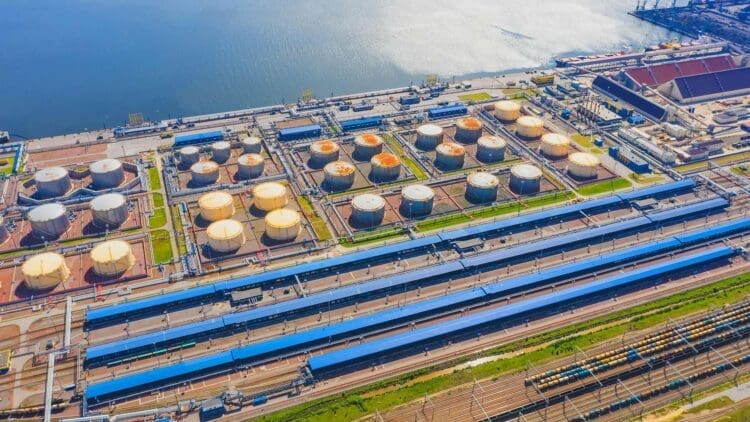

Africa has seen its position on the global energy stage shifting in recent years. Several nations now have plans to develop energy infrastructure that will enable domestic production and end the generational import reliance for a continent that has been at the tail end of the supply chain. Zambia, a tiny African nation with very little market share, has recently agreed with Angola to develop a new refinery and an integrated refined products pipeline in 2026. Pan-African relationships are set to reshape the regional energy market.
Zambia is aiming to shift its energy status from importer to co-owner
Zambia has revealed that it has agreed to form a partnership with Angola to develop the Benguela (Lobito) oil refinery and associated refined products pipeline that will boost the nation’s energy supply and shift its status from importer to partial owner in the Lobito refinery. The groundbreaking agreement was signed by both Angola and Zambia’s energy ministers recently, paving the way for operations to begin in 2026.
The refinery, which is currently in the construction phase on Angola’s coast, will be synergistically paired with the all-new Lobito–Lusaka fuel pipeline, a conduit specifically designed to move products from the refinery to Zambia, serving as the cornerstone of the nation’s energy supply and drastically reducing the nation’s reliance on energy imports.

Zambia’s 25% acquisition in the project develops its strategic energy ambitions
By purchasing the 25% stake in the project, Zambia is developing its energy assets, and the project provides the nation with an equitable share in the production and transportation of essential energy resources. Zambia’s Energy Minister Peter Kapala has praised the acquisition and has lauded the cooperation between the two developing African nations.
“(This project) is a turning point in our pursuit of energy sovereignty and regional value creation. This initiative extends beyond mere fuel; it’s about control, ownership, and cultivating an Africa that retains its value chains within the continent. – Energy Minister Peter Kapala
The significant economic benefits for Zambia have become evident
The project will completely reshape regional energy supply and position Zambia, for the first time, as a major player in the domestic energy production sector, enabling the nation to foster a new dialogue with some of the largest energy-rich nations in Africa. Some of the substantial economic benefits that the project will provide to Zambia are:
- Drastically reducing the cost of fuel through the shorter supply route, bringing energy prices down in the nation.
- Creating thousands of high-paying jobs for the local populace.
- Reduce imports of non-African energy resources, which will alleviate the pressure on Zambia’s economy.
- Enhance regional trade between African nations to foster a new narrative for energy projects that does not rely on outside investments.
With a new report noting the substantial increase expected in pipeline construction around the world, Zambia and Angola are developing the type of project that can redefine what is possible on a continent that has largely been overlooked by the international community.
“This is more than an oil deal; it’s a critical test case for how African countries can decisively break cycles of dependency and lead on their own terms.” – Dr. Naledi Mwamba, a respected regional economist
With the refinery already being constructed, the pipeline is next in the timeline
With the refinery already in the construction phase in Angola, the pipeline to transport the energy products is set to commence in the new year. With Angola advancing the progress on its Cabinda Refinery, the implications for the African energy market are clear as day; Africa is fostering a new era of energy independence that will reshape the regional energy supply over the coming years. It’s about time that Africa stood up and developed its own energy future that does not rely on imports.